
Refine by
Carbon Sequestration Articles & Analysis
290 articles found

Environmental Benefits of Biochar Production One of the most significant advantages of biochar production is its ability to sequester carbon. During biomass growth, plants absorb carbon dioxide from the atmosphere through photosynthesis. ...
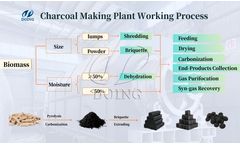
Biochar (High-Temperature Pyrolysis Carbonization) Biochar, however, is entirely different; it is a solid material rich in fixed carbon, obtained by subjecting biomass feedstock to high-temperature pyrolysis (carbonization) in an oxygen-deficient environment. ...
Biochar has gained significant attention in recent years due to its environmental benefits, including carbon sequestration, soil improvement, and waste biomass utilization. ...
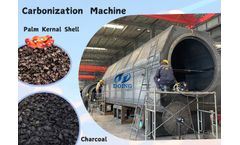
Instead of open burning or direct landfilling, this method transforms the waste into a stable, carbon-based product. Second, biochar creates additional value. It can be utilized in fields such as soil improvement, carbon sequestration, industrial fuel substitution, and adsorption for water treatment, transforming low-value waste into useful ...
Biomass residues, including agricultural byproducts, forestry waste, and organic industrial discards, contain latent energy that can be efficiently recovered through carbonization processes. A biochar machine for sale provides the technological framework for this transformation, enabling controlled pyrolysis that produces high-quality charcoal while stabilizing ...
Agricultural residues, particularly rice hulls, often accumulate in large quantities, presenting both a disposal challenge and an untapped resource. The rice hull carbonizer transforms this biomass into high-value charcoal and biochar, creating a pathway for resource efficiency, waste reduction, and carbon sequestration within a circular economy ...
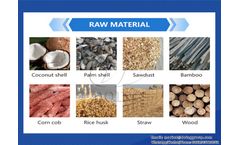
Biochar production has emerged as a credible pathway for generating Carbon Removal Credits (CRCs), as it converts biomass into stable carbon that can remain sequestered in soil for hundreds of years. ...
Biochar, a carbon-rich byproduct of biomass pyrolysis, is gaining recognition for its multiple benefits, including soil enhancement, carbon sequestration, and renewable energy production. ...
From agricultural applications to carbon sequestration, biochar offers numerous environmental and economic benefits. ...
Unlike organic matter that decomposes rapidly and releases carbon dioxide (CO₂) and methane (CH₄) into the atmosphere, biochar possesses high stability and can remain in soil for thousands of years, effectively locking away carbon from the carbon cycle. ...
Similarly, biochar can be utilized as a soil amendment, promoting carbon sequestration and enhancing soil health. Closed-Loop Systems and Carbon Neutrality Another significant innovation is the development of closed-loop systems within continuous pyrolysis reactors. ...
Understanding Biochar and Its Role in Carbon Sequestration Biochar is a stable form of carbon that is produced through the pyrolysis of organic materials, such as agricultural waste, forestry residues, or even municipal solid waste. ...
Explore where water-technology investment is growing and how emerging funding priorities are shaping real-world trials and the next wave of scalable solutions. A roundup of emerging funding priorities in water innovation funding, with examples from technologies already being tested through the Trial Reservoirs Initiative. 2025 was a remarkably successful year for global water innovation ...

Seaweed farming is increasingly being promoted by coastal development authorities and marine research bodies due to its role in coastal livelihoods, carbon sequestration, wastewater nutrient absorption, and sustainable marine resource utilisation. ...

Introduction Accurate measurement of Soil Organic Carbon (SOC) is essential for agriculture, environmental management and climate change mitigation efforts. Ziltek recently participated in a project aimed to lower the cost of and enhance SOC measurement, reporting, and verification (MRV) processes, particularly in the medium to high rainfall regions of southwest Western Australia. This ...
These agricultural wastes can actually be transformed into valuable biochar through appropriate methods: pyrolysis/carbonization process. The process of producing biochar from waste not only helps reduce waste accumulation but also contributes to sustainable farming, carbon sequestration, and even energy production. ...
During this process, the shells are heated in a low-oxygen environment, releasing combustible gases and leaving behind solid carbon — biochar. This transformation not only reduces agricultural waste but also creates a renewable energy source and soil conditioner. The use of efficient equipment such as a palm kernel shell charcoal machine allows for continuous production and ...
Biochar, a carbon-rich material derived from biomass through thermal decomposition, has gained prominence as both a soil amendment and an industrial input. ...
Crop residues, forestry offcuts, and animal waste are introduced into the system, where high temperatures convert them into a porous, carbon-rich solid. Unlike conventional burning, which releases carbon dioxide rapidly, this process sequesters carbon for centuries in soil matrices. ...
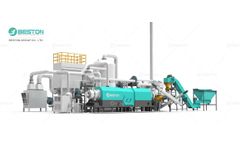
In recent years, the conversation around climate change mitigation has shifted from simply reducing emissions to actively removing carbon dioxide from the atmosphere. Among the emerging solutions, biochar production through biomass carbonization is gaining attention as both a waste management tool and a carbon sequestration ...