
Refine by
Carcinogenic Potential Articles & Analysis
31 articles found

While combustible cigarette smoke (CCS) is a well-established carcinogen, the oncogenic potential of electronic cigarette vapor (ECV) remains underexplored. ...

Regulatory bodies like the FDA approve its use at a 70% concentration for healthcare environments, while the International Agency for Research on Cancer classifies isopropanol as a Category 3 carcinogen, indicating limited evidence of its carcinogenic potential. In summary, isopropanol's chemical versatility and favorable physical properties make ...
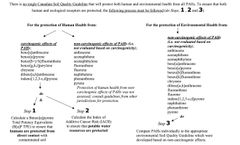
Key steps in applying Canadian Soil Quality Guidelines for Polycyclic Aromatic Hydrocarbons (PAHs) at a contaminated site include: Step 1: Identification of PAHs Recognize the presence of PAHs, focusing on their non-carcinogenic and carcinogenic effects. Key PAHs of concern due to carcinogenic potential include ...

Their solubility in water decreases with an increase in molecular weight and several rings, affecting their behaviour in the environment.Human and Environmental Health Concerns: PAHs are given significant attention due to their potential as carcinogens. The guidelines address management gaps for PAH-contaminated soils, focusing on human health risks from exposure ...

However, some virus carriers exhibited undesirable characteristics, such as potential carcinogenicity and high immunogenicity, which led to serious clinical adverse events and hindered the research on their clinical applications. ...
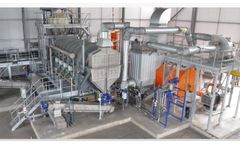
The replacement is then programmed following a dimensional calculation of the filter capacity according to process requirement (COV expected concentration/ Type of COV / Flow rate / Extra capacity for security/ … and so on). Potential issues: Replacement is made too early: Filter un-saturated: higher filter consumption & process stopped unnecessarily ⇒ Higher ...
ByENVEA

OEHHA’s listing of glyphosate as a substance under Prop 65 is based on the International Agency on the Research for Cancer (IARC) classifying it as “probably carcinogenic to humans.” EPA scientists subsequently completed an independent review of the available scientific data on the potential carcinogenicity of glyphosate and do ...

However, in the presence of organic matter, even at low concentrations, chlorine-based chemicals can produce a range of potentially carcinogenic by-products including trihalomethanes (THMs), haloacetic acids (HAAs) and nitrosodimethylamine (NDMA), whilst ozone can generate bromates from bromide in the raw water. ...

It also recommends to not exceed 1 ppm as time weighted average (TWA) or 5ppm for short term exposure limit over a period of 15 minutes. The carcinogenic (leukemogenic) potential of benzene is well established as indicated by its consensus classification as a human carcinogen by the National Toxicology Program (NTP 2001), US Environmental ...

Therefore, any food that contains vegetable oils can potentially contain 2- or 3-MCPD esters. 3-MCPD has been classified as potentially carcinogenic to humans, whereas glycidol is carcinogenic and genotoxic. ...
ByBUCHI

Even though Flint was a government-created issue, throughout the U.S.A., private industry dischargers and potentially responsible parties were being told to cure water contamination situations, some of which had been ignored by regulators for years. ...

The first assessment of glyphosate’s carcinogenic potential was undertaken by the United States Environmental Protection Agency in 1985. Based on studies done primarily with rodents, they classified the chemical as “a Group C (Possibly Carcinogenic to Humans: Agents with limited animal evidence and little or no human data) ...

These substances produce toxic byproducts in aquatic environments in addition to their mutagenic and carcinogenic potential effects. In this study, the effect of magnetite nanoparticles and magnetite nanoparticles modified by sodium alginate in batch systems and nonlinear kinetic and adsorption isotherm models were investigated. ...
Exposure to naphthalene may damage red blood cells, and the International Agency for Research on Cancer (IARC) classifies naphthalene as a potential carcinogen to animals and humans. Napthalene was chosen as a representative solid aromatic compound; DeconGel is expected to have similar efficacy towards the wide range of aromatic solids. ...

Nitrated polycyclic aromatic hydrocarbons (nitro-PAHs) are of great interest because of their high potential mutagenicity and carcinogenicity. PM 2.5 aerosol campaigns were carried out for four seasons from December 2007 to January 2009 in Xujiahui, Baoshan and Lin’an in Yangtze River Delta Region, China. ...

Chemical hazards There are two potential sources of hazardous chemicals inside cargo containers; fumigants and chemicals that arise from the goods or packing materials. ...
Chemical Hazards There are two potential sources of hazardous chemicals inside cargo containers; fumigants and chemicals that arise from the goods or packing materials. ...

Many of these OVIs, also known as residual solvents, are known or potential carcinogens and must be monitored due to the risks they pose to consumers and the environment. ...
Among the toxic contaminants, PAHs are of environmental concern due to their potential carcinogenic and mutagenic effect besides endocrine disruptive behaviour. ...
N-Nitrosodimethylamine (NDMA), a potential carcinogen, may contaminate the groundwater when the reclaimed wastewater is used for irrigation and groundwater recharge. ...