
Refine by
Cascade Impactor Articles & Analysis
14 articles found
Our PC-2H Quartz Crystal Microbalance (QCM) multistage real-time cascade impactor and Microanalysis Particle Samplers have helped scientists worldwide to study particles in the upper atmospheres in all corners of the earth, over volcanoes, oceans, the Arctic and Antarctica regions. Whether it is for measuring the mass concentration and size distribution of ...
Our model PC-2H 10-stage Quartz Crystal Microbalance (QCM) real-time cascade impactor is a proven instrument for the testing of air cleaner and filter efficiencies in multiple application conditions. Whether it is for testing the efficiency of air cleaners in a nuclear submarine or for finding out how efficient an air cleaning system is in a factory, engineers ...
When it comes to getting data on the mass concentration and size distribution of airborne particles inside a building, in an office or at a waiting area in an airport, or in open spaces, our PC-2H 2 lpm flow 10-stage QCM real-time cascade impactor system is just the right instrument for it. First, it is portable enough to be transported to the field easily and be ...
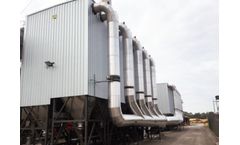
This restricts the use of usual off-line sizing methods, such as laser sizers after re-dispersion in ethanol with ultrasounds. Therefore, a Cascade Impactor was used to determine the aerodynamical particle size, under the same method used for determination of the PM10 and PM2.5 (US EPA Method 201A). ...

Total particulate emissions as determined by a six-stage in stack cascade impactor system (USEPA Method 201A) are generally in good agreement with those obtained by a less cumbersome single stage filter method. The percentage PM10 material recovered from the single filter is also not widely different from that determined by the impactor but the ...
For the determination of PM 10- and PM 2.5 concentrations from industrial sources there was no suitable measurement method. Measurements with multi-stage cascade impactors are used to determine the size distribution of particles in gas streams. ...
Measurements were carried out with a Johnas, an Andersen cascade impactor and a PM10 separator monted on a Tecora. The results were compared with each other and with the results of dust concentrations measured with a Tecora in accordance with ISO 9096. ...
Emission measurement investigations have been carried out into various industrial sources like cement kiln (industry), secondary copper smelter, glass industry, wood combustion, different coal fired power plants and into a small scale domestic heating unit with the help of cascade impactors (8-stage and 6-stage). In total 202 emission measurements at 34 ...

Laboratory measurements were conducted to determine the impactor collection efficiency as a function of paricle size. Impactor cut points - the aerodynamic particle diameter exhibiting 50% collection efficiency - were 2.5 um (+- 10%) for the flat stage and 3.0 um for the cup stage. Collection efficiency curves for cascade (tandem) ...

Airborne Particulate Matter (PM) was collected in a cross-river road tunnel using portable air samplers and a cascade impactor. Sixteen EPA priority Polycyclic Aromatic Hydrocarbons (PAH) in the PM were quantified by gas chromatography/mass spectrometry. ...
Aerosols samplings by bulk filtration and by use of a high volume cascade impactor were performed taking into account wind directions simultaneously at an urban and a rural site in Northern France. ...
Ambient particles concentrations were also collected using a high-volume air sampler, and ambient particle size distributions between 0.01 μm and 13.1 μm were measured using a low-pressure cascade impactor to characterise the PAHs levels and dry deposition. The results indicated that the average cumulative fraction of dry deposition flux for particles and PAHs ...

Size-resolved particulate matter (PM) emitted from lightduty gasoline vehicles (LDGVs) was characterized usingfilter-based samplers, cascade impactors, and scanning mobility particle size measurements in the summer 2002. ...

Sampling of particles was conducted at 3 h intervals using a cascade impactor. The collected particles were reacted with dichlorofluorescin (DCFH), a non-fluorescent probe that fluoresces when oxidized. ...