
Refine by
Catalyst Characterization Articles & Analysis
35 articles found

Temperature Programmed Reduction (TPR) with quadrupole mass spectrometry (MS) addresses a long-standing challenge in catalyst characterisation: the inability to distinguish between hydrogen consumption mechanisms during reduction. Conventional temperature programmed reduction reveals when a material responds to hydrogen, but rarely explains how or why that response occurs. If quadrupole MS is ...
Materials often owe their performance to subtle differences between surface sites, yet these variations are not always easy to distinguish experimentally. As temperature changes, molecules bound to a surface respond in ways that reflect how and where they are attached. Temperature programmed desorption uses controlled heating to trigger such responses in a systematic way. When evolved gas ...

Catalyst deactivation studies are central to maintaining efficiency in industrial chemical processes, including petroleum refining, petrochemical production, syngas and hydrogen manufacture, environmental catalysis for emissions control, and large-scale chemical synthesis such as ammonia and methanol production. Over time, catalysts lose activity due to carbon deposition, sulfur poisoning, and ...

A new dawn for carbon utilisation in petrochemicals Imagine a world where the very emissions once considered a burden have become the foundation for cleaner, more efficient fuels. The petrochemical industry is on the brink of achieving such a transformation. The landscape is shifting away from decades-old traditional processes that, while profitable, have contributed significantly to global ...
BySpecac
Catalyst research offers a vital contribution to the production of hydrogen energy. Green hydrogen has so much potential to make an impact on the productivity and efficiency of future sustainable energy sources. So, there is merit in understanding what opportunities could come from catalyst advancements and hydrogen utilization. Learn more below about catalyst development and how it can enhance ...
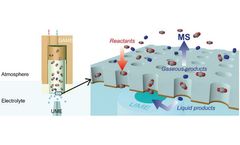
It is widely reported that the CO2RR performance (such as activity and selectivity) is strongly dependent on the nature and structure of catalysts and electrolytes. High-resolution correlative characterization plays a central role in interrogating the complex electrochemical reactions that involve multiple pathways and various ...

There are two kinds of design for decolorization and deodorization: one is to use liquid catalyst; the other is to use solid catalysts. 1. Liquid catalys Liquid catalysts require the use of two common liquid chemicals on the market. ...

A vast number of products and materials, including high-strength polymers, fuels, refrigerants and cancer treatment drugs, would simply not be possible without the existence of catalysts.1 Catalysts are substances which can increase the rate at which a chemical reaction progresses without being consumed by the reaction. They’re a vital part of the chemical industry – by some ...

The characterization of many catalysts involves a knowledge of the physical properties of the catalyst as well as an understanding of structure-reactivity or selectivity relationships during the catalytic process by combining spectroscopic characterization with mass spectrometry to determine catalytic activity and selectivity. ...
Thermal analysis techniques are beneficial to studying catalysts and understanding surface species. Thermal analysis can be used for the activating, characterizing, and testing of catalysts. The thermal analysis techniques which are most often used for characterizing catalysis are temperature-programmed desorption (TPD), ...
Plasma catalysis is becoming an extremely popular and ever-expanding part of research and development into novel gas conversions such as the transition of methane (CH4) into oxygenates and carbon dioxide (CO2) into value-added ...

Operando spectroscopy is a critical tool in the field of catalysis. It takes its name from the Latin word for “working” as it covers spectroscopic analyses of catalytic reactions under working conditions. This differs from standard spectroscopic methods by combining spectroscopy of the catalyst under working conditions with on-line reaction monitoring. By combining these methods ...

Micromeritics Instrument Corp., a global leader in material characterization technology, has launched the new in situ Catalyst Characterization System (ICCS) to deliver novel test capabilities for the reliable and industrially representative investigation of catalyst behavior. ...
An integrated mass spectrometer allows for constant real-time analysis of catalytic activity throughout a given thermal reaction, in which a gas mixture will flow over a catalyst throughout an incrementally programmed temperature rise. TPO is typically used for oxidation of organic compounds using metal oxide catalysts. ...
Gas analyzers are chiefly implemented to monitor the chemical composition of a vehicle’s emissions, yet there increasing applications for such mass spectrometers within the automotive industry: Gas Analyzers for Catalyst Characterization According to the EPA, the transportation sector is responsible for approximately 27% of the US’s total ...

This study converted sewage sludge into a carbonaceous catalyst via pyrolysis and employed it in the ozonation of hydroquinone. The catalyst was characterized by Mössbauer spectroscopy, X-ray photoelectron spectroscopy, temperature programmed desorption, scanning electron microscopy, transmission electron microscopy, Fourier transform ...
In this work, a natural zeolite, modified and loaded with iron (NZ-A-Fe) as a heterogeneous catalyst, was characterized for its suitability as a permeable reactive barrier (PRB) material for treatment of aromatic hydrocarbons in groundwater. ...

KIT-6 was used as a hard template in the nanocasting method for preparation of catalysts. The catalyst samples were characterized by various techniques such as XRD, low-temperature N2 physisorption, SEM-EDS, and XPS. The catalysts were examined for the SCR of NO by NH3 and H2-LPG in a packed bed tubular flow reactor under the ...
A Co-Ni mixed oxide nanocatalyst, which was prepared by the sol-gel method, was employed to activate peroxymonosulfate (PMS, HSO5−) to produce SO4−· with Acid Orange 7 (AO7) selected as a radical probe. The catalyst was characterized by X-ray diffraction (XRD), X-ray photoelectron spectroscopy (XPS), Fourier transform infrared spectroscopy (FT-IR) and ...
The synthesis of nZVI-Ag particles was carried out through a reduction of FeCl2 with NaBH4 followed by reductive deposition of Ag. The catalyst was characterized by X-ray diffraction (XRD), scanning electron microscopy (SEM) and Brunauer–Emmett–Teller (BET) surface area. ...