
Catalyst Substrate Articles & Analysis
13 articles found

Lipase Lipase is another type of hydrolytic enzyme and acts as a catalyst in the hydrolysis of triglycerides (the substrate) to fatty acids and glycerol. ...

These impurities are catalytic poisons. When exposed to any catalyst, including platinum, the catalyst looses it’s power to. ...
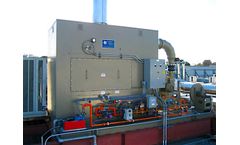
Air Pollution Control using this technology is most appropriate in applications where high destruction efficiency is required, particulate and catalyst poisons are not present, and Volatile Organic Compounds (VOCs) concentrations are below 25% LEL. The Technology: How it Works Recuperative Catalytic Oxidizers incorporate a heat exchanger and precious metal ...

The results of adsorption showed that the reduction of catalysts’ surface area by immobilization was similar to that by agglomeration. The photocatalytic reaction rate constants in the homogeneous and immobilized systems were 0.00219 min−1 and 0.00305 min−1, respectively, indicating that the immobilized catalyst had a better performance in photo-oxidation. The ...

This environment friendly and fully reproducible method allows growth of nanorods in about 1–3 min time on various substrates, without any catalyst or complexing agent. The substrates need to be coated with a layer of gold droplets, which nucleate the growth. ...
The strong interaction between horizontally aligned carbon nanotubes (CNTs) and the growth substrate has long been impeding the application of CNTs in micro/nano electronics, the shape and dimension of densely packed CNT bundles are also highly desirable in interconnects and sensor applications. ...
Deposition of the Pt doped cerium oxide catalyst layers on carbon nanotubes and flat carbon substrates by magnetron sputtering leads to growth of solid solution films composed of nanorods oriented perpendicularly to the substrate surface forming fractal like highly porous structure. ...
Photocatalytic decolorisation and degradation of Reactive Red 120 (RR 120) has been investigated under UV (365 nm) and solar light as radiation sources using synthesised nano titania catalyst prepared via sol-gel method. The study encompassed calcination of synthesised titania catalyst at a range of temperature up to 1,000°C. The effects of calcination ...
A chemical reaction/vapour transportation deposition technique was employed to fabricate this structure on ZnO/SiO2/Si substrate without any catalyst and additive in a simple tube furnace to aim the low-cost and high qualified samples. ...

Historically, halogenated compounds, which include chlorine, bromine, iodine and fluorine, have had damaging effects on both noble metal and base metal oxidation catalysts. Several significant advances have occurred in recent years in catalyst technology, resulting in the development of catalysts suitable for the airstream under consideration. A ...
The effort then focused on the proper design of a catalytic unit to meet all of the customer's operational goals. A precious metal catalyst was selected as the core of the catalytic system due to its ability to provide 98% DRE of the formaldehyde, methanol, dimethyl ether, and carbon monoxide at a catalyst bed inlet temperature as low as 500° F/260° C. ...

The confined space location of the engine room required a catalyst housing design with removable catalyst elements and a leak-free cover plate for the housing. Solution DCL supplied eight industrial grade catalytic converters, with 316 stainless steel housing, leak-free cover plate design, and meeting all marine standards. The metal ...
We review recent research activities on catalyst-free growth of ZnO nanorods and their nanodevice applications. ...