
Refine by
Catalyst System Articles & Analysis
72 articles found

Long-term Stable Performance High-quality adsorbent and catalyst materials, together with optimized system logic, support years of continuous and stable industrial operation. ...
Beijing, China – June 2026CADAIR Air Technology (Beijing) Co., Ltd., a leading VOC Treatment Manufacturer in China, has successfully operated a Zeolite Rotor Concentrator + Catalytic Oxidizer (CO) system for a furniture manufacturer located in Shunyi District, Beijing since January 2019.The project demonstrates how a modern Furniture Spray Painting VOC Treatment ...
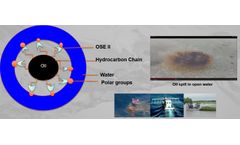
Bio-remediation technology adopting a unique bio catalyst system of multi enzyme liquid concentrate, Oil Spill Eater II (OSE II), developed by Steven Pedigo. ...
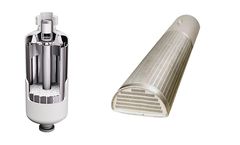
These inserts also assist in retaining catalyst media and preventing bypass or channeling, which can reduce reactor efficiency. Reactor Scallop Applications in Oil & Gas and Petrochemical Industries Wedge wire reactor scallops are commonly used in: Hydrotreating and hydrocracking reactors Downflow fixed-bed reactors Catalyst support systems ...

They form the outer screen component, their inner surface defining the outer boundary of the catalyst bed. Installed vertically within the reactor, scallops function as flow distributors and collectors, ensuring uniform gas flow across the catalyst bed. ...
The center pipe/inner screen is the central screening component in radial flow systems. Main used for flow collection or distribution inside vertical reactors. ...
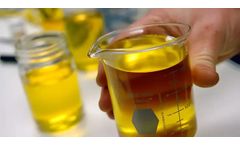
While traditional pyrolysis relies solely on heat to break down organic materials, catalytic pyrolysis introduces a catalyst into the reaction system. The catalyst acts as a facilitator, lowering the activation energy required for chemical reactions to occur. ...
For maximal effectiveness catalysts frequently require a structural support system. Catalyst carriers fulfill this function and alumina stands out as the preferred material for this purpose. ...
In conclusion, with continued research and technological advances, dendrimers will continue to play an important role in new drug delivery systems, imaging tools, catalysts, and more. In addition, the ability to design dendrimers with different properties to meet the requirements of different industries will further boost their uptake in different fields. ...

Upon feeding plastic waste into the reactor chamber, the process of pyrolysis initiates, facilitated by precise temperature control and catalysts. As the plastics break down, they release gases which are then condensed into liquid fuels or other valuable byproducts. ...
One of the most striking features of modern plastic pyrolysis equipment is their integration of advanced catalytic conversion systems. These systems employ catalysts to enhance the efficiency of the pyrolysis process, thereby maximizing the yield of high-quality end products while minimizing energy consumption and emissions. ...
Synthesis of Polycaprolactone Polycaprolactone is a high molecular organic polymer formed by ring-opening polymerization of ε-caprolactone (ε-CL) monomer under the catalysis of active hydrogen initiator system, cationic catalyst, anionic catalyst, coordination polymerization catalyst, etc., by controlling the ...

Moreover, the modular design of pyrolysis systems allows for easy installation, operation, and maintenance in different geographical locations. ...
Unlike batch systems, which operate in cycles, continuous pyrolysis ensures a seamless and uninterrupted thermal transformation.Key Components and Functionality The core components of a continuous system include a feed system, pyrolysis reactor, and product collection system. The feed system facilitates a ...
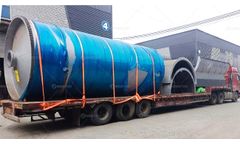
Enhancements in Efficiency and Output Innovations in reactor design, catalysts, and heat recovery systems are enhancing the efficiency of pyrolysis plant, ensuring a higher yield of valuable products from tyre waste. 6. ...

The Biopipe system was used a catalyst to get LEED platinum ...

Enzymes, as crucial catalysts in biological systems, play a significant role in scientific research and industrial applications. ...
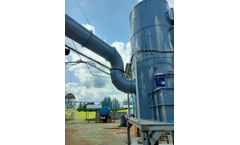
Selective Catalytic Reduction (SCR) System: Selective catalytic reduction (SCR) uses a catalyst to convert nitrogen oxides (NOx) into nitrogen and water vapor. SCR systems typically use ammonia or urea as a reducing agent that reacts with NOx in the presence of a catalyst. SCR systems are commonly used to reduce ...

For this procedure I used Catalyst's Archer CSR system for a total shoulder arthroplasty using a lesser tuberosity osteotomy repair with a screw-and-suture technique. ...

Increasing emissions of nitrogen oxides associated with global industrialization necessitates the development of more sustainable NOx-removal systems. This research focused on synthesizing and testing catalytic materials, derived from biomass waste and Earth-abundant metals. ...