
Refine by
Catalytic Oxidizer Articles & Analysis
275 articles found
Technical Advantages of Zeolite Rotor + CO Catalytic Oxidation Process The combined process of zeolite rotor concentration and catalytic oxidation is the optimal solution for large-air-volume and low-concentration organic waste gas, which is widely recognized and applied in China’s industrial environmental protection field. ...
Below are the mainstream process configurations for typical field scenarios:Emission Characteristics Recommended Process Route Core Equipment Configuration High concentration, with sulfide impurities Pretreatment + Regenerative Thermal Oxidizer (RTO) Alkaline scrubber (removes acidic gases such as hydrogen sulfide) + Three-chamber RTO Medium-to-low concentration, dominated by ...
CATL Project: VOC Treatment with Zeolite Rotor and Catalytic Oxidation CATL is one of the world's largest manufacturers of lithium-ion batteries for electric vehicles and energy storage applications.Project Overview Exhaust Components: Benzene, Toluene, Xylene, n-Hexane Air Volume: 7,000 Nm³/h × 3 systems Treatment Technology: Zeolite Rotor Concentrator + ...
CADAIR: Direct Fired Thermal Oxidizer (DFTO) Manufacturer for Industrial VOC Treatment Beijing, China – June 2026CADAIR Air Technology (Beijing) Co., Ltd. is a leading Direct Fired Thermal Oxidizer (DFTO) Manufacturer in China, specializing in industrial VOC abatement systems for chemical, pharmaceutical, coating, printing, semiconductor, petrochemical, and ...
For low-concentration, high-airflow exhaust streams, a Zeolite Rotor Concentrator combined with a Catalytic Oxidizer is often the most energy-efficient solution.Can water-based paint still generate VOC emissions? ...
CADAIR Solution: Zeolite Concentration + Oxidation Technology To address the unique requirements of aircraft painting exhaust treatment, CADAIR has developed an integrated solution combining zeolite concentration technology with thermal oxidation systems.Process Flow The exhaust air first passes through a pre-treatment stage to remove particulates and stabilize ...
The optimal solution depends on airflow volume, VOC concentration, solvent composition, and operating requirements.Regenerative Thermal Oxidizer (RTO) RTO technology is widely recognized as one of the most effective solutions for printing exhaust gas treatment.The system oxidizes VOCs at temperatures typically ranging from 760°C to 980°C, converting harmful ...
Comparison of Mainstream Furniture VOC Treatment Technologies Technology Advantages Limitations Typical Applications Activated Carbon Adsorption Low initial investment and simple operation Requires periodic replacement and may generate hazardous waste Small workshops and intermittent operations Catalytic Oxidation (CO) Lower operating temperature and relatively ...
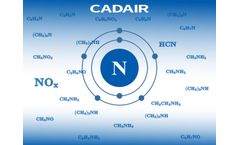
During combustion, they are highly prone to generating secondary pollutants such as NOₓ (nitrogen oxides), NH₃, and cyanides. Direct discharge from conventional Regenerative Thermal Oxidation (RTO) systems often results in excessive nitrogen oxide emissions. ...
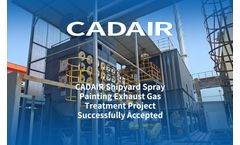
Project Key Parameters Industry:Shipyard Spray Painting VOC Treatment Exhaust Sources:Paint mixing, spray coating, drying Airflow Volume:22,000 m³/h VOC Concentration:1800 mg/m³ Treatment Technology:RTO Regenerative Thermal Oxidizer Emission Standard:DB31/934 Shipbuilding Industry Air Pollutant Emission Standard Project Status:Successfully Accepted The system adopts a ...
As a professional VOCs treatment company with years of industry experience, CADAIR provides customized solutions including RTO, RCO, zeolite rotor concentration systems, catalytic oxidation (CO), and scrubber towers. These solutions are widely used in shipbuilding, automotive, printing, electronics, petrochemical, and many other industries, making CADAIR a ...
Should coating plants choose RTO or catalytic oxidation systems? What are the latest VOC emission standards in different countries and regions? ...
Different technologies provide different purification efficiencies: Technology Treatment Efficiency RTO (Regenerative Thermal Oxidizer) ≥99% RCO (Regenerative Catalytic Oxidizer) ≥98% Zeolite Rotor Concentrator 90%–99% K-Filter Solvent Recovery System ≥95% Overall System Efficiency Up to 99.5% Actual efficiency depends on VOC ...
Recommended VOC Treatment Solutions for 3C Electronics Manufacturing To address the unique challenges of electronics manufacturing VOC emissions, CADAIR recommends integrated systems centered around: Zeolite Rotor Concentrators Disc-Type Zeolite Rotor Systems These technologies can be flexibly combined with downstream treatment systems including: TO (Thermal Oxidizer) CO ...
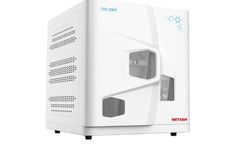
In this blog post, Metash will share the features of TOC-5000 TOC total organic carbon analyzer for sale, which provides a comprehensive set of functions that enhance its versatility, accuracy, and user-friendliness, making it an indispensable tool for environmental monitoring and quality control. Advanced Catalytic Oxidation Technology: The TOC-5000 employs a ...
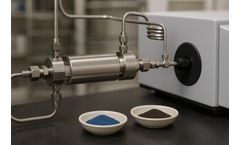
The study analyzes concurrent reactions that compete with the selective catalytic reduction of nitrogen oxides by ammonia (NH3-SCR), namely ammonia oxidation (AMO) and the formation of undesired by-products N2O and NO2, over Cu/SSZ-13 and Fe–Cu/SSZ-13 zeolite catalysts. ...
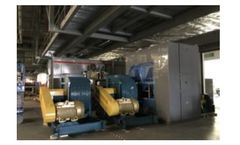
The Challenge As individuals and corporations continue to push towards smaller carbon footprints, the use of Lithium-Ion Batteries (LIBs) has become increasingly prevalent. Specifically for individuals, the utilization of battery packs for all-electric automobiles and solar-powered home battery banks have continued to grow at a rapid rate. The manufacturing of these battery packs generates ...
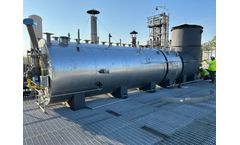
The Challenge Many industrial furnaces operate in oxygen depleted conditions, emitting high levels of ammonia, NOx, and other nitrogen-bearing compounds. This presents a significant challenge for manufacturers striving to meet air quality regulations and limit carbon output. Emission streams that contain nitrogen bearing hazardous air pollutants (HAPs) cannot be thermally treated in a ...
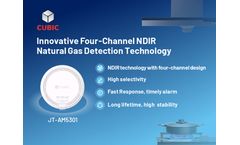
Currently, the mainstream sensor technologies, including metal oxide semiconductor (MOS), catalytic combustion, electrochemical, and non-dispersive infrared (NDIR), have different performance for natural gas leak detection. MOS sensors operate based on changes in conductivity caused by the adsorption and reaction of gases on the surface of metal ...

Since Whitebeam started supplying catalytic converters for commercial ovens about 20 years ago, we hadn’t given much thought to exactly why caustic soda damaged catalytic converters.But one day, a customer asked a crucial question:Could catalytic converters be redesigned to withstand traditional, inexpensive, and effective oven ...