
Cbod Articles & Analysis
24 articles found
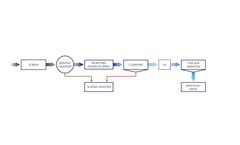
Throughout the operating life of the NTFs, the plant has consistently met permit requirements, with average effluent concentrations of 2.15 mg/L cBOD and 1.81 mg/L ammonia over the period reported. Operation and maintenance of the filters have remained straightforward, with no major repairs or retrofits required. ...

Prior Status: Average of 30 inches of sludge in the 1ST cell lagoon. Operations Flow of 300,000 gallons/day at 200/300 ppm BOD into a 3 cell system, The1ST and 2ND cell each being 450?x 450? in size, aerated with a 30 HP blower-type Hind system. The 3RD cell is a finishing pond of one million gallons. The project started in August 2001 with the introduction of four-2HP WTR Fine Bubble Diffusion ...
Solids build-up in this open anaerobic lagoon in Tennessee was hampering operations at a large US industrial food waste rendering plant. In just four months, a single application of Bio Dredger biocatalyst broke down solids, with samplings analysis showing 58% Total Solid Reduction (TSR) and 60% Volatile Solid ...
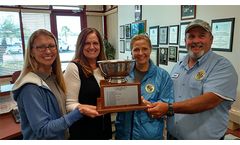
Some significant industrial users can send CBOD loads in excess of 35,000 mg/L into the treatment plant. “Our industrial loading is very diverse and includes metal treating, fiberboard construction material, food processing and dairy operations, which definitely affects the operation of our plant,” says Chief Plant Operator Pat Murphy. ...
TKN/day. Design limits were set at CBOD, 25 mg/L average; TSS, 30 mg/L average; and average ammonia ranging from 2.7 mg/L to 14.8 mg/L. ...

Topics: facultative, odor control, sludge, energy savings, sludge reduction, MLS/TSS Overview: This is a municipal wastewater treatment facility (WWTF) that serves the city. The wastewater system consists of 7 facultative ponds with initial biochemical oxygen demand (BOD) of about 550 mg/L and a continuous discharge rate of 2.8 MGD. Pond 1 is 85 acres in surface area with an average operating ...

Consistent methanol dose control is challenging when trying to meet low effluent TN and simultaneously maintaining a low effluent carbonaceous biochemical oxygen demand (CBOD). This plant is currently in full operation and in compliance with the effluent requirements. ...
PRIMARY CELL INFLUENT: Raw sewage with high carbon BOD (CBOD), high nitrogen, and high phosphorus. SOLUTION: Add SolarBee® GridBee® mixing to enhance the facultative process. ...
The City anticipates better BOD, CBOD and TSS reductions over time as sludge processing through SolarBee-induced enhanced oxidation continues. Furthermore, Pond 7 now performs very well, with independent CBOD test results showing influent waters of 170 mg/L CBOD being discharged at "non-detect" levels, outstanding for a large pond-based municipal ...

Testing capabilities include microbiological such as coliform testing, general chemistry including BOD. COD. CBOD. metals analysis using ICP, ICP-MS, and GFAA. radiological methods, organics, TCLP and whole effluent toxicity. ...
Results After eighteen months of collection system bioaugmentation treatment the WWTP has observed the following positive changes: 30% Reduction in Influent CBOD Load 14% Reduction in Effluent TSS Load 65% Reduction in Effluent Ammonia Load 31% Reduction in Gallons of Sludge Pressed Project Installed: June 2011 Plant Size: 1.63 MGO Service Objectives: Control ...
Effluent ammonia load has decreased by 50% Influent CBOD and TSS have decreased by 11% and 28%, respectively. Effluent CBOD and TSS have decreased by 22% and 19%, respectively Sludge production has decreased by 9% (based on cubic yards disposed) Summary at a Glance Project Installed: November 2012 Plant Size: 5.7MGD Service Objectives: Control ...
Over the first nine months of In-Pipe service, the average daily effluent CBOD dropped by nearly 50% - from 17 lbs/day to 9 lbs/day. In addition the average daily effluent nitrogen went from 126 lbs/day before In-Pipe, down to 86 lbs/day with In-Pipe - a reduction of over 30% compared with baseline conditions. ...
Present Conditions In addition to improving the nitrogen removal of the process, In-Pipe Technology has reduced the influent and effluent CBOD by 52% and 36% respectively. Further, due to the lower oxygen requirements of In-Pipe bacteria, the plant is saving $60,000 a year in digester aeration energy by introducing IPT's blend of facultative heterotrophic spore forming bacteria. ...

Findings show that the annual mean of the total 5-day BOD in the effluent from the polishing pond consisted of 44.92% as the algal carbonaceous biochemical oxygen demand (CBOD), 43.61% as the nitrogenous biochemical oxygen demand (NBOD), and 11.47% as the soluble CBOD. According to this study, the annual mean ratios of algal COD and 5-day ...

The final treated effluent results met all design and regulatory objectives for BRC with CBOD reduced from 8000 ppm ...

TECHNOLOGY BACKGROUND EPA-approved, optical Rugged Dissolved Oxygen (RDO) methods are quickly becoming the most convenient and widely accepted methods for determining DO, biochemical oxygen demand (BOD), and carbonaceous biochemical oxygen demand (CBOD). The standard Winkler titration has always presented drawbacks for the determination of dissolved oxygen in an ambient setting. ...
(Same air supply 125 CFM by Blowers, Two running, one standby) Estimated energy use = 6.5 Wire HP New ILEPA NPDES limits: CBOD < 25 mg/l TSS < 37 mg/l NH3 record monthly No ammonia limits established, but expected to be coming by ILEPA. ...
Influent Carbonaceous Biochemical Oxygen Demand (CBOD) load decreased 16% from 2549 lbs/day to 2132 lbs/day, and influent Total Suspended Solids (TSS) load decreased 9% from 2358 lbs/day to 2165 lbs/day. ...
However, CBOD5, total suspended solids, and total nitrogen did not vary substantially among the treatments.Keywords: CBOD, intermittent loading, nitrification, nitrogen removal, subsurface flow, treatment ...