
Refine by
Cems Data Articles & Analysis
19 articles found
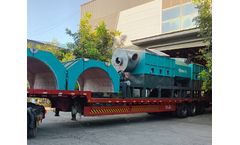
Continuous Monitoring and Reporting Continuous emission monitoring systems (CEMS) provide real-time data on particulate concentrations, gas composition, and temperature. These systems enable operators to detect deviations instantly, allowing corrective measures before emissions exceed regulatory limits. Data logging and automated reporting ...

Accurate emissions data doesn’t happen by chance. It relies on precise calibration and the field technicians who keep CEM systems running under strict performance expectations. For these technicians, addressing CEM calibration problems is a routine but critical part of the job. Knowing how to recognize and resolve the most common issues can ...
CEM systems monitor gases at the source of industrial emissions, producing data that must be both precise and defensible. The trust placed in that data, by regulators, engineers, and environmental managers alike, depends on one fundamental condition: accurate gas calibration. When calibration is neglected or imprecise in a CEM ...
Calibrating Continuous Emissions Monitoring (CEM) gas analyzers is crucial for ensuring the reliable measurement of emissions from industrial smokestacks and maintaining compliance with environmental regulations. Using a CEM calibration system can create precise and dependable emission measurements. Read our guide to understand the key steps and requirements for calibrating CEM gas analyzers with ...

The gas turbine and controls were installed and started-up in 2006. The unit was equipped with a CEMS that was certified in December, 2006. This certified CEMS provided the quality assured data that constitutes the training dataset for the statistical hybrid PEMS model. ...

While it is very achievable to aggregate data from different platforms into an Excel Spreadsheet, plant historian, or corporate data lake, how can you be sure that the underlying raw data measurement satisfies the regulatory data collection criteria? ...

Gasmet CEMS II eIs Designed for Flexible and Versatile Emissions Monitoring Gasmet CEMS II e is a continuous emissions monitoring system that is designed for flexible and versatile emissions monitoring purposes. ...

For example, if historical hourly emissions data is available for a source from a continuous emission monitoring system (CEMS), that hourly data can be paired with meteorological data from the same period to produce a much more refined modeling analysis than if fixed emission rates (usually conservative “maximum” ...

ABSTRACT: This paper illustrates how software developed for ambient Air Quality Monitoring (AQM) applications has been used to provide a readily available and field tested solution for CEM reporting requirements. Data processing to produce CEM compliance reports can be a significant task, requiring greater resource than the operation and ...

In this presentation, Doug Hatler, environmental management lecturer, industry expert and Vice President of Alliances at Enviance, Inc., will explore water resource management, including regulatory compliance management and CSR initiatives, and the role of data management technology. He will also address how organizations can better prepare for and report on regulatory ...
What will the MACT look like? What did the ICR data reveal? Can the industry comply with the rule in three years, like the Clean Air Act mandates? ...

So it is with Continuous Emissions Monitoring (CEM), which not only helps you to meet your environmental targets, but also has a critical role to play in the pursuit of operational excellence. Extractive CEM systems have traditionally been relied upon to monitor the levels of pollutants from power plant operations. ...
Continuous Emissions Monitoring In a departure from the proposed rule, units with capacities equal to or greater than 100 MMBtu/hr are not required to install and operate a continuous emissions monitoring system (CEMS) for CO. However, an oxygen CEMS is still required. Compliance with the CO (and dioxin/furan) limit will be demonstrated by maintaining the 12-hour ...
For instance, EPA requires mercury CEMS on kilns while virtually all of the mercury CEMS in the U.S. that are used for compliance demonstration purposes are installed at power plants. ...
The following parameters, with compliance ranges established during performance tests, must be monitored using CPMS: Wet Scrubber – Pressure drop, liquid flow rate, pH (for HCl control) Dry Scrubber – Sorbent injection rate Electrostatic Precipitator (with wet control systems) – Voltage and secondary current or total power input Continuous Emissions Monitoring For units ...
The converted gas sample is then analyzed in a secondary NOx CEMS and the difference between the NOx readings of the primary and secondary CEMS is calculated by the Data Acquisition and Handling System (DAHS) to determine ammonia slip. ...
Question: Will my facility be required to install a CEMS? Answer: The rule requires direct measurement of emissions from certain units that already are required to collect and report data using CEMS under other programs (e.g., ARP, NSPS, NESHAP, SIPs). ...
CEMS data are stored in the plant process data historian along with other process variables (flow rates, temperatures, etc.) required to perform calculations necessary to determine compliance with all requirements. The CEMS data quality must comply with the standards specified under the New Source Performance ...

This paper presents the challenges that LCR faced in meeting the NOx reduction rules requirements; the reasons that LCR selected a real-time process historian-based emissions data management solution, and the benefits that LCR has been able to realize. Even though this paper focuses on NOx, LCR selected a system that was fully capable of handling the requirements for any other ...