
Refine by
Chemical Labeling Articles & Analysis
130 articles found
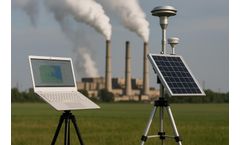
In AERMOD View, the Pollutant Type list is accessible through the Control Pathway's Pollutant / Averaging options. Many pollutant types serve as labels with no chemical transformations; however, certain pollutant names or combinations influence how AERMOD computes outputs. ...

In modern laboratories, efficiency, accuracy, and traceability are non-negotiable. As labs handle increasingly complex workflows and growing sample volumes, manual data entry and paper-based tracking systems are no longer sustainable. One powerful way to improve operational performance is by integrating barcoding technology with a Laboratory Information Management System (LIMS). This integration ...

The affinity between biotin and streptavidin can facilitate the detection of biotinylated probes using labeled streptavidin conjugates, leading to improved sensitivity and specificity in assays. ...

Soil and Land Contamination Standards• Define limits for heavy metals, chemicals, and pollutants in the soil to prevent land and groundwater contamination.• Example: The Comprehensive Environmental Response, Compensation, and Liability Act (CERCLA) (Superfund) in the U.S. addresses contaminated sites.5. Occupational and Environmental Health Regulations• Ensure worker safety ...

No Need for LabelingUnlike some spectroscopic techniques, CD does not require any chemical labeling of the sample, which can avoid the risk of possibly changing the properties of the protein itself.3. ...

Labeled quantification and label-free quantification are two major quantitative strategies in proteomics for comparing protein abundance under different samples or treatment conditions.Labeled QuantificationIn the sample preparation stage, a certain labeling technique is used to chemically label proteins or ...

TMT (Tandem Mass Tag) is a technology widely used in quantitative proteomics. TMT is a chemical labeling method used for quantitative proteomics. Peptide segments from different samples are labeled with different isotopic tags. ...

These techniques are used for quantitative analysis of protein expression levels in different samples, especially suitable for comparing the proteome composition of biological samples under different conditions, such as health and disease states, different biological treatment conditions, etc.Basic Principles of TMT and iTRAQ1. Chemical LabelingBoth TMT and iTRAQ technologies use ...

This technology allows researchers to quantify proteins in multiple samples simultaneously in mass spectrometry analysis using heavy-labeled chemical tags. The following are some key application examples of TMT technology.Discovery of BiomarkersIn disease research, TMT technology is used to identify and validate potential biomarkers. ...

iTRAQ (Isobaric Tags for Relative and Absolute Quantitation) and TMT (Tandem Mass Tag) are two commonly used mass spectrometry labeling techniques for protein quantification analysis in proteomics research. These techniques quantify protein expression levels in different samples by using chemical labels and are particularly useful for comparing ...
The term "label-free proteome" generally refers to a group of proteins in proteomic research that do not rely on any form of chemical or isotopic labeling for protein quantitative analysis. Their analysis and quantitation depend on technical means that do not involve chemical labeling, such as mass ...
Proteomics is the study of the complete set of proteins within a cell, including their expression, function, and regulation. In proteomics research, "labelled" and "label-free" are two main methods.Labelled ProteomicsIn this method, proteins or their fragments are chemically labelled, usually for quantification. ...
TMT (Tandem Mass Tags) technology is an advanced method used for protein quantification analysis in proteomics research. TMT labeling involves using a series of chemically different weight tags that can bind to the N-terminus and side chains of peptides. ...
Non-DestructiveThere is no need for chemical modification or labeling of proteins.4. Time-Resolved AbilityIt can observe dynamic changes in protein structure over time.ApplicationHDX-MS has a wide range of applications in drug development, protein interaction research, and understanding protein folding and conformational changes. ...
This technique uses culture media containing light and heavy isotope-labeled amino acids to label cells separately, resulting in stable isotope labeling of intracellular proteins. ...
Among them, enzymatic labeling and chemical labeling after sample processing is the current research focus.1. ...
Its advantage is that these isotopically labeled peptides have the same physicochemical properties, but predictable differences in mass. Isotopes can be naturally introduced through metabolic pathways or can be chemically labeled and "read". The latter is called isobaric labeling, and its detection principle is that the mass of ...
Firstly, it is a non-invasive method that does not require any chemical modification or labeling of the sample. Secondly, it can be experimented in almost all solvent environments, including water, organic solvents, and acidic and alkaline environments. ...
These specially labeled amino acids, though chemically identical to their natural counterparts, possess isotopic substitutions that make them easily distinguishable and traceable within biological systems. ...

TMT (Tandem Mass Tag) LabelingTMT is a chemical labeling method used for quantitative proteomics. Peptides from different samples are chemically labeled with different isotopic labels. ...