
Refine by
Chemical Release Articles & Analysis
270 articles found

It is the closures, lost recreation revenue, health advisories, and reputation damage that follow. Chemical algaecides act fast, but they can trigger closures, permits, toxin release, and repeat blooms. ...
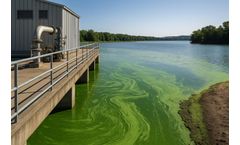
Source-water prevention is preferred to avoid toxin release and associated disruptions.Source Water ManagementStrategic intake management: Use deeper or cleaner intake points during blooms; some utilities can blend sources to dilute impacts. This requires infrastructure flexibility and reservoir-specific hydrodynamics.Watershed nutrient reduction: Long-term reductions via ...

CBS News Boston coverage in April 2026 highlighted community restoration and safe swimming conditions, underscoring the impact of early-season deployment, real-time water quality monitoring, and ultrasonic bloom prevention that avoids chemical treatments. From Crisis to Confirmation Chilmark Pond has been a site of nutrient loading since the 1980s; by 2014 nitrogen levels were at ...

Textile recycling Innovative technologies in the production of recyclable textiles Every day, large amounts of damaged recyclable textiles and other materials are discarded worldwide, contributing to pollution either because of their long decomposition time or because they release harmful chemicals. This waste stream includes pre-consumer textile waste —factory ...
When they come into contact with a pollutant, it is more than just “cleaning the air”: there is deposition, absorption, chemical transformation, and sometimes even release of a given pollutant. ...

Introduction: From Leak Detection to Industrial Transformation Optical Gas Imaging (OGI) has long been associated with gas leak detection, especially in the oil and gas sector. But over the past decade, OGI technology has quietly evolved into something much broader — a cornerstone of industrial innovation. Modern Camera OGI systems are no longer limited to methane or hydrocarbon ...
ByOPGAL
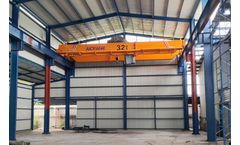
Dust, Sand, and Contaminants Industrial cranes are often exposed to dust, sand, or chemical contaminants, which can affect their operation:Dust and Sand: In desert or mining environments, dust can infiltrate motors, gearboxes, and hoists, increasing wear and reducing efficiency. ...

Unlike their N-linked counterparts, O-glycans: Lack consensus sequence motifs, making prediction nearly impossible Feature eight distinct core structures with vastly different elongation patterns Often cluster in heavily glycosylated protein domains, creating steric hindrances Resist simple enzymatic release methods, necessitating chemical approaches The ...

Furthermore, plastic waste in the oceans releases harmful chemicals into the water, further degrading marine ecosystems and contributing to biodiversity loss. ...

However, the negative impact begins much earlier: excessive water consumption during manufacturing, the use of toxic substances in production (such as dyes and chemical residues), the release of microplastics when washing low-quality textiles, and packaging waste used to protect garments during transportation and storage. ...

A busy kitchen during dinner service can produce particle levels similar to standing near a busy road. Guest rooms trap chemicals released by furniture, carpets, and mattresses. Newly renovated rooms are particularly concerning, often containing twice the recommended levels of formaldehyde from new furnishings. ...
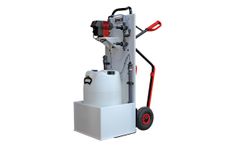
At the heart of the system is the Magdos LDp diaphragm dosing pump, which injects a calcium hypochlorite solution into the contaminated water from a container via a ten-metre PVC hose. The chemical releases hypochlorous acid (HOCI), which kills microorganisms through oxidation. ...

As the biomass is heated to temperatures typically ranging from 300°C to 800°C, a series of complex chemical reactions occur. The biomass decomposes, releasing volatile gases like methane, hydrogen, and carbon monoxide, as well as a solid residue known as biochar. ...
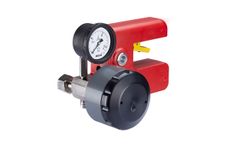
At the heart of the system is the Magdos LDp diaphragm dosing pump, which injects a calcium hypochlorite solution into the contaminated water from a container via a ten-metre PVC hose. The chemical releases hypochlorous acid (HOCI), which kills microorganisms through oxidation. ...
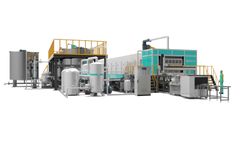
The process eliminates the need for energy-intensive procedures like chemical pulping or bleaching, which are common in the production of new paper. ...
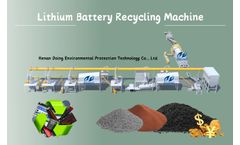
Environmental Protection: Improper disposal of lithium batteries can lead to the release of toxic chemicals into the environment, contaminating soil and water. ...
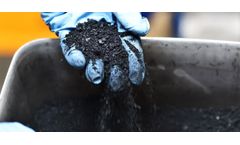
Waste tyres are a major source of landfill waste, and incinerating tyres contributes to air pollution and the release of toxic chemicals. Pyrolysis, on the other hand, not only provides an eco-friendly alternative to these disposal methods but also produces valuable byproducts that can be used in various industries. ...
Many of the chemicals in play at chemical industries can be directly or indirectly harmful to living organisms. ...
ByOPSIS AB

Enzymatic ReleaseProteins or peptides are treated with specific glycosidases (like peptide-N-mannosidase) to release glycans.2. Chemical ReleaseIn some cases, chemical methods (like β-elimination reactions) can also be used to release O-glycosylated glycans.Separation and Purification of Glycan Chains1. ...

After the sample is collected, non-biological components are removed by physical methods such as filtration, and then the microbial cells are lysed by chemical or physical methods to release and enrich the proteins.Since there are many types of microorganisms and the abundance of proteins varies greatly, the difficulty of protein extraction is high, and it is ...