
Chlorella Articles & Analysis
45 articles found
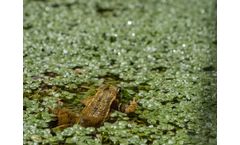
The ocean is home to many microalgal species, including Chlorella vulgaris, which are highly efficient at producing oxygen. Among phytoplankton, Prochlorococcus, the smallest photosynthetic organism, produces the most oxygen in the ocean due to its abundance and ...

Algae (photosynthetic organisms) can be found in almost any aquatic environment, such as ponds on golf courses. Depending on the type and level of growth, golf course pond algae can be beneficial and challenging. Therefore, here are some critical points about golf course pond ...
In the case of wastewater, even if the treated water meets the discharge standards, there will be swimming algae such as chlorella, which will make the water colored. In addition, due to the color of the source water, it is also common for the effluent to be colored, such as colored wastewater from printing and dyeing plants and coating wastewater from paper mills.After the ...

Results and Discussion The kinetic experiments for Chlorella were run in duplicate. The data show that no measurable flocculation for Chlorella occurred with or without preozonation (i.e., little, if any, change in the cell concentration N time). ...

li] Of the microalgae being looked at, two rise to the top; Chlorella vulgaris and Haematococcus pluvialis, Chlorella is used in biofuels, animal feed, aquaculture, human nutrition, wastewater treatment and bio-fertilizer in agriculture. ...
ByAlgatech

The food system will grow food grade sample of dried Chlorella vulgaris (Cv) for non-animal proteins. Wheatland County, Federation of Canadian Municipalities - Green Municipal Fund, National Research Council of Canada, In collaboration with JMP Engineering, BRT Consulting, Bow Ridge Fabrication and Residents of ...

A mixed culture of oleaginous yeast Lipomyces starkeyi and wastewater native microalgae (mostly Scenedesmus sp. and Chlorella sp.) was performed to enhance lipid and biomass production from urban wastewaters. ...
In this work, Microcystis aeruginosa (toxic cyanobacteria) and Chlorella pyrenoidosa (typical green algae) were chosen as model microalgae to verify this hypothesis. ...
Present study is focused on assessment of wastewater grown indigenous microalga Chlorella sp. for fuel quality parameters. This was successfully grown in secondary treated waste water diluted with tap water (25% dilution) in glass house. ...
In this research removal of NH3-N, NO3-N and PO4-P nutrients from municipal wastewater was studied, using Chlorella vulgaris, Pseudomonas putida, Bacillus cereus and an artificial consortium of them. ...
A microalgal strain found in the effluent treatment plant of a fertilizer industry in Mumbai, India was systematically adapted to remove up to 700 ppm of ammoniacal nitrogen from industrial wastewater, which is nearly four times higher than the ammonium tolerance reported in the literature as well as other algal strains tested in our laboratory. 18S rRNA sequencing revealed the strain to be ...
A locally isolated microalga, Chlorella sp., was grown to determine the effect of temperature, aeration rate, and cultivation time on simultaneous biomass production and nutrient removal from piggery wastewater using central composite design (CCD). The most important variable for the biomass productivity of Chlorella sp. was aeration rate, while that for lipid ...
Algae inactivation and algal metabolic pollutant removal of Chlorella and Duneliella salina from seawater by the Fe-ACF electro Fenton-like process has been studied. ...
A novel anion exchange resin, quaternary ammonium–Chlorella vulgaris (QACV), was prepared by introducing quaternary ammonium groups onto dried Chlorella vulgaris as base material. ...

Toxicity estimates were derived for six tropical freshwater species (Chlorella sp., Lemna aequinoctialis, Amerianna cumingi, Moinodaphnia macleayi, Hydra viridissima, and Mogurnda mogurnda). ...
Chlorella sp. is often used in the treatment of wastewater to produce lipids, a practice which could go beyond wastewater treatment and be used to generate green energy. ...
In this work, the cultivation of microalgae has been examined in non-recirculated water (NR) and recirculated water systems (R). The growth of Chlorella zofingiensis and the nutrient removal of DWW have been recorded. ...

Examples of organism derived odors are: Species Moderate Abundant Cyanophyceae (Blue Green) Anabaena Grassy Septic Aphanizomenon Grassy Septic Microcytis Grassy Septic Oscillatoria sp (filamentous) Grassy Musty Chorophyceae (Green) Chlamydomonas ...
In contrast, activated sludge treatment without PAC produced an effluent that significantly inhibited (>50%) (i) the bioluminescence by Photobacterium leiognathi (ToxScreen³ test kit), (ii) the photosynthesis by the green algae Chlorella vulgaris (LuminoTox SAPS test kit), and (iii) the particle ingestion by the crustacean Thamnocephalus platyurus ...
Algal monocultures (Chlorella sorokiniana and Botryococcus braunii) and algal communities native to clarifiers of a wastewater treatment plant were batch cultivated in (1) clarified effluent following a biochemical oxygen demand (BOD) removal reactor post-BOD removal clarified effluent (PBCE), (2) clarified effluent following a nitrification reactor post-nitrification clarified ...