
Refine by
Chlorine Level Articles & Analysis
109 articles found
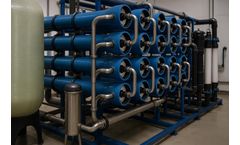
Elevated hardness, alkalinity, or silica levels indicate a risk of scaling, which reduces permeate flow and increases required operating pressure and cleaning frequency. ...

How biofilm control strengthens food safety programs and supports Salmonella and E. coli risk reduction Introduction: Egg washing as a critical food safety control point Egg washing is a foundational food safety step in commercial shell egg production, designed to remove visible debris and reduce microbial contamination on eggshell surfaces prior to packaging or breaking. However, while ...
Abstract The certification of Jenfitch's JC 9465 by the Washington State Department of Agriculture (WSDA) under the USDA National Organic Program (NOP) represents a notable development in the landscape of sanitizing agents approved for use in organic food-processing environments. As organic production expands nationally, processors face increasing limitations regarding allowable sanitation ...
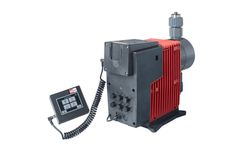
The multi-channel controller also supports water treatment operations, using its sensors to monitor various water parameters including chlorine, pH value, REDOX and conductivity. Dosing pumps can be controlled via digital and analogue outputs (0/4-20 mA and relay/optocoupler) in order to ensure optimal water quality. ...
Yet, many pool operators focus solely on pH and chlorine levels, overlooking how gases like carbon dioxide (CO2), oxygen (O2), nitrogen (N2), and chlorine (Cl2) influence water chemistry. ...
Advancing Swimming Pool & Hot Tub Spa Sanitation Treatments: The Benefits of Advanced Oxidizing Processes Technology Agent HydroTreat™ Over Conventional Treatment Methods Executive Summary This white paper explores the technological and environmental advantages of HydroTreat™, an advanced oxidizing processes (AOP) product for swimming pool and hot tub sanitation, emphasizing why ...
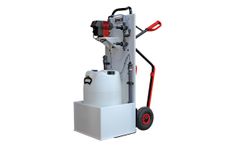
” SAFETYCHLORMIX enables chlorine production of up to 650 g/h SAFETYCHLORMIX is available in different performance levels, which enable chlorine production from 18 to 650 g/h. The delivery rate varies between 0.5 l/h and 15 l/h. The chlorine granulate is available in two package sizes: 25 or 60 litres. ...
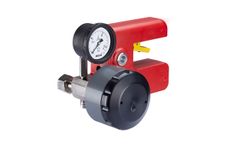
Lutz-Jesco has developed the Safety Mix mobile emergency chlorination system for just these emergencies. T. Lutz-Jesco will also be presenting its new VakuStop safety shut-off valve, which makes handling hazardous chlorine gas safer. ...

Chemical properties: Sensors can measure pH levels, dissolved oxygen levels, conductivity, and other chemical parameters that indicate water quality. ...
For instance, an increase in turbidity levels may indicate the presence of pollutants or sediment runoff, signaling the need for remedial measures. ...
By continuously monitoring parameters such as chlorine levels, microbial contamination, and chemical pollutants, these sensors help maintain compliance with water quality standards and enable early detection of potential health hazards. 3.3 Agricultural Water Management Water quality sensors are valuable tools in agricultural water management. They provide ...

In this blog post, we will discuss the eight parameters that are commonly tested to determine water quality. 1. pH Level The pH level of water is an indicator of its acidity or alkalinity. The pH scale ranges from 0 to 14, with 7 being neutral. A pH level below 7 indicates acidic water, while a pH level above 7 indicates alkaline ...
Even when the organics themselves are not a health hazard, when combined with chlorine they may lead to the formation of harmful disinfection byproducts (DBPs). Reducing the concentration of organics via various treatment processes, such as enhanced coagulation and activated carbon adsorption, is one of the most effective ways to reduce DBP formation during the ...
Once the microbes have been killed, the remaining chlorine levels are monitored to ensure that the water is still safe for consumption. Residual chlorine levels should be kept within specific limits to ensure effective killing of microorganisms, but not to levels that may cause health problems.Residual ...

Chemical-based technologies such as free chlorine are known to form treatment by-products which are harmful to the environment1,2 and as a result, free chlorine levels are often capped in discharge permits, requiring operators to consistently monitor chlorine use and possibly apply additional dechlorinating chemicals to stay ...

Value chain innovations in emerging Health Tech, Smart City and Greentech industries addressing the challenges of smart urban environment. Today’s urban systems need to adapt to a growing population in order to sustain and provide a healthy, smart and green environment. Smart technologies, solutions and innovations are needed. The EU-funded URBAN TECH project will support the acceleration ...
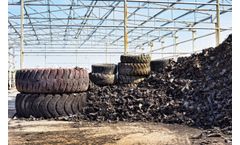
Recycling of scrap tires at element level that includes some form of chemical decomposition or transformation is different than the mechanical process. ...
This article covers information on chlorine gas, its sources in the ambient air, permissible levels, health and environmental impact, possible corrective measures, the need for chlorine monitors as well as different methods of Cl2 monitoring. ...

A critical limit is a range of maximum and minimum values used as a reference in controlling a critical control point (CCP) to reduce or eliminate any potential hazard. Critical limits must be measurable, observable, and can be monitored during the actual operations for the control of food safety. Establishing a critical limit is based on the identified potential hazard and CCPs of your HACCP ...
ByFoodDocs
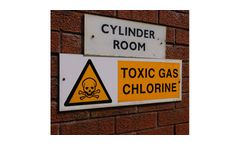
Monitoring Chlorine According to The Occupational Safety and Health Administration, the permissible exposure level for chlorine is 1 part-per-million (ppm), which should not be exceeded at any time. Chlorine is considered to be immediately dangerous to life and health when exposure levels reach 10 ppm. ...