
Refine by
Chlorophyll Fluorescence Articles & Analysis
27 articles found
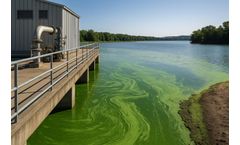
Essential parameters include chlorophyll-a (total algae), phycocyanin fluorescence (cyanobacteria-specific), dissolved oxygen profiles, temperature stratification, and nutrient concentrations. Chlorophyll-a above 10 µg/L and phycocyanin above 5 µg/L indicate elevated risk; dissolved oxygen below 2 mg/L signals potential internal phosphorus ...

How Algae Produce Oxygen Algae, like land plants, contain chloroplasts with chlorophyll pigments that absorb sunlight. Chloroplasts are found within plant cells and algal cells, and are responsible for photosynthesis. Algae, like green plants, use chlorophyll to capture sunlight and produce oxygen. During daylight hours, these microorganisms transform carbon dioxide and water into glucose for ...

By measuring the absorbance of light at specific wavelengths, it can quantify pigment concentrations such as chlorophyll a, chlorophyll b, and carotenoids. The primary steps include: l Extracting pigments using solvents like acetone or ethanol. ...

One of India’s leading crop protection companies has harnessed the power of remote sensing technology to enhance its interactions with farmers. By offering valuable insights into crop management, covering aspects such as nutrition, irrigation, and pest and disease control. The company has improved the efficacy of crop protection strategies and strengthened its relationships with the farming ...

Interestingly the efficiency of photosynthesis follows an opposite trend to the quantum yield of fluorescence from chlorophyll in the leaves.We are lucky to have some holly just outside our factory in Scotland which makes us feel Christmassy all year round. Taking advantage of this we have measured the fluorescence quantum yield of its leaves as ...

With irrigation being used in many spheres of life and food production methods getting diversified, it is not surprising that research on this topic is getting more specialized. Procedures for analysis, which were restricted earlier to big institutions, need to be widely available so that their reach is extended and science will benefit from more in-depth studies. An increasing number of ...
Irrigation is essential to increase food production. However, competing needs and increasing drought makes water for irrigation scarce. Therefore, new methods and strategies are continuously being tested by scientists to improve food production, accompanied by better water use efficiency. This article will examine how modern field tools are helping in this venture. Irrigation Methods According ...
As a result, many vital metabolic processes are affected, including Photosynthesis, by changing photosynthesis electron transport, chlorophyll content, and fluorescence Water-cycle Levels of reactive oxygen species generation at the cellular level Antioxidant defences Root to canopy ratio Yield response Salinity affects yield in crops gradually. ...
There is no denying the importance of light for the growth of plants; however, there are many other environmental factors—such as temperature, moisture and nutrient availability, and soil type–that also influence plant growth. These factors do not act in isolation and are, many times, correlated. So, it is interesting to see how light works in combination with other resources to ...
With the pressure to increase food production, every agricultural practice that can be optimized for improving crop yield is under scrutiny; therefore, micronutrients, which are important for crop health and growth, are receiving more attention. Agronomists are increasingly studying different treatment methods to establish the easiest and most cost-effective way to improve micronutrient ...
They need carbon dioxide (CO2) in the air, which enters the plant through leaves, and water (H2O) from the soil, which roots absorb. Light captured by chlorophyll in the leaves combines water and carbon dioxide to produce glucose (C6H12O6) and oxygen (O2). ...
They need carbon dioxide (CO2) in the air, which enters the plant through leaves, and water (H2O) from the soil, which roots absorb. Light captured by chlorophyll in the leaves combines water and carbon dioxide to produce glucose (C6H12O6) and oxygen (O2). ...

Ultrasound can inhibit cyanobacterial growth through rupturing cells, but this pathway frequently has the risk to release intercellular toxin (e.g., microcystin). Depressing photosynthesis without cell disruption may provide a new strategy to control cyanobacterial blooms using ultrasound, especially Microcystis blooms. In this work, Microcystis aeruginosa (toxic cyanobacteria) and Chlorella ...

Exposure to copper and cadmium caused changes in internal cell granularity and increased chlorophyll a fluorescence. Lead, zinc, and nickel had no effect on any of the cellular parameters measured. ...
Long‐term effects on photosynthesis, chlorophyll a fluorescence, pigment content, community tolerance and bacterial carbon utilization were studied after exposing periphyton for 17 days in flow‐through microcosms to 0.316 ‐ 10 000 nM TCS. ...

The ALGcontrol offers on-line monitoring of different kind of algae through fluometric a (fluorescence) technique. Fluorescence is the property of some atoms and molecules to absorb light at a particular wavelength and to subsequently emit light after a brief interval. ...

Together with several universities and research institutes, we discovered that fluorescence measurements of algae pigments and the measurement of different water quality parameters (Dissolved Oxygen (DO), pH, Redox and Temperature) combined can determine which type of ultrasonic treatment is the most effective in each specific situation. ...
Here, the combined effects of BPA and Cd on the photosynthesis, chlorophyll fluorescence and content of soybean seedlings were investigated using non‐invasive technology. Our data show that the combined treatment of 1.5 mg/L BPA and 0.2 mg/L Cd synergistically improved the net photosynthetic rate (Pn), initial fluorescence (F0), maximal ...
Pulse Amplitude Modulation (PAM) fluorometry, based on chlorophyll a fluorescence, is a frequently used technique in algal bioassays to assess toxicity of single compounds or complex field samples. ...
The toxic effects of cadmium (Cd) on the green alga Chlorella vulgaris were investigated by following the response to Cd of various toxicity endpoints (cell growth, cell size, photochemical efficiency of PSII in the light or ФPSII, maximal photochemical efficiency or Fv/Fm, chlorophyll a fluorescence, esterase activity and cell viability). These toxicity ...