
Refine by
Clarification And Filtration Articles & Analysis
70 articles found
Abstract Nylon 66 filter membrane is a high-performance microporous filtration material widely used in pharmaceuticals, food and beverages, electronics manufacturing, environmental protection and other fields. It features high mechanical strength, good chemical resistance, excellent thermal stability and low protein adsorption, playing a critical role in sterile ...
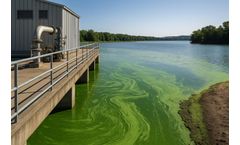
Early recognition hinges on monitoring with parameters described below.HAB Development Stages in ReservoirsStage 1 — Nutrient accumulation: Phosphorus and nitrogen accrue in water and sediments from agricultural runoff, urban runoff, wastewater discharges, and atmospheric deposition, setting the stage for growth.Stage 2 — Thermal stratification: Seasonal layering traps nutrients in the ...
Most treatment systems are designed to remove the majority of contamination early in the process. Solids are settled. Particles are filtered. Many dissolved metals are reduced along the way. For years, that level of treatment satisfied most discharge permits. Stricter mercury limits change the design challenge. When discharge thresholds fall into the parts-per-trillion range, the remaining ...
Introduction Treatment of water is the backbone of safe supply. Utilities select methods of treatment based on source risks, then verify performance with monitoring against standards. When teams design water system treatment around actual hazards, plants run efficiently, taste and odor issues drop, and compliance stays steady during blooms and storms. Below we compare these different treatment ...

Oil and Gas: Well screens, sand control, process water filtration. Food and Beverage: Raw material filtration, product clarification, process stream screening. ...
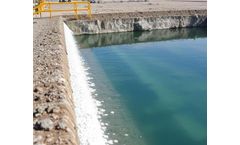
Are you a plant manager dealing with scale deposits buildup in your boiler feed water? Maybe you are a consulting engineer trying to optimize a client’s cooling tower water treatment. Or, perhaps you’re working at an industrial wastewater treatment plant. Silica can secretly wreak havoc in many industrial applications. Addressing this invisible issue can save your equipment. It will ...
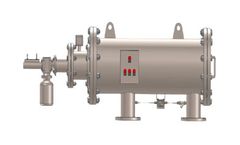
APPLICATION: Clarification and recovery application. Bulk filtration in Pharmaceutical industry. Sugar syrup filtration Clarification of fruit juices in food processing Clarification of fruit juices in food processing Fining and Polishing Treatment in Winery Primary DE Filtration in brewery Cell ...
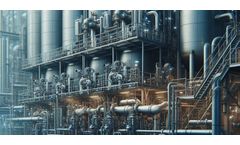
In an era where water scarcity and environmental regulations are tightening their grip, innovative industrial water purification systems for heavy industries are becoming more important to stay competitive and sustainable. Heavy industry companies like those in manufacturing, mining, oil/gas, steel production, petrochemical processing and power generation rely heavily on large volumes of water ...

Plant Type Water Treatment Plant Client ARAMCO Sector Industrial Country Saudi Arabia Capacity 185,000 m3/day Technology Degassing and water treatment (clarification, filtration and chemical dosage) Participation of AWS In The SPV 51% Type of Project 25-year contract under the BOOT scheme Investment US$ 400 million Status Under construction ...

In general, a basic cooling tower water treatment system typically includes some types of: ✭ clarification ✭ filtration and/or ultrafiltration ✭ ion exchange/softening ✭ chemical feed ✭ automated monitoring Filtration and Ultrafiltration The Filtration and Ultrafiltration are the most crucial steps in the water treatment ...
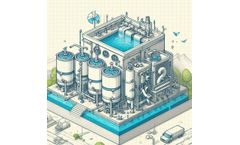
Imagine a world where wastewater treatment is no longer a centralized, energy-intensive process. A world where communities, both urban and rural, can take control of their wastewater management and reap the benefits of a more sustainable, cost-effective solution. Well, that world is here, and it’s all thanks to decentralised wastewater treatment. I know what you’re thinking – ...

As scarcity becomes a growing reality, innovative responses are needed to stem the tide of pollution. Enter eco-friendly natural bio polymers for water remediation, promising to rewrite the rules of water treatment, seamlessly replacing antiquated methods with a conscious focus on environmental sustainability. Natural bio polymers, derived from renewable sources such as plants, microorganisms ...
Ever turned on the tap and wondered what journey your water took to reach you? Well, it’s quite a story. From nature’s basins to our communities and businesses, every drop of water embarks on an incredible voyage. Integral in this expedition are the most common water treatment methods. Now imagine if that pristine stream could speak – oh, the tales it would tell! About ...
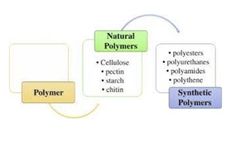
Divalent cations often act as bridges between negatively charged surfaces, which promote agglomeration into larger flocs easily separated using sedimentation, clarification or filtration methods. Selecting an appropriate weak electrolyte polymer requires careful consideration since it must effectively treat the water while meeting environmental standards when ...
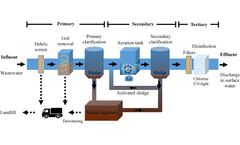
This sustainable and eco-friendly solution not only enhances primary and secondary clarification effectiveness but also aligns with sustainability goals. This is a key consideration as organizations strive to reduce their environmental impact. ...
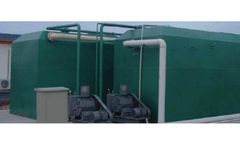
These treatment chemicals will combine the suspended solids and small metal particles in the water into large clumps, making it easier to eliminate with clarification and post filtration. 3. Added Chemicals Even though coagulants, flocculants, and pH adjustment chemicals are the primary chemicals for treating mining wastewater, it's sometimes necessary to use ...
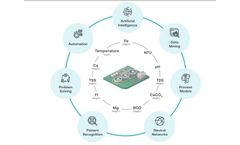
This is usually achieved by processes such as clarification, where colloidal particles are settled, and removed by sedimentation or filtration. Clarification requires a coagulation and flocculation process to allow small, suspended particles to floc together thus becoming larger, settling more rapidly. ...

The water treatment plant had coagulation, flocculation, clarification, filtration (including a layer of manganese dioxide filter media). ...
ByCoftec
Under these conditions manganese is oxidised to insoluble forms which can be easily removed from the water by coagulation, clarification, and filtration. In the hypolimnion layer, DO is depleted and bacteria obtain oxygen through Manganese ion reduction, thus releasing dissolved Mn+2 into the water. ...
ByCoftec
These systems can also be used for water reuse purposes too. Sustainable clarification is typically used in one of the primary steps of these treatment systems. ...