
Refine by
Clarifier Aeration Articles & Analysis
22 articles found
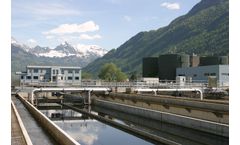
For example, conventional activated sludge uses large aeration basins and clarifiers, while MBRs trade higher capital for a much smaller footprint and higher effluent quality. ...

From larvae to full-blown swarm, here’s how these pests thrive—and how to stop them in their tracks. What are Midge Flies? The term midge flies or midges, refers to several species of tiny non biting flies. These mosquito like insects are often seen swarming around wastewater treatment plants and sewage lagoons because it is an ideal environment for their larvae, often called ...
Foaming is a common problem in wastewater treatment and can occur in multiple processes (i.e., clarifier, aeration basin, aerobic digester) within a plant. Not only can foaming create hazardous working conditions for operators, but it also hinders the performance of treatment plants. ...

.- Sand trap as ventilated sand and fat catcher or round sand trap.- Primary clarifier as rectangular or round basin.- Aeration as continuous flow or SBR with common container shapes.- Sludge treatment as anaerobic treatment or aerobic stabilization.In AD92 we have revised the databases and made them clearer. ...
Information can be utilized to more effectively dose coagulant chemicals to improve BOD and TSS removal efficiency at primary clarifiers or improve control of aeration rate and recycle ratio in activated sludge processes.For treatment plants that are prone to organic loading spikes, such as industrial wastewater treatment plants, municipal wastewater plants ...
Monitoring organic loading ,via rapid or real-time BOD/COD measurement, early in the municipal wastewater treatment process empowers you to: Detect and identify industrial discharge events Optimize chemical addition for incoming wastewater COD/BOD, decreasing the potential for under- or overdosing Improve clarifier performance, increasing sludge quality and reducing handling ...

The basin, with a diameter of 40 meters, is divided into a primary clarifier and an aeration basin and covers a total area of 1,200 square ...

Most successful winery wastewater treatment systems include proper primary screening, a robust active aeration system followed by a clarifier, or membrane barrier to separate the treated effluent from the biological process. ...

There are five additional major structures, including a new aeration basin, stabilization basin, clarifier, a bio-tower and ultraviolet light channel structure. ...

PROJECT DETAILS LOCATION Sunrise Beach, Missouri CUSTOMER City of Sunrise Beach SOLUTION Packaged Wastewater Treatment TECHNOLOGIES Advanced extended aeration with nitrification-denitrification and rapid sand tertiary filtration Two treatment trains can be used individually, or together to handle much higher flow during summer months Background Sunrise Beach, a small ...
The municipal sewage system and waste water treatment plant consists of: couple kilometers of sewer line from factory to WWTP, lift station, primary sedimentation tank> aeration tanks> secondary clarifiers and sludge dewatering department. ...

Large amounts of suspended solids regularly overflowed from the secondary clarifier and the aerated lagoon had a scum layer of about 20cm on top. ...

The foam can reach three inches in depth reducing the efficiency of the surface aerators and causing odors. The treatment system consists of primary filtration and an SBR aeration tank/secondary clarifier. Objective The primary objective is to reduce the foam in a cost effective manner without severe reduction in aeration ...
Aeration can be “conventional rate” based on mechanical aeration, or “extended rate” based on diffused aeration. ...

Spray nozzles were strategically placed to address problematic areas such as the aeration basin, clarifier, pulp dryer exhaust stack and exhaust fans for the roof and windows. ...

DAF with aluminum sulfate and anionic flocculant is used to flocculate and float TSS and FOG. After that water is aerated and clarified for foam removal of some proteins. The effluent is then treated with zeolite/sand/anthracite filters. ...
Waste water from the processing plant is aerated and clarified. Thickened sludge from the clarifier is conditioned using polymers prior to dewatering on a 2-meter wide Komline-Sanderson Kompress - Belt Filter Press Model G-GRS (Photo 1 background). ...

The initial treatment consisted of a total of 50 lbs of Sewper Rx, distributed between the aeration basin and the secondary clarifiers. Within 30 days an improvement in water quality was noted, but the plant was still marginally above its BOD and TSS limits. ...
Large amounts of suspended solids regularly overflowed from the secondary clarifier and the aerated lagoon had a scum layer of about 20cm on top. ...

The upgraded plant replaces an existing aerated lagoon system, while utilizing part of the existing system. The plant configuration includes a preliminary anaerobic lagoon for flow equalization and sedimentation, fine screening, an aeration tank with a HRT of 3 hours, secondary sedimentation and gravitational sand filtration. The aeration tank is ...