
Refine by
Clarifier Efficiency Articles & Analysis
12 articles found

Clean water treatment needs more innovative tools. Today, many facilities look for systems that deliver fast results without chemicals. Therefore, ultrasonic technology has become a powerful option. It improves tank clarity, reduces manual work, and boosts operational stability. Most importantly, it transforms how treatment plants handle algae. The Ultrasonic algae clarifier tank approach is now ...
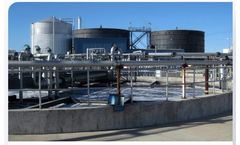
Primary Treatment The objective of primary treatment is to allow organic solids to settle to the bottom of the primary clarifier while simultaneously allowing greases and oils to rise to the surface. ...
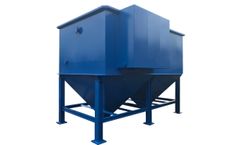
These devices are designed to improve the efficiency of sedimentation and solid separation, allowing for clearer and cleaner water while occupying a smaller footprint than traditional clarifiers. Whether in municipal water treatment plants, industrial wastewater facilities, or power generation stations, lamella clarifiers play a crucial role in ...

Information can be utilized to more effectively dose coagulant chemicals to improve BOD and TSS removal efficiency at primary clarifiers or improve control of aeration rate and recycle ratio in activated sludge processes.For treatment plants that are prone to organic loading spikes, such as industrial wastewater treatment plants, municipal wastewater plants ...
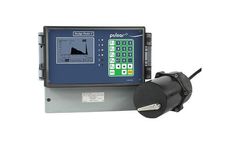
In the wastewater treatment process, the primary clarifier is designed to dispose of floatable solids from the surface by skimmers, while allowing the heavier and settleable solids to form a layer of sludge at the bottom of the clarifier. ...
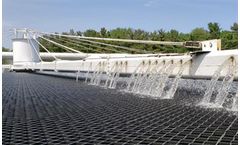
Trickling filters have proven to efficiently remove pollutants from wastewater since their inception, earning recognition as a technology that will continue to serve the industry well into the future. ...
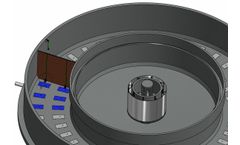
The paper presents the effects of gradual upgrade of existing secondary clarifiers of the waste water treatment plant (WWTP) Asselbrunn. From existing two clarifiers at the beginning only one has been modified (clarifier no. 2), while the other remained unchanged (clarifier no. 1). In a first step the intake structure of ...

The aim of this paper is to prove the applicability of Auxipó as an auxiliary agent of coagulation for pulp and paper industry wastewater. Thus, it is possible to clarify the effluent more efficiently before launching it in waterbodies. To test the applicability of the auxiliary agent of coagulation, two coagulation and flocculation assay diagrams were ...

Several LG Sonic e-line devices were installed in the SAB Miller Clarifier #1 in Tocancipa Brewery, Colombia in order to control filamentous algae. ...
Clarifier efficiency is based on hydraulic detention time, temperature of the water, the design of the tank and the condition of the equipment. Poor clarifier performance can be due to a variety of factors such as (1) hydraulic overload which decreases hydraulic detention time; (2) hydraulic under-load which doesn’t allow the ...
The pH greatly affected the adsorption efficiency, and the amounts of all sulfonamide antibiotics adsorbed on HSZ-385 decreased at alkaline conditions compared with that at neutral conditions. During storage, the pH and ammonium-ion concentration increased with urea hydrolysis for porcine urine. We clarified that the adsorption efficiency of ...

Environmental concerns and sustainable development call for new technology for energy conversion and power generation, which is more efficient, environmentally friendly and compatible with alternative fuels and renewable energy sources and carriers. ...