
Refine by
Clarifier Effluent Articles & Analysis
51 articles found
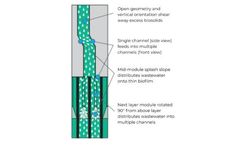
The treatment efficiency ranges from 85% to 90%.AAB effluent goes to a conical clarifier, where the sludge is separated from the treated water. The clarifier is made of fiberglass with a diameter of 2.4 m (7.9 ft), and retention time is approximately 3-4 hours for effective suspended solids removal.Afterwards, effluent flows into ...
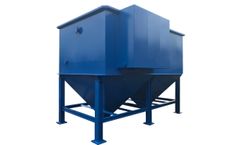
How Lamella Clarifiers Work The core principle of lamella clarifiers revolves around the concept of inclined plate settling. ...
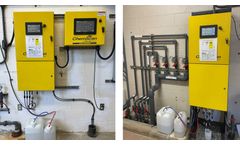
Two ChemScan sequencers were installed to monitor the plant’s five-stage BNR process, testing for nitrite, nitrate, ammonia and phosphorous from primary clarifier influent through tertiary filter effluent. Challenge The McDowell Creek Water Resource Recovery Facility, part of Charlotte Water, expanded from a permitted capacity of 6 MGD to 12 MGD in 2007. ...

The Challenge Anguil Environmental Systems was asked to supply an oxidizer and packed tower air stripper to treat a 65 gallon per minute water stream containing significant concentrations of Diesel Range Organics (DRO), Volatile Organic Compounds (VOCs) and Total Suspended Solids (TSS). The customer was sending the wastewater stream through a cooling tower which was continually fouling from the ...
Learn how DAF works, and why it’s effective at treating industrial wastewater Dissolved air flotation (DAF) is a wastewater treatment process that effectively clarifies water or wastewater by removing suspended solids from liquids. It uses dissolved air to float solid particles to the surface, where they are removed by a skimmer. The liquid being treated can be sewage, liquid sludge, or ...
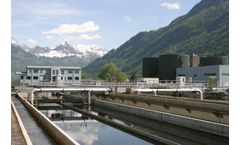
The Xact® 920 was installed downstream of an effluent treatment plant (ETP) clarifier, at one of the world’s largest smelting facilities which produces various metals and chemicals. The ETP treats effluents from different plant processes in addition to run-off by rain, snowmelt, and water spray to reduce fugitive road dust emissions. ...

Removal of scum and floating solids is almost always easier with rectangular clarifiers, which are known to provide more effective scum/foam trapping via rotating scum pipe. ...

Settle cycle: Aeration and mixing are completely stopped during this stage to provide calm conditions that allow settling of the biosolids to the bottom of the tank, leaving a clarified supernatant layer above the solid–liquid interface. Decant/draw cycle: The clarified effluent is withdrawn from the top of the tank without disturbing the ...
ByCoftec
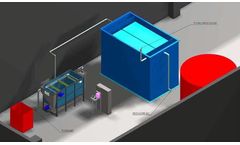
Facility Background PEWE has developed a new patent pending process equipment system for clarifying mixed solids flows of aerobically treated waste streams. It is a dissolved air flotation clarifier, or commercially the PEWE T2-MaxTM Thickener DAF. ...

Dairy wastewater frequently contains high levels of the complex protein casein, a milk solid with unique properties which make it difficult to breakdown. When enough casein is undegraded, it can lead to problems with poor settling, foaming, a cloudy effluent, and unnecessary plant expansion. Furthermore, undegraded casein does not release free amino acids, which aid in essential floc formation. ...
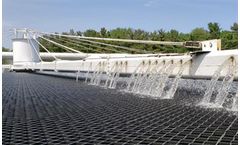
Trickling filters drain at the bottom, and the effluent is sent to clarifiers where solids can settle out. Efficiency Trickling filters are simple and reliable. ...

Following pre-treatment (grit removal, primary clarifier and trickling filter), the effluent flows into a five-pond lagoon system. ...

A submersible pump was placed in the splitter box that feeds the two primary clarifiers. The effluent from the unit flowed by gravity into aeration. ...
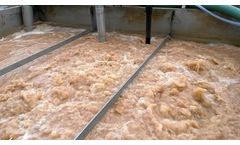
Process performance independent of the secondary clarifier Activated sludge systems use recirculated sludge to increase their SRT. However, if there are issues in the separation that occurs in the clarifier, the return sludge can be of lower quality and affect the performance of the reactor. ...
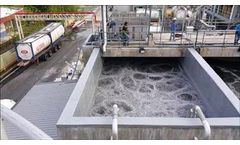
The constant motion encourages improved contact between the biofilm and the substrate within the effluent solution. The bacteria absorb and metabolize the organic materials in the effluent and produce some manner of natural elements and compounds depending on whether the process is aerobic, anaerobic, or anoxic. Following aeration, the effluent ...

The constant motion encourages improved contact between the biofilm and the substrate within the effluent solution. The bacteria absorb and metabolize the organic materials in the effluent and produce some manner of natural elements and compounds depending on whether the process is aerobic, anaerobic, or anoxic. Following aeration, the effluent ...

Since treatment with ERI began, John Sherlock, the head plant operator, reports air phase H2S levels of approximately 2 PPM in the primary clarifier effluent. Several times since treatment began in 2005, Pima County has had one month or longer gaps in which the plant was left untreated. ...

This case study shows how Fluence helped a fish processing plant in Ecuador upgrade its wastewater treatment facility to improve the quality of its effluents, reduce disposable waste, and save thousands in energy costs – all without interrupting its operations. ...

The aim of this work was to investigate and demonstrate the feasibility of applying an easy-to-operate BES as a polishing mechanism for treated secondary clarified effluent from a municipal WWTP, containing low levels of organic matter, buffer capacity and low concentrations of remaining nitrate. ...

Let’s compare the benefits of each configuration. Clarifier Performance Shape of the clarifier alone does not exhibit observable difference in clarifier performance as long as the clarifiers are well designed. ...