
Refine by
Clarifier Filter Articles & Analysis
38 articles found

What Is a Candle Filter and How Does It Work in Industrial Filtration? A candle filter is a pressure-driven industrial filtration system used to separate solids from liquids or gases. ...
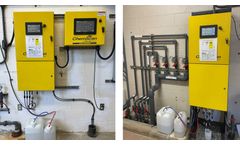
Two ChemScan sequencers were installed to monitor the plant’s five-stage BNR process, testing for nitrite, nitrate, ammonia and phosphorous from primary clarifier influent through tertiary filter effluent. Challenge The McDowell Creek Water Resource Recovery Facility, part of Charlotte Water, expanded from a permitted capacity of 6 MGD to 12 MGD in 2007. ...
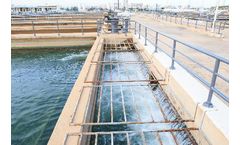
Many of these mechanisms are not only inadequate for large scale deployment in reservoirs, but do not control algae and with moving parts and buoyancy reducing effects, can be a theat to water users straying too close to their intake areas LG Sonic bathymetric analysis using Remote Sensing allows Utilities to identify areas to dredge Coagulation, flocculation and clarification: Increased ...
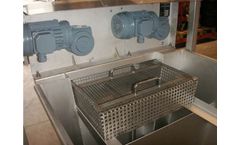
In order to clean the cooling water in steel factories companies usually use a combination of scale pit, longitudinal clarifier and gravel ...

Pectin has a very high viscosity, and its existence makes it difficult to squeeze, filter and clarify. Using pectinase to process fruits and vegetables can greatly improve the yield of squeezed juice and the clarification effect of juice. ...

Multi-media filter is a process of using one or several filter media to pass water with higher turbidity through a certain thickness of granular or non-granular material under a certain pressure, thereby effectively removing suspended impurities and clarifying the water. ...

The Challenge Food production has always been a demanding and competitive process. Executives are constantly challenged by slow product development cycles, competition from healthier alternatives and even food fraud. In today’s climate, producers now worry they can be perceived as environmentally and socially irresponsible, resulting in some retail chains refusing to stock their brands ...

Following pre-treatment (grit removal, primary clarifier and trickling filter), the effluent flows into a five-pond lagoon system. ...
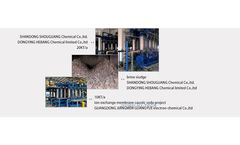
This process involves salt water filters and salt water purifiers for salt water filtration, salt water purification and salt water desalination. Process characteristics: HIGH-QUALITY PRIMARY BRINE SS≤0.5ppm, [Ca2 +] + [Mg2 +] ≤0.5ppm WITHOUT ANY FLOCCULANTS Reduce costs and no additional ionic contamination; SMALL FOOTPRINT New projects can reduce more than 30% ...

The traditional filtration methods (diatomaceous earth, framed filter) can not completely retain the impurities, can play a temporary clarification. ...

With these safety costs adding to other operational costs, effective filter life is now an extremely important metric for operators. FTC Invicta™ – A Case in Point A gas processing operator in the Permian Basin recently mentioned that the quality of filtration delivered by FTC’s Clarify 250 filters was excellent, but that the ...

To maintain sweetness, some wines are not allowed to fully ferment, which leaves higher levels of sugar in the wine.Once fermentation is complete, the wine is clarified or filtered, in order to remove residual solids and any other undesired particles. ...
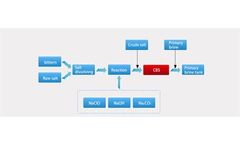
CBS process can also be used for bittern vacuum salt making and the quality of solid salt produced is higher than that of clarification process which can be used as high-quality edible salt or chloralkali salt. primary brine purification primary brine purification Process characteristics: HIGH-QUALITY PRIMARY BRINE SS≤0.5ppm, [Ca2 +] + [Mg2 +] ≤0.5ppm WITHOUT ANY FLOCCULANTS Reduce costs ...
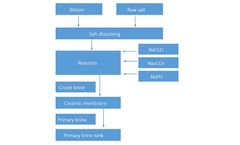
Process characteristics: HIGH-QUALITY PRIMARY BRINE SS≤0.5ppm, [Ca2 +] + [Mg2 +] ≤0.5ppm WITHOUT ANY FLOCCULANTS Reduce costs and no additional ionic contamination; SMALL FOOTPRINT New projects can reduce more than 30% investment in primary brine; WITHOUT ANY LIMITATION FOR RAW SALT Suitable for raw salt with inverted calcium and magnesium ratio Also applies to sea salt; LONG SERVICE ...

States usually establish limits on fecal or total coliform bacteria and may require that wastewater be filtered before it can be reused as reclaimed water. Turbidity standards are also frequently established. ...

MABR was chosen because of its: Extremely low energy consumption (up to 90% less than than conventional aeration technologies) Low operating costs High effluent quality Modular, scalable, and easily expandable design Quiet and odorless operation The Fluence MABR-based wastewater treatment solution features: Fine screens and FOG separator as pretreatment Biological treatment using ...
Following pre-treatment (grit removal, primary clarifier and trickling filter), the effluent flows into a five-pond lagoon system. ...

This process improves the efficiency of downstream pretreatment systems such as clarifiers, sand and cartridge filters. Nevertheless, almost all RO unit operators are confronted with a certain level and a certain kind of fouling on their membranes, due to an incomplete coagulation of troublesome components upstream. ...

The pilot plant included a lamella plate clarifier followed by a geo-textile blanket filter and a UV disinfection reactor. The clarifier operated with a surface load of 115 m3m−2d−1, whereas the filter operated with 10 m3m−2d−1. ...

CHALLENGE: The raw water is to be treated for the removal of Manganese, iron, turbidity, suspended solids, colour, organic matter and pH The design of the plant shall atleast be in compliance with the sound engineering practices and the norms suggested in the Manual on Water Supply and Treatment, 3rd edition, published by Central Public Health Environmental Engineering Organization (CPHEEO), ...