
Refine by
Clarifier Settling Articles & Analysis
44 articles found
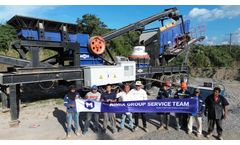
Fine particulate matter not only affects the health of workers but also settles on neighboring properties, leading to potential legal and social friction.Advanced Suppression and Collection Systems A high-efficiency aggregate crusher plant(planta de trituración de agregados) must employ a multi-layered approach to dust. ...
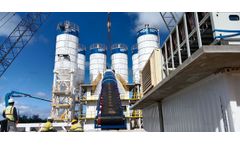
It passes the water through a series of settling tanks or a hydrocyclone. Solids settle as sludge. Clarified water returns to the mixing circuit. ...
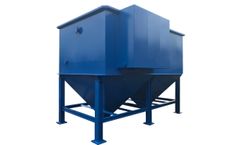
How Lamella Clarifiers Work The core principle of lamella clarifiers revolves around the concept of inclined plate settling. ...
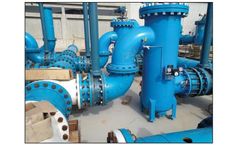
Strainers also play a critical role in the wastewater treatment systems used in chemical processing. Often placed after clarifiers that settle suspended solids from liquids, strainers can remove contaminants of many different sizes, from small organic material to large debris prior to additional processing. ...

For grain processors, removing suspended solids such us fats, grease, grit, contaminants and leftover process materials from liquids is necessary to comply with regulations like the EPA's Clean Water Act. which sets wastewater standards for industry and national water quality criteria for pollutants in surface waters. To remain compliant, processors often use clarificrs, also known as settling ...
To remain compliant, processors often use clarifiers, also known as settling tanks or settlers. Clarifiers are designed to continuously remove the solids that accumulate due to sedimentation, the separation of suspended solids from a liquid by gravity. Concentrated impurities are discharged from the bottom of the tank while scum particles float ...

In the modern activated sludge plant, a clarifier is used for the secondary phase of sludge treatment. No matter if it is a circular or rectangular clarifier, the key is the use of a constantly moving “rake” to keep the sludge (of course, due to its weight, sludge settles to the bottom of the clarifier) fluidized and ...

Sediment Transport and Deposition Suspended sediment particles can settle and accumulate on the beds of water bodies, altering the physical characteristics of the aquatic environment. ...
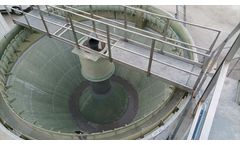
Settling is a solid-liquid separation process commonly used in water treatment. The Static Clarifiers are designed especially for biological processes like for example secondary sedimentation. ...

In addition to these surface aerators, Landustrie earlier supplied a new LANDY screw pump for the influent pumping station and refurbished the clarifiers of the existing primary settling ...
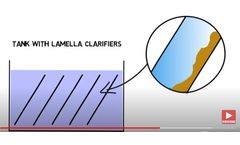
In other words the settling area of the basin was increased from the tank base to the projected surfaces of all lamella clarifiers. ...
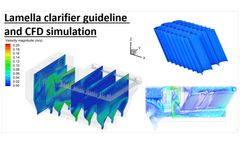
More details on the selection of the right lamella clarifier module can be found in the linked video. Other parts of a lamella clarifier tank are the water inlet, sludge settling and water outlet zone. The most important design guideline is to achieve an equal flow inside the lamella clarifier tank and to reduce turbulences so ...
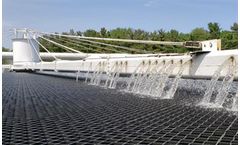
Trickling filters drain at the bottom, and the effluent is sent to clarifiers where solids can settle out. Efficiency Trickling filters are simple and reliable. ...
In addition to these surface aerators, Landustrie earlier supplied a new LANDY screw pump for the influent pumping station and refurbished the clarifiers of the existing primary settling tanks. ...

Application Steel Finishing Mill Industrial Waste Water Treatment Facility Material: Primarily Iron Oxide and Calcium Carbonate Settled out in Clarifiers Incoming Slurry 10 – 35% Solids Problems & Challenges Two Existing Vacuum Drums are Obsolete and One Already Out of Service Parts for Vacuum Drums Usually must be Custom Made ...
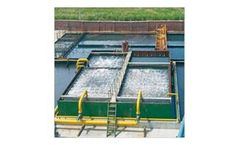
Processes that require recirculation also typically produce more sludge in the clarifying step, more sludge that will need to be disposed of. This also means that the overall efficiency of the reactor is not dependent on how well the effluent settles. ...

Processes that require recirculation also typically produce more sludge in the clarifying step, more sludge that will need to be disposed of. This also means that the overall efficiency of the reactor is not dependent on how well the effluent settles. ...
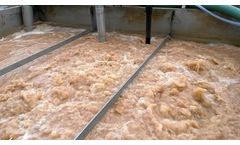
Process performance independent of the secondary clarifier Activated sludge systems use recirculated sludge to increase their SRT. However, if there are issues in the separation that occurs in the clarifier, the return sludge can be of lower quality and affect the performance of the reactor. This is not an issue in MBBR systems because there is no need for ...
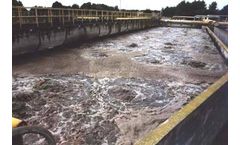
Four Possible Biological Processes: Activated Sludge Process (ASP) A suspended solids system that aerates a loose biological media and is then pumped to a clarifying tank to settle. Sludge from the clarifier is recirculated back into the reactor, called return activated sludge. Occupied Area: Second largest HRT: Second lowest, 4-10 hours ...

Because of the grease received at the plant, there was little settling occurring in the 30-minute settling tanks, despite personnel maintaining a low mixed liquor in the aeration basin. ...