
Class A Biosolids Articles & Analysis
26 articles found
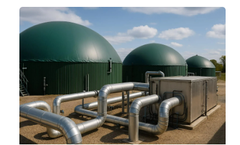
They support compliance with regulatory benchmarks such as PAS 110 and Class A Biosolids and have been installed across agricultural, sewage treatment, food waste and landfill biogas facilities worldwide.For operators seeking to scale biogas output while improving thermal efficiency and reducing waste, HRS systems offer a technically grounded path across the full ...

The City selected a 5 Stage Bardenpho biological process followed by an RDP EnVessel Pasteurization process to produce a Class A biosolids ...
The streamlined, patented two-stage Neutralizer® system treats waste activated sludge and produces Class A residuals for unrestricted land application in just a matter of hours. Long-Term Success: 43% reduction in annual operating costs for biosolids treatment and disposition 92% decrease in energy costs associated with biosolids ...

The Borough of Mechanicsburg, located in central Pennsylvania, was experiencing challenges in finding sufficient agricultural fields to continue the beneficial use of their anaerobically digested liquid wastewater treatment plant Class B biosolids. At the time, the only alternative available was dewatering and going to landfill, which is significantly more ...

Over the last several years, the town's Utility Manger, Rick McClain, had laid the groundwork for planned land application of Class B biosolids. Until early 1996, Decatur had contracted for the removal of pond wastes, which were dredged up by a private firm and hauled away for land application. ...

Applying an electrical field for 10 min to mechanically dewatered biosolids increased dryness to 35 to 45% and reduced Escherichia coli levels to/close to detection limits. ...

The Challenge An arm of the City of Philadelphia Water Department, the Biosolids Recycling Center (BRC) was in need of critical support. Consisting of a dewatering complex and a compost operation that utilized a portion of the dewatered biosolids (with the balance transported offsite for disposal), the BRC had an expired Title V air management operating permit ...

Cake solids were at 54% and qualified as Class A biosolids. A second layer of 30' circumference Geotube containers was placed directly on top of the first layer and filling began June I, 2004. ...
The Challenge Seated approximately 30 miles southwest of Bakersfield, California, the South Kern Compost Manufacturing Facility (SKCMF) was commissioned in 2006 to alleviate concerns about long-term viability of land application of Class B biosolids in Southern California, and address air quality issues of previous traditional composting processes. ...
In 2001, the City of Phoenix, Arizona (USA) committed to the conversion of the existing high-rate anaerobic digestion process at the 8.9 m3/s 91st Avenue Wastewater Treatment Plant (WWTP) to a multi-phase process (acid/methane, mesophilic/thermophilic) to optimise existing digestion capacity and achieve Class A biosolids. The improved solids reduction is ...

This study evaluated the influence of 20 annual land applications of Class B biosolids on the soil microbial community. The potential benefits and hazards of land application were evaluated by analysis of surface soil samples collected following the 20th land application of biosolids. ...
Over the Last several years, the town's Utility Manger, Rick McClain, had been laying the groundwork for planned land application of Class B biosolids. Until early 1996, Decatur had contracted for the removal of pond wastes, which were dredged up by a private form and hauled away for land application. ...

The process claims were: an improvement of VS destruction by 60%, a doubling in dewaterability, doubling of digester loading, elimination of foaming and production of Class A Biosolids. The results have been very satisfactory and met these claims. ...
The City and County of San Francisco completed a two-year pilot study of pre-treatment processes to mesophilic anaerobic digestion for improved biosolids stabilization and production of biosolids suitable for unrestricted reuse (class A biosolids). ...
This changes quality measures such that class B stability is required, and class A desired. Large systems (>150,000 EP) can justify the large capital expenditure to implement advanced anaerobic digestion technologies, including thermal hydrolysis. ...
ABSTRACT High-solids mesophilic anaerobic digestion (HS-MAD) processes employing thermal hydrolytic pretreatment (THP) have gained much interest in recent years; primarily because they have been shown to produce Class A biosolids in accordance with EPA 503 regulations, but also because they represent an economical approach to the maximization of available ...
ABSTRACTDuring 2001-2003 the city and county of San Francisco completed a two-year pilot study of pre-treatment processes to mesophilic anaerobic digestion for improved biosolids stabilization and production of biosolids suitable for unrestricted reuse (class A biosolids). ...
ABSTRACT Two large scale projects have been successfully brought on line utilising the thermal pretreatment to ensure production of a Class A biosolid product. In Reading (UK), the sludge is pasteurised prior to mesophilic anaerobic digestion while in Dublin (Ireland), the sludge is both pasteurised and hydrolysed prior to digestion. ...
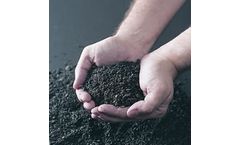
Another concept that has been receiving increasing attention is the need to produce Class A biosolids for land application. A third concept that is receiving attention is the need to remove nitrogen from the recycle streams from anaerobic digestion. ...
ABSTRACT The District of Columbia Water and Sewer Authority (DC WASA) has decided to incorporate thermal-hydrolysis pretreatment in conjunction with mesophillic anaerobic digestion as the backbone of a long-term biosolids treatment plan to produce Class A biosolids. The Authority has been lime stabilizing their raw solids from the Blue Plains ...