
Refine by
Cleanroom Testing Articles & Analysis
14 articles found
ABSTRACT Airflow Visualization studies (AKA Smoke Studies) are used to evaluate air patterns in medical product cleanrooms and barrier systems (RABS, Isolators, pass-throughs and airlocks) that support aseptically produced, terminally sterilized and low bioburden product manufacturing.) These studies should be considered as more than a definitive pass/fail test. ...
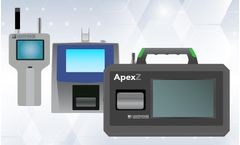
Airborne Particle Counters (APCs) play a critical role in monitoring and maintaining the cleanliness of environments where air purity is essential, such as cleanrooms. There are two fundamental types of APCs: portable and fixed-point remote. ...

Airborne Particle Counters (APCs) play a critical role in monitoring and maintaining the cleanliness of environments where air purity is essential, such as cleanrooms. There are two fundamental types of APCs: portable and fixed-point remote. ...
This blog elucidates the critical role of particle counters in cleanroom certification, routine monitoring, and HEPA filter testing while adhering to ISO ...
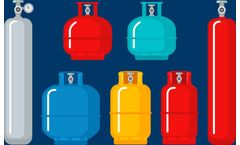
Gas Sampling in Cleanrooms In cleanrooms, especially those classified ISO 5 or cleaner, maintaining contamination control is paramount. ...
The following frequently asked questions arose at a presentation given by PMS Senior GMP Scientist, Mark Hallworth, on the 6th of December on the topic of EU GMP Annex 1 Environmental Monitoring. Is there an international standard or guideline for sampling 1m³ total particle counts and viable particles with air samplers like the MiniCapt® mobile device for routine monitoring of ...
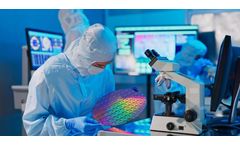
Semiconductors are in almost every electronic device, from everyday items like smartphones and coffee makers to complex automobiles, defense equipment, and spaceships. Manufacturers make semiconductors in special semiconductor cleanrooms because the wafers are extremely sensitive to environmental contaminants. ...
Welcome to our Cleanroom Classification and Qualification questions and answers blog, where Particle Measuring Systems answers commonly asked questions about the latest changes to regulation. Listen to this useful webinar to learn more about how classification limits are made for expected cleanliness levels in a cleanroom manufacturing ...
Listen to the webinar to learn more about microbial testing in cleanrooms and the USP 1116 ...
Cleanroom certification is based on ISO 14644-1, “Classification of air cleanliness by particle concentration” standards. ...
Facilities grappling with USP797 and USP800 verify their compliance through cleanroom certification. Airflow measurements, leakage testing and environment measurements (differential pressure, temperate and relative humidity) are documented and certified. ...
Each category requires a different approach. Certification is measuring a cleanroom for a standard. The only standard recognized worldwide is ISO14644-1, “Classification of air cleanliness by particle concentration”, which defines how a cleanroom performs and its ability to show uniformity across the entire space. ...

Cleanrooms are pushing the limits of industrial manufacturing and scientific research programs. ...

The world faces difficult pollution control decisions. For every dollar spent on pollution control, there is an alternative investment in health improvement. For every dollar spent on reducing one pollutant, there is an alternative to reduce another. The most prudent course to make the best investment should include: Intelligent uncertainty Intelligent classification of options Intelligent ...