
Refine by
Cmos Camera Articles & Analysis
21 articles found

The ECOFLAKE system enables precise PET flake separation using RGB CMOS cameras with NIR technology. Visit picvisa.com to discover how PICVISA can optimize your PET recycling ...
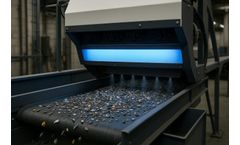
The absence of moving mechanical parts in the ejection mechanism — air jets rather than flaps or gates — allows continuous operation with reduced wear compared to mechanical separators.Sensor Types and CapabilitiesModern industrial optical sorters deploy sensor arrays optimized for material properties. Cameras operating in the visible spectrum (400–700 nm) identify color and ...

Thanks to its multispectral vision system, it can be configured to adapt quickly to new materials entering the waste stream.ECOFLAKE separates different types of plastic flakes with exceptional precision and efficiency, using high-definition RGB CMOS cameras combined with NIR technology.Ocean plastic recycling companies: driving change Leading the transition ...

ECOFLAKE optical sorting systems, on the other hand, facilitate the separation of different types of material flakes with outstanding accuracy and efficiency. They use high-definition CMOS RGB cameras combined with NIR technology. The optical sorter is programmed to look for PET plastic. ...

These systems use high-definition RGB CMOS cameras combined with NIR technology. What can recycled PET become? ...

These optical sorting systems facilitate the separation of different types of material flakes with outstanding accuracy and efficiency. They use high resolution CMOS RGB cameras combined with NIR technology. Both proposals demonstrate that the mechanization of plastics and other material recycling is an absolute necessity. ...

These optical sorting systems facilitate the separation of different types of material flakes with outstanding accuracy and efficiency. They use high resolution CMOS RGB cameras combined with NIR technology. Both proposals demonstrate that the mechanization of plastics and other material recycling is an absolute necessity. ...

Coupled with the ECOFLAKE optical sorting systems, which use high-resolution CMOS RGB cameras combined with NIR technology to separate different types of material flakes with exceptional accuracy and efficiency, they demonstrate that the mechanization of plastics and other material recycling is an increasingly urgent need that will help meet regulatory ...

ECOFLAKE: Advanced Technology The ECOFLAKE system emerges as an advanced technological solution to the challenge of separating flakes of different materials with unprecedented precision and efficiency. Using high-definition RGB CMOS cameras along with NIR technology, ECOFLAKE achieves detailed classification by color, transparency and composition of materials. ...
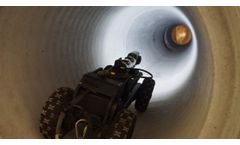
Videology offers Full HD and SD camera models that are a perfect fit for any imaging task in pipe and sewer inspection. ...

latest generation of software and high-resolution RGB CMOS cameras, the result is high-precision separation by color or transparency across a wide variety of materials. ...

At Solar MEMS we are fascinated by sun sensors: they are our core products and we know them inside out. Today, we would like to explain how the most common types of sun sensors available in the aerospace market work. Sun sensors are navigation instruments that are used in space to establish the direction and position of the sun in relation with the satellite or spacecraft. In the aerospace ...

Are you looking for a Pipeline Inspection Camera? Suitable for a range of applications including sewer line and water pipe inspections, USA Borescopes can offer you a range of Pipeline Inspection Cameras for sale or on a rental basis. ...

The “chip on the tip” CMOS superb quality camera is located within the short rigid distal end of the probe. ...
Despite its tiny size, the high resolution (160,000 pixels) distal lens at the end of the probe is equipped with a built-in fiberoptic light. Due to its CIS CMOS sensor the camera delivers clear, crisp and bright images without a grainy pattern common in fiberoptic type devices. The camera features a 90 degree field of view (FOV) with straight, ...
Thus, the new inspection system fills the void providing the NDT professional community with a video borescope that comes as close as possible to the definition of intrinsically safe. The new explosion camera features 4-way articulating probes with lengths ranging from 1.5m (4.9′) to 7.5m (24.6′), and with two diameter options, 4mm (0.16”) and 6mm ...
Increased longevity despite the multiple cycles of inspections High-quality, crisp images due to innovative high-resolution CMOS Video Camera chip (60 fps@AVGA) and six integrated LED lights Add-on features for more informative inspections: powerful zoom, grid and mirroring function The buttons on the control unit are FEW and they are easy to find and use ...
The images are captured with the help of intuitive controls located on the base unit with rubber anti-slip handle. The new fast CMOS Video Camera chip (60 fps@AVGA), built-in in the tip of the probe, provides a clear and bright view of the inspection area. ...
It is an enhanced inspection equipment with high-resolution camera head, variety of imaging options including grid, mirror functions and zoom-in/zoom out. ...
High end scopes are going to be more expensive than economy scopes, the main reason for this is that higher end scopes tend to use higher resolution video chips in the camera heads, the better the quality of the camera, the better your inspection results will be. High quality camera chips also ensure that any light provided will be used to the ...