
Refine by
Coagulation Articles & Analysis: This-Year
12 articles found

Higher treatment costs and shorter filter runs Dense biomass increases organic load and shortens filter run times. In addition, it raises coagulant and powdered carbon demand. As the season lasts longer, these costs accumulate across more weeks of the year. ...
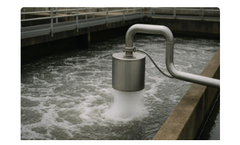
The limitations of traditional chemicals Chemicals have been used for decades to control water quality in industries. Chlorine, biocides, coagulants, and oxidizers remain common, but they have drawbacks. Treatment is a long-term cost factor, including ongoing retesting. ...
This is achieved using a combination of coagulants and flocculants. This can be fully automated, eliminate messy mixing problems like unblended polymer, and allow operators to easily switch products when wastewater characteristics change. ...
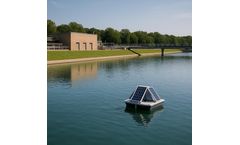
The study provides utilities with an independent, operations-focused reference for evaluating ultrasonic algae control.Study scope and independenceThe article presents a full-cycle field evaluation conducted by Central Alabama Water with an academic partner from the University of Alabama.It reports practical findings from an installed system in an active drinking-water basin, not vendor ...
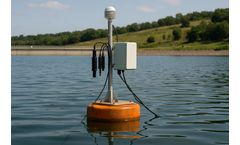
Reduced Chemical Costs: When a bloom reaches a treatment plant, utilities increase coagulant, oxidant, and activated carbon dosing to remove taste and odor compounds such as geosmin and MIB, which is costly. ...
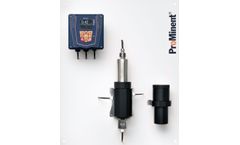
In wastewater treatment, turbidity often indicates how stable solid removal, coagulation and flocculation are proceeding, and whether downstream processes such as filtration or discharge areas remain within the target range. ...
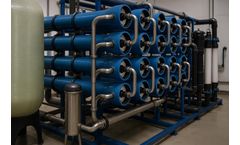
Particulate fouling control: Media filtration, ultrafiltration, and cartridge filters are commonly used to remove suspended solids, sometimes supported by coagulation in more challenging cases. Iron and manganese: Require oxidation prior to filtration for effective removal. ...
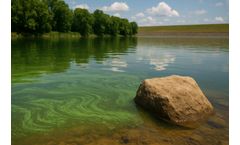
They are semi-volatile, low molecular weight, and resist many standard treatment processes. Coagulation and filtration remove solids but not these dissolved compounds; chlorination has limited effect and can create other byproducts; ozonation is more effective but costly and infrastructure intensive; activated carbon is commonly used but has limitations, especially during high ...

Lastly, wastewater treatment systems have processes that vary on the needs and goals of a particular plant, but the average treatment facility follows a process that usually includes coagulation, flocculation, sedimentation, filtration, disinfection, fluoridation, and distribution. ...

In industrial and drinking water treatment, pH changes during algal activity can affect coagulation efficiency, chemical dosing, and overall operational stability. ...

Erbium resurfacing offers precise ablation and coagulation control to smooth crepiness around the eyes, mouth, and jawline, particularly when GLP-1–related changes vary across the face. ...
Known as the lunchtime facial, it softens fine lines, improves texture, and reduces redness, pigmented lesions, and flushing that can become more evident as facial volume shifts during weight loss.Erbium resurfacing provides precise ablation and coagulation control to smooth crepiness around the eyes, mouth, and jawline, with customization to patient skin condition, which is ...