
Refine by
Coagulation Control Articles & Analysis
27 articles found
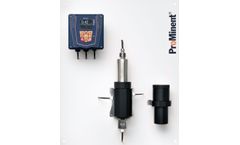
In potable water treatment, raw water turbidity primarily serves as an event indicator, providing early warning of changes in raw water conditions and potentially necessitating adjustments in subsequent treatment stages. After coagulation and flocculation, turbidity can indicate whether process control is within the appropriate range and whether metering ...

Erbium resurfacing offers precise ablation and coagulation control to smooth crepiness around the eyes, mouth, and jawline, particularly when GLP-1–related changes vary across the face. ...
Known as the lunchtime facial, it softens fine lines, improves texture, and reduces redness, pigmented lesions, and flushing that can become more evident as facial volume shifts during weight loss.Erbium resurfacing provides precise ablation and coagulation control to smooth crepiness around the eyes, mouth, and jawline, with customization to patient skin ...

This makes UV254 a more relevant parameter for evaluating the DBP formation potential resulting from the organic content of the water. As organics can control or significantly contribute to the charge neutralization and coagulation process, measuring UV254, in addition to turbidity, at the plant intake provides very valuable information for ...
Therefore, turbidity is monitored continuously in many plants and often utilized for coagulation process control purposes.Nonetheless, plants can benefit from monitoring organic matter in addition to turbidity for optimal coagulant dose control as in many cases organics contribute more to the total negative charge and create a ...
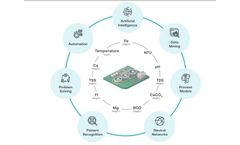
Traditionally, the optimum coagulant dose is determined by jar testing which has multiple limitations. These limitations can be overcome by incorporating machine learning and process modelling using raw water quality and process control parameters. Coagulation in water treatment Coagulation is a critical component of water ...

The UV254 analyzers provide various benefits to the treatment plants including raw water event monitoring and aiding with control of the coagulation process to enhance or optimize organics removal. ...

Water Quality Monitoring Solutions for Industrial Wastewater – Coagulation Control s::can sensors combined with process control software can provide feed forward coagulant dose control to fully optimize operations. ...
ByCoftec

Municipal Utilities Department (MUD) employs coagulation, sedimentation, active flow control and filtration to produce 60 million gal per day (mgd) of water at its surface water treatment plant. In addition, the system includes 27 wells and 21 booster stations controlled by SCADA. Water distribution is provided through more than 1,200 miles of ...

The required coagulant dosage is strongly related to the quality of raw water or wastewater. Online sensors for most quality parameters are now readily available to treatment facilities, yet remain rarely used in treatment process control. This paper presents the evaluation of an advanced coagulant dosing control system based ...

Online organic water quality testing ensures that immediate action can be taken to establish proper treatment. real-time organic monitoring is invaluable for optimizing and controlling coagulant dosing; monitoring performance and condition of activated carbon filters; determining uV dose; indicating potential formation of disinfection byproducts (DBPs) for ...
Coagulant dosing control in drinking and wastewater treatment plants (WWTPs) is often limited to flow proportional concepts. The advanced multi-parameter-based dosing control systems have significantly reduced coagulant consumption and improved outlet qualities. ...

District staff knew that algae control and DBP reduction could be accomplished in two ways: through the use of alternative oxidants to chlorine, or by creating a physical barrier to block the sunlight that algae requires to grow. ...
Considering this, the aim of this study is to evaluate, on a bench level, the removal of Giardia spp. cysts and of Cryptosporidium spp. oocysts from water with high turbidity, using polyaluminium chloride as a coagulant. Filtration using mixed cellulose ester membranes, followed, or not, by purification through immunomagnetic separation (IMS) was used for detecting protozoans. By ...

We’re here to tell you about turbidity sensors being utilised for drinking water, effluent discharges and coagulant controlling. Turbidity Sensors and Drinking Water Turbidity sensors are an excellent way of analysing water quality and can be a great way of assessing processing issues. ...
An automatic coagulant dosage control technology for water purification plants was developed to deal with rapid changes of feed water quality. Control logic was developed to decide coagulant dosage based on aluminum concentration in the mixing tanks. A coagulant-sedimentation process apparatus was installed in ...

Contribute to the cause of taste and odors, water discoloration, water meter clogging and high turbidity. Chemical control of invertebrates a. Insect larvae: Chlorination as high as 50mg/l with CT of 24 hours has been shown to be ineffective against insect larvae. ...
Turbidity is a very useful tool when regarding control within the primary settlement stage of water treatment. By utilising turbidity as a control variable during this stage of the process you can enable a more rapid response to variations in load and provide early warning to operators of equipment malfunction before it’s too late; allowing for ...
Dependence on pH is found at every phase of water supply and wastewater treatment, including acid-base neutralization, water softening, precipitation, coagulation, disinfection and corrosion control. In the simplest terms, bases are used to neutralize acids, while acids are used to neutralize alkalis. ...
This paper describes the use of both the streaming current detector (SCD) and coagulation computer models to provide real-time data for required coagulant feed rates. ...