
Coagulation Test Articles & Analysis
30 articles found
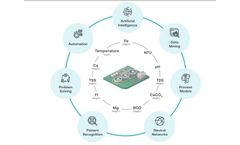
Traditionally, the optimum coagulant dose is determined by jar testing which has multiple limitations. ...

Ancient Egyptians mastered the coagulation disinfection technique as early as 1500 BCE [5], which used aluminum sulfate’s coagulation properties to facilitate clumping of water-suspended particles for easy filtration [4]. ...

Some compounds can play a role of both coagulant and flocculent, e.g. chitosan. Types of coagulants. Inorganic coagulants: Aluminum salts, such as ACH (aluminum chlorohydrate), PAC (polyaluminum chloride) Iron salts such as ferric chloride or ferric sulphate Organic coagulants (cationic polyelectrolytes): ...
Look for changes in influent flow, pH, or chemistry by conducting jar testing. Are the polymer and coagulant levels where they should be? Use jar testing to check. Problem #5: Loss of solids over effluent weirWhat to do about it: Check for proper chemical dosage with jar testing. ...

The coagulants tested were metallic and organic and their efficiency was compared when treating samples of raw and treated sewage (activated sludge). Before the efficiency tests of the coagulants, viral concentration methods were compared. Coagulation tests were carried out by using the ...
This work evaluated the performance of a dissolved air flotation (DAF) system for biomass recovery from the effluent of algal ponds used for sewage treatment in Northeast Brazil. Two different coagulants and effluent samples were tested following a random-factor experimental design (34–1–4 factors and 3 levels), in triplicate. Factor analysis showed that ...
The aim of this paper is to prove the applicability of Auxipó as an auxiliary agent of coagulation for pulp and paper industry wastewater. Thus, it is possible to clarify the effluent more efficiently before launching it in waterbodies. To test the applicability of the auxiliary agent of coagulation, two coagulation and ...
Scientists continuously search for alternative coagulants that would be able to outperform traditionally used aluminium (Al) and iron (Fe). Use of a novel metal coagulant zirconium (Zr) has been associated with enhanced organic matter reduction. ...
Chitosan was chosen as an alternative primary coagulant in a complementary coagulation–flocculation treatment of sanitary landfill leachate with the aim of removing recalcitrant organic matter. ...
In order to protect public health during swimming, Cryptosporidium-sized microsphere removals by high-rate sand filtration with six coagulants were evaluated with a 5.5 m3 pilot-scale swimming pool. A sand filter without coagulation removed 20–63% of Cryptosporidium-sized microspheres. Cryptosporidium-sized microsphere removals exceeded 98% by sand filtration ...
The paper presents results of research on the removal of priority hazardous polycyclic aromatic hydrocarbons (PAHs) (anthracene, benzo[a]pyrene, benzo[b]fluoranthene, benzo[k]fluoranthene, benzo[g,h,i]perylene, indeno[1,2,3-cd]pyrene) from water in the coagulation and sedimentation process. Coagulants chosen for the analysis were aluminum(VI)sulfate and two ...
An automatic coagulant dosage control technology for water purification plants was developed to deal with rapid changes of feed water quality. Control logic was developed to decide coagulant dosage based on aluminum concentration in the mixing tanks. A coagulant-sedimentation process apparatus was installed in December 2010 in a water ...

However, the use of alum can increase the residual aluminium concentration both in the effluent and biosolids. Chitosan, an alternative coagulant, does not allow for the removal of TP below the requirement level when lower than the soluble phosphorus fraction of the water. ...
A natural zeolite and Na-activated zeolite mixed with magnetite and ferric chloride are tested. The combination of sedimentation (with coagulant) followed by magnetic filtration is from six to 30 times faster than only sedimentation (with coagulant) in attaining the same final turbidity. ...
In recent climatic events in Australia, the need for frequent jar testing to determine optimum coagulant and flocculant aid doses became apparent in order to determine optimum treatment efficiencies. The generally applied jar test procedure can be time consuming and this prompted investigations for capacity to test waters more ...
In this initial study, about a hundred different samples were screened for coagulation activity. Amongst the plants tested were fruits and vegetable pulps, leaves and seeds (like jackfruit, tamarind, papaya, orange, watermelon, pineapple, cucumber, green gram, peas, black gram, cluster bean rice, maize, chili, cabbage, mustard, cauliflower, beetroot and carrot). ...
This source water has a DOC concentration ranging from 8 to 12 mg L−1 and total hardness of about 400 mg L−1 CaCO3, which represents a typical surface water quality of the Canadian Prairie. Four coagulants were tested at different pH levels: alum, ferric sulfate, ferric chloride and titanium sulfate. Coagulation effectiveness was ...
In this study, eight different raw water samples from the various water types found in the country were seasonally collected and treated for the removal UV absorbance at a wavelength of 254 nm (UV254) using enhanced coagulation (EC). The efficacy of EC, which can be employed as a practical technology in the removal of both turbidity and NOM, was evaluated in remaining UV254 from ...
In this study, coagulation efficiencies for each growth phase of Microcystis aeruginosa, one of the main species involved in eutrophication in South Korea, were examined at the laboratory scale to obtain data on removal characteristics of this organism during the coagulation process. ...
In this study of coagulation operation, a comparison was made between the optimum jar test values for pH, coagulant and coagulant aid obtained from traditional methods (an adjusted one-factor-at-a-time (OFAT) method) and with central composite design (the standard design of response surface methodology (RSM)). ...