
Refine by
Coarse Bubble Diffuser Articles & Analysis
23 articles found

SiteWorks fulfilling EDI's "Aeration for life" commitment over more than a decade with major American mozzarella producer. Project Information Type: Industrial Wastewater Treatment Location: Denver, CO Treatment Objectives: Ongoing, Reliable Treatment: Through the continuous relationship, Keep Plant Running Economically ...
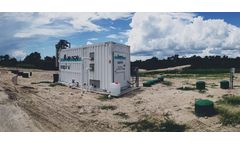
Decentralized design is customized to suit treatment needs As demand grows for sustainable wastewater solutions, the Aspiral™ Flex line from Fluence stands out with its versatile, containerized wastewater treatment units. Ideal for small- to medium-sized communities and facilities, the Aspiral™ Flex units can handle flows from 5,000 to 250,000 gallons per day (20 to 950m3 per day), ...
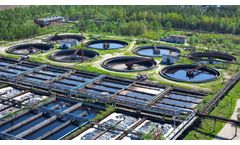
Some examples of solutions include; the use of integrated head works screens in primary treatment; sustainable bio-organic liquid flocculants for efficient suspended solids clarification, and jet aeration diffusion systems providing up to 40% reduction in energy consumption over coarse bubble and surface diffusion systems in ...
Technical Bulletin 162: High Efficiency Diffusers versus Surface Aerators EDI has engineered systems that are well suited for almost any aeration mixing application. With multiple diffuser platforms available, it gives design engineers or users choices for coarse bubble, fine bubble of different types, and ...
History - Coarse, Medium, Fine Bubble Diffusers Diffuser efficiencies are generally measured in clean water to allow basis of comparison of similar products and prediction of actual performance in a wastewater treatment plant application. ...
The only other method considered was typical diffused aeration with coarse bubble diffusers, but it was decided that diffused air would not provide sufficient mixing energy throughout the tank, particularly in the bottom third, and would allow accumulation of solids between pipe headers, as is commonly seen in ...
Coarse bubble diffusers are suitable for almost any type of water and wastewater application. The primary application of coarse bubble diffuser systems today are as indicated below: Aerobic Digestion Applications Coarse bubble diffusers have ...
Fine bubble aeration systems are inherently more efficient in oxygen transfer than coarse bubble aeration systems. Overall, a fine bubble aeration system configured in a grid configuration will operate at approximately 50% the energy consumption of coarse bubble systems. ...
The decisions include: Fine Bubble or Coarse Bubble? Floating Lateral or Floor Mounted Diffuser Systems? ...
Representative cases of this total service approach would include replacement of existing systems and upgrades with: EDI FlexAir Magnum full circumference perforation systems EDI Flex Air MiniPanel fine bubble diffusers with top only perforation EDI MaxAir SS coarse bubble maximum mixing and reliability EDI PU Membrane ...
This can be a huge energy penalty that may need to be considered. Coarse Bubble Diffusers – Coarse bubble diffuser units are much less efficient in shallow basins vs. fine bubble and on a typical basin would require much greater air volumes and higher energy consumption. ...

Pre-Deployment Conditions: Both basins contained grids of coarse bubble “tube style” diffusers for mixing. They were powered by three (3) 75HP blowers, one dedicated for each basin, and a third for use as a ...

This includes retrievable fine/coarse bubble diffusers attached to the media racks and submersible pumps. ...

The aerator is unique in that it utilizes low energy regenerative blowers to force air through both coarse and fine bubble diffusers. There is a dedicated blower for each application. In other words, the coarse bubbles, following deflection off an underwater baffle, ‘push’ surface water. ...

Aeration and Mixing Requirements: Coarse bubble diffusers typically provide process aeration and mixing of the media for moving bed systems. Structured-sheet modules work with fine or coarse bubble diffusers, typically sized for process air only, and do not require additional air for mixing. ...

Materials and Methods Lagoon characteristics: The City of Spring Valley, IL wastewater treatment lagoon receives primary clarifier effluent (-0.97 MGD) with approximately 100 mg/L of biochemical oxygen demand (BOD5) and approximately 100 mg/L of total suspended solid (TSS). The lagoon is aerated with coarse bubble diffused air headers spaced 100 ...
The high-energy footprint caused by the coarse bubble diffusers and mixing air requirement extend expenses past the capital investment. ...

Because the membranes were immerged in the aeration tank, the coarse bubble and fine bubble diffusion systems coexisted in the same tank. ...
To form a basis of comparison with traditional aeration technologies, additional testing was done with conventional aerators (fine bubble and coarse bubble diffusers) replacing the GP membrane. OTE can be established based on the re-aeration of deoxygenated water or by monitoring the catalytic oxidation of a sodium sulphite ...

The biomass carriers are mixed in the tank by unique airlift hydraulics, using the process air supplied through specially coarse bubble diffusers. Wedge wire screens are installed at the outlet of the AGAR reactor, in order to maintain the carriers inside the reactor. The screens are continuously kept clean the flow of a mixture of water, air ...