
Refine by
Coating Electrode Articles & Analysis
28 articles found

Alongside this growth, environmental compliance and VOC emission control have become increasingly important for battery manufacturers seeking sustainable production.Processes such as electrode coating, drying, electrolyte filling, and solvent recovery can generate volatile organic compounds (VOCs), NMP tail gas, and electrolyte-related emissions. ...
In the lithium battery industry, the system is used for NMP recovery during electrode coating with a high recovery rate. Additionally, it is applied to automotive painting lines and spray booths to treat xylenes, butyl acetate and butanol, maintaining a recovery efficiency above 96%. 5. ...
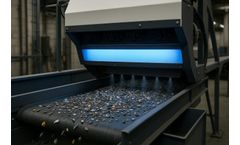
In battery recycling, XRT distinguishes metallic from non-metallic particles regardless of surface condition, color, or coating, making it insensitive to contamination and oxidation that can confound optical sensors. XRT sorting is effective for separating electrode foils from separators and casings, and for detecting dense metallic contamination within bulk ...
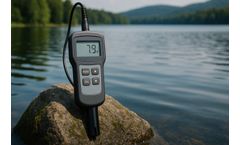
Each method serves a different operational purpose: spot verification, rapid screening, or continuous system tracking. 1) Handheld meter with glass electrode Most professional pH meters use a glass electrode that measures electrical potential changes caused by hydrogen ion activity. ...

Molybdenum-based alloys are used in high-heating components, extrusion molds, glass melting furnace electrodes, spray coatings, metal processing tools, and spacecraft parts because of their good strength, mechanical stability, and high ductility.Chemical IndustryMolybdenum grease lubricant: Molybdenum dioxide is a good solid lubricant because it has a low ...

Following the success of our recent discussion on electrochemical mass spectrometry, we sat down with Jim Melling, Senior Applications Specialist, and Andrea Secco, Applications Specialist — both members of the Gas Applications Team at Hiden Analytical — to discuss the latest developments in the ECL-Series electrochemical cells for the HPR-40 DEMS system. In this Q&A, Jim and ...
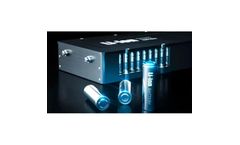
The European Union’s Battery Regulation (EU 2023/1542) marks a new era for energy storage technologies. One of its most significant features is the introduction of the EU Battery Passport — a digital system designed to ensure transparency, sustainability, and traceability throughout the entire battery value chain. From February 2027, every large industrial and electric vehicle (EV) ...

Therefore, monitoring trace moisture levels and maintaining stable humidity are critical to preventing material instability and ensuring optimal conditions for processing. During the electrode manufacturing stage, N-Methyl-2-pyrrolidone (NMP) is commonly used as a solvent in slurry processing. ...

Components: Consists of a pair of electrodes and a magnetic coil to create the magnetic field. Ultrasonic Flow Meter: Principle: Uses ultrasonic waves to measure the flow velocity. ...
Generally low maintenance but can be affected by coating or buildup on the electrodes. 5. Accuracy and Range: Mass Flow Meter: High accuracy, typically ±0.1% to ±0.5% of the flow rate. ...
Improper Grounding & Shielding: Poor grounding can lead to signal noise and measurement instability. Proper grounding rings or electrodes help maintain accuracy. Air Bubbles & Cavitation: Air bubbles in the fluid can cause signal fluctuations, leading to inaccurate readings. Incorrect Sensor Orientation: The flow meter should be installed so that the ...
Maintenance and Durability: Magnetic Flow Meter: No moving parts, leading to low maintenance. Susceptible to coating or buildup on electrodes, which can affect accuracy. Vortex Flow Meter: Has a bluff body that can be subject to wear or damage. ...
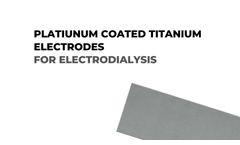
The performance and efficiency of electrodialysis systems depend on the choice of electrode materials. Titanium coated platinum electrodes have gained significant attention in the field of electrodialysis due to their unique characteristics and advantages. In this article, we will present the benefits and applications of titanium ...
ByYASA ET

Some common types include glass electrode sensors, ISFET (Ion-Selective Field Effect Transistor) sensors, and combination sensors. Glass electrode sensors are the most widely used and offer high accuracy. ISFET sensors are suitable for harsh environments but may have limitations in certain applications. ...
Electrodes are crucial components in many different industries, ranging from electroplating to water treatment and beyond. The type of electrode used can greatly impact the effectiveness and efficiency of the process, making it important to choose the right one for the job.If you're ready to learn more about the advantages of electrodes with ...
ByYASA ET

Conversely, choosing the wrong pH sensor will not only lead to inaccurate measurements, but also damage the electrodes, resulting in increased engineering costs. For different applications, we introduce the following four most widely used ph sensor electrodes: 1, pH composite sensor An electrode that combines a pH glass ...

Your sodium hypochlorite generator keeps your rig or vessel’s cooling water systems free of biofouling. This system is essential—and expensive. Fortunately, routine maintenance and consistent check-ins on its performance will go a long way towards protecting your hypochlorite generator and its parts as well as your investment. However, it’s equally crucial to have an expert ...
ByH2O Inc.

Challenge An electrode manufacturer was looking for a better method of electrode coating and requested a collaborative effort with Dürr in an effort to develop a simultaneous two-sided coating and drying process that did not require a vertical web path through the dryer. ...

In this study, the effects of the electrode materials and working conditions were investigated. The experimental results show that the type 1 (iridium oxide-coated anode and cathode) electrode system generated a high concentration of free available chlorines (FACs) because iridium has higher electrocatalytic activity than ruthenium. ...
This study focuses on two main aspects: developing a novel cost-effective electrode material and power production from domestic wastewater using three different mediators. Methylene blue (MB), neutral red (NR) and 2-hydroxy-1,4-naphthoquinone (HNQ) were selected as electrode mediators with different concentrations. A tin-coated copper mesh ...