
Cod Data Articles & Analysis
16 articles found
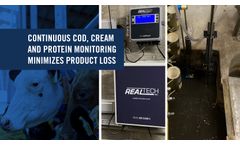
The facility looked to Real Tech to help achieve these goals, installing an industrial grade, real-time BOD/COD probe on the effluent of their production plant. The wastewater probe delivered reliable and continuous COD, cream and protein data, in addition to event notification. ...
The required aeration rate of a biological treatment system is determined by three key parameters: incoming organic loading expressed in terms of COD or BOD, dissolved oxygen (DO) concentration maintained in the aeration tank, and the concentration of microorganisms maintained in the aeration tank expressed as MLSS. ...

The system consists of sensors installed in the water supply that are connected to the data acquisition system. The sensor measures COD/BOD levels and transmits the data to the data acquisition system. The data is then processed and analyzed using specialized software that can provide real-time alerts and ...

Figure 2 below displays real-time COD data from a monitoring system installed in the primary settling basin for nutrient dose optimization. Laboratory COD samples are plotted in red displaying the reliability and accuracy of real-time monitoring over a wide range of concentrations. ...

"The sensor has been really useful and we are developing a good correlation between the COD mass loading and the MET data. Our next step is to use this to further automate our oxygen feed rate to the ...

Developed for chemical organic matter (COD) and turbidity responses, the quadratic polynomial model is suitable for prediction within the range of simulated variables as it showed that the optimum conditions were m of 5.55 g/L at pH 7.05, with a determination coefficient R² at 99.33%, 99.92% and adjusted R² at 98.85% and 99.86% for both COD and turbidity. We ...

In the background, members of his team are analyzing real time chemical oxygen demand (COD) and biochemical oxygen demand (BOD) data coming from various water and waste water treatment facilities from around the world, as a part of both sales and strategic development collaborations. Before MANTECH’s PeCOD, real time COD ...

The challenge Besides the refurbishment of the plant, the client’s main need was to face a considerable increase of the flowrate of the wastewater to be treated, having a COD inlet value of 3000 mg/l, and redoubling the capacity of the existing plant. ...
ByIdraflot
In the present study, the effect of short-term organic shock loads (675, 799, 1,084 and 1,410 mg COD/L) on the treatment performance of a pilot-scale vermifilter (VF), employing an epigeic earthworm Eisenia fetida and treating synthetic domestic wastewater is investigated. ...

Hydrolysis of hydrolysable chemical oxygen demand (COD) and the utilization of readily biodegradable COD (rbCOD) are the most important processes in the sewer collection system. ...

"That is why we were looking for a new. cheaper, total solution, which we could use to eliminate certain organic substances which cannot be discharged at all. and at the same time to reduce the chemical oxygen demand (COD) by around 70 percent." Project Data Application : Production of fragrances and flavours Wastewater volume : 150ms/day (peak level 70 ...
Vinasse wastewater of high organic content (COD = 131,000 mg/L) and low biodegradability (BOD5/COD = 0.11) cannot be easily managed and usually require several consecutive treatment steps. ...
The dual objectives of this study are to: (1) examine the relationship between COD and BOD in seawater environment with a rapid but reliable method for the measurement of BOD in seawater, and (2) establish the relationship model between BOD5 and COD in the firth of Dongbao River to predict the values of BOD5. ...
The calibration and validation steps were performed on extended on-site data. The global soluble COD, DO and OUR were properly reproduced. Possible causes for the remaining discrepancies between measured and simulated data were identified and suggestions for improvement directions were made to adapt ASM1 to winery effluents. ...

Degradation of the initial azo dyes was assessed by the measurement of the chemical oxygen demand (COD). Kinetic analysis of these data showed a pseudo-first order degradation reaction for all azo dyes. ...

Modern BMP tests usually involve multiple additions of substrate or wastewater to anaerobic reactors over 3 to 60 days to assess the ability for sustained biodegradation. Example BMP test data are shown in Figure A for three wastewater streams as compared to an ethanol control when using a Challenge AER-200 aerobic/anaerobic respirometer system. In this case, substrate injections ...