
Coliphage Articles & Analysis
50 articles found
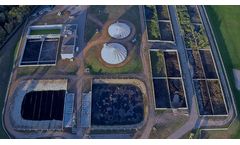
Microbiological parameters: E. coli, Legionella spp., intestinal nematodes, coliphages and clostridium spores. Therefore, water reuse is a growing trend for social, environmental, economic and political reasons, and technology plays a key role in this ...
ByIdrica

Airora’s technology has been demonstrated to be highly effective against MS2 Coliphage, an accepted surrogate (as agreed by the CDC & EPA) for SARS-Cov-2. ...
This is demonstrated by the testing carried out by Public Health England's microbiologists at Porton Down using MS2 Coliphage virus as a surrogate. In every test, our process quickly rendered MS2 Coliphage inactive in the air and on surfaces. The microbiologists at Porton Down use MS2 Coliphage as a gold-standard surrogate for pathogens ...
Airora's technology was tested for efficacy against pathogens by the UK Government’s Health Protection Agency at Porton Down, where it was demonstrated to kill 99.9999% of MS-2 Coliphage (a test surrogate for pathogenic respiratory viruses) in an 18m3 testing chamber in less than 5 minutes. ...

The present study aimed to establish the kinetics of the appearance of coliphage plaques using the double agar layer titration technique to evaluate the feasibility of using traditional coliphage plaque forming unit (PFU) enumeration as a rapid quantification method. ...
We measured traditional (Enterococcus spp. and Escherichia coli), as well as alternate (enterophages and coliphages) indicators of fecal contamination in a tropical watershed in Puerto Rico during a 1-year period, and examined their relationship with rainfall events across an urbanization gradient. Enterococcus spp. and E. coli concentrations were 4 to 5 logs higher in ...
This study was conducted to isolate phages in treated sewage collected from wastewater treatment plant, and explore their morphological diversity by transmission electron microscopy (TEM). Fates of total bacteriophages and their reduction by biological treatment were also assayed. Phages were isolated using the plaque assay then negatively stained and observed by electron microscope. Electron ...
However, it has not always been successful against viruses and, therefore, it is important to find new methods to disinfect water. Seventeen different coliphages were isolated from the treated municipal wastewater. These coliphages and MS2 were treated with different dosages of chlorine in drinking water, and a combined chlorine/ultraviolet irradiation treatment ...
This calls for the search of alternative viral indicators. Somatic coliphages’ (SOMCPH) ability for acting as surrogates for enteroviruses was assessed in 47 sludge samples subjected to novel treatment processes. ...
In a closed system at 23 °C, Safe Sludge disinfection achieved >9.3 log10 and >4.0 log10 decrease of indigenous Escherichia coli and seeded MS2 coliphage, respectively, within 10.6 hours, and 2.0 log10 inactivation of seeded Ascaris suum eggs within 2 weeks. ...
Fecal contamination levels in drains were high (Escherichia coli: geometric mean (GM), 8.60 cfu log10/100 mL; coliphage: GM, 5.56 pfu log10/100 mL), and did not differ by neighborhood or physical drain characteristics, indicating that frequency of contact with drains, and not drain type or location, drives exposure risk. ...
In this study, the potential for fecal indicator organisms enterococci (ENT) and F+ coliphage to be transported through marine beach aquifers was investigated. ...
The effects of protease activity in sludge on MS2 coliphage decay in digested and air dried sludge were also investigated. MS2 coliphage showed a 3.0–3.5 log10 reduction during incubation with sludge-protease extracts at 37 °C for 25 h. Proteases produced by indigenous microbes in sludge potentially increase coliphage inactivation ...
Initial results have demonstrated that the removal of somatic coliphages in both AS and TF systems is considerably higher than that of F-RNA coliphages, and that AS more effectively removes both phage groups than TF. ...
For comparison, two other important health-related viruses, poliovirus 1 (PV1) and coliphage MS2, were included in this study. The removal of NV by coagulation, flocculation and sedimentation processes based on RT-PCR assay in this study was 1.5 log10, which was similar to that of PV1 and a little lower than that of coliphage MS2 (2 log10) based on the same ...
For microorganisms such as Escherichia coli, coliphages and Giardia lamblia (cysts), an average reduction in concentrations by three logarithmic steps (99.9%) was achieved. ...
A virus tool based on Activated Sludge Model No. 3 for modeling virus elimination in activated sludge systems was developed and calibrated with the results from laboratory-scale batch tests and from measurements in a municipal wastewater treatment plant (WWTP). The somatic coliphages were used as an indicator for human pathogenic enteric viruses. ...
Standard drinking water parameters, as well as specific microbiological parameters (Legionella, Mycobacterium, Adenovirus, coliphage) and DBP formation were monitored. Final results highlighted that the plant could reach a good removal of bacteria and a significant reduction of viruses. ...
The indicators that better predicted the risks of symptoms (respiratory) in tropical recreational waters were total (somatic and male-specific) coliphages (OR = 1.56, p < 0.10, R2 = 3.79%) and Escherichia coli (OR = 1.38, p < 0.10, R2 = 1.97%). The present study supports the potential of coliphages as good ...
A study was conducted on the banks of the Yamuna River, Delhi, India, to ascertain if riverbank filtration (RBF) can significantly improve the quality of the highly polluted surface water in terms of virus removal (coliphages, enteric viruses). Human adenoviruses and noroviruses, both present in the Yamuna River in the range of 105 genomes/100 mL, were undetectable after 50 m ...