
Collagen Structure Articles & Analysis
19 articles found

Collagen is a crucial structural protein, widely presenting in human skin, bones, tendons, ligaments, and other tissues. It's essential for maintaining the structural integrity and function of tissues. The measurement of collagen can help researchers and physicians understand the pathological process of related diseases (such as ...

Collagen is an important structural protein that is widely found in various biological tissues, such as skin, bones, tendons, and blood vessels. Accurate determination of collagen content is very important for biomedical research, disease diagnosis and quality control of related products. Here are some commonly used methods for determining ...

Due to its crucial role in many biological processes, such as the structure and stability of the extracellular matrix, the analysis and detection of collagen have become an important area of research in the scientific field. ...

Recombinant Type III Collagen is a type of collagen protein produced through biotechnological methods. In nature, collagen is a vital structural protein, widely present in the skin, bones, tendons, and other connective tissues of humans and animals. Type III collagen is particularly common in newly formed ...

The triple-helix structure of proteins, especially the triple-helix structure of collagen, can also be analyzed by circular dichroism. In the triple-helix structure of collagen, each helix is composed of three polypeptide chains. ...

Recombinant collagen is a type of collagen protein expressed in microorganisms, animal cells, or plants through genetic engineering technology. ...

Thermal stability generally refers to the ability of collagen to maintain its structure and function during the heating process. ...

Collagen peptides are a type of small molecule peptide obtained from collagen through enzymatic hydrolysis or other methods. ...
Collagen is a primary structural protein in various tissues, especially in the skin, bones, tendons, and ligaments. ...

In this article, we will delve into the intricacies of this remarkable enzyme, exploring its structure, function, physiological importance, and the ways in which it is leveraged in various industries. ...

Collagen is the main structural protein in vertebrates. It plays an essential role in providing a scaffold for cellular support and thereby affecting cell attachment, migration, proliferation, differentiation, and survival. Natural animal collagen and its recombinant collagen are favorable replacements in human tissue engineering ...
Function of Beauty Peptides l Enhance Collagen Synthesis One of the main functions of beauty peptides is their ability to enhance collagen synthesis. Collagen is a protein responsible for providing structural support to the skin. ...

MMPs are capable of degrading ECM proteins such as collagen, gelatin, laminin, fibronectin, fibrinogen, elastin, and proteoglycans. ...
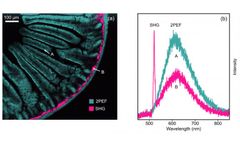
The resulting multiphoton image is shown in Figure 2(a). 2PEF at 630 nm from the Alexa Fluor® 568 dye is shown in teal and reveals the structure of the intestinal villi. The area shown in pink is SHG at 520 nm from fibrillar collagen near the intestinal wall. Collagen build up in intestine wall is indicative of many health problems such as ...
According to its structure, it can be divided into fibrous collagen, basement membrane collagen, microfibrillar collagen, anchored collagen, hexagonal reticular collagen, non-fibrous collagen, transmembrane collagen, etc. ...

RepliGut® 3D uses micro-molded collagen gel to make crypt-like structures. This architecture allows for the establishment of growth factor gradients along the length of the crypt. ...

In chondrocytes, dedifferentiation is marked by reduced expression of type II collagen (Col2) and an increase in expression of type I collagen (Col1). Col2 is the structural backbone of healthy cartilage and makes up more than 90% of collagen found in articular cartilage. ...

Results and Discussion Natural Leather Collagen True leather is made from animal skin, often cattle hide. The main constituent of animal skin is a protein called collagen. The building blocks of protein are amino acids, so the pyrolysis of collagen results in many ring structures such as pyrroles and indoles. ...

In the tanning process, animal hides and skins are treated to remove hair and nonstructured proteins and fats, leaving an essentially pure collagen matrix. The hides are then preserved by impregnation with tanning agents. ...