
Refine by
Combine Head Articles & Analysis
13 articles found

Total loss = Hydraulic + Volumetric + Mechanical These losses are not constant and are dependent on the pump speed and head. We can see in the below diagram that for a constant head the losses increase as pump speed increases and decreases below an optimum speed range. ...
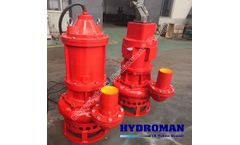
The submersible sand pump is mainly composed of three parts: pump head, motor and combined seal. The motor and pump are coaxial and submerge in the medium. ...

We recently wrote an article on how to read the information presented on a standard centrifugal pump performance curve and to develop this further we need to examine how this relates to the system curve. So, what is the system curve? This plots the head in terms of the static head (that does not change) in addition to the pressure loss through the system that will increase as the flow rate ...

Asset reliability and performance are the two most important factors for the oil and gas sector but as processes change and equipment ages, optimizing uptime can become a greater challenge. Changes to pump performance may be required for a number of reasons. For instance, refineries looking to increase production will examine the assets involved and identify any bottlenecks. In some cases, ...

The removable velocity-, temperature-, and pressure-sensing head is built into the vortex meter's body. To measure fluid velocity, the flowmeter incorporates a bluff body (shedder bar) in the flow stream and measures the frequency of vortices created by the shedder bar. ...

Fluorescence is the preferred method for measuring low oil levels (0 to 1,000 ppm). The transducer sensor head is a combined optical and ultrasonic component. The laser passes through a smaller sapphire window to excite the water sample, while the fluorescent properties are captured via optical fiber light guides and taken to: An optical filter and photo ...

Utilizing the centrifuge effect in a series of mixing heads, combined with the injection of air and chemicals under pressure, the GEM Technology can easily be integrated with the DAF. ...

Having developed mathematical models over the years we are able to design sampling heads and predict the particle d50 cut-off points and impaction velocity for any combination of sampling head hole count, hole size and volumetric flow. ...

Residential-scale microhydro-electric systems have the reputation of being the holy grail of home renewable-energy (RE) systems. While they lack some of the hype, magic, and bling of solar-electric (photovoltaic) systems, microhydro systems are a simple technology that most people can understand...at least in general. In this article, we'll look at some common microhydro system misconceptions, ...
See the “Microhydro Rules” sidebar for a formula about how water flow and vertical pressure (head) combine to determine the power available from a potential hydro site. ...

Net Positive Suction Head Available (NPSHa) – The difference between standard atmospheric pressure and the combination of atmospheric pressure at elevation, total dynamic suction lift, vapor pressure, and safety factor. ...

Mixing, tempering, multistep drying and control of grain temperature enhanced the milling quality while reducing the drying time and specific energy requirement. To achieve maximum head yield, minimum specific energy and minimum drying time, the optimum process parameters were grain bed depth 7-10 cm, air velocity 0.55-0.68 m/s and drying air temperature 112-116°C. This ...

In order to have confidence in the model, it is necessary to demonstrate that the calculated heads are reasonably close to the observed heads. This is generally accomplished by iteratively finding the aquifer properties, boundary conditions, and hydrologic stresses that result in calculated heads within an acceptable range of error. Although ...