
Refine by
Combustion Boiler Articles & Analysis
84 articles found
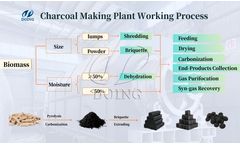
Primary Applications of Biocoal: As an eco-friendly solid fuel, it serves as a direct substitute for traditional coal and is widely utilized in scenarios requiring direct combustion to generate thermal energy, including residential heating, industrial boilers, and biomass power plants. ...

Combustion-based Equipment: Emissions from incomplete combustion of fuels in heating systems such as boilers, furnaces, and backup diesel generators.Welding and Thermal Processes: Soot particles and byproducts from incomplete combustion during welding, laser cutting, and thermal fabrication processes.Paint Shops and Curing Ovens: ...
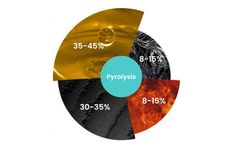
Operating under an oxygen-limited environment, this process separates complex hydrocarbon chains into fuel oil, carbon black, and combustible gas. Each output possesses distinct physicochemical characteristics and serves a specific role in industrial energy recovery and material production. ...
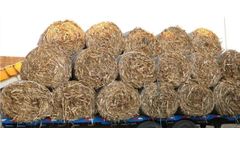
This "coal and biomass dancing in the same furnace" model, with its low retrofitting costs, is the mainstream choice for small industrial kilns/boilers. Coupled Co-Firing: Chongqing Conch Cement’s biomass co-firing project utilizes locally abundant agricultural and forestry waste, such as bamboo scraps and straw. ...

This project is dedicated to the mechanical pre-treatment of mixed municipal solid waste (MSW) before combustion in a circulating fluidized bed (CFB) boiler. Designed with a daily processing capacity of 1,000 tons, the system utilizes a two-stage shredding and mechanical separation process to efficiently classify and extract different waste components. The ...
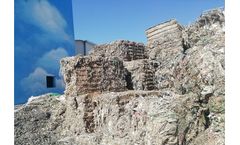
At the same time, the high price of coal has made it difficult to reduce the cost of coal combustion in the paper industry, which relies on fossil energy as the main source of heat production. A New Perspective: Paper Mill Waste Resourceful Treatment Paper mill waste is mainly light residue from paper mills, and the difficulty of treatment lies in the complicated composition ...
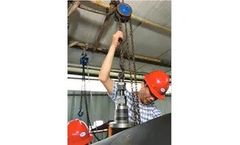
For consulting engineers tasked with planning, designing and supervising construction projects, today’s zero-emission high-voltage electrode boilers offer advantages over traditional fossil-fuel burning models. Used for centralized heating, power plants, swing-load balancing and fuel boiler replacements, they can match the capacity (up to 65 MW) and output (270,000 lb of steam per hour) of ...

These zero-emission, high-voltage electrode boilers are used in diverse environments for applications. For consulting engineers tasked with planning, designing, and supervising construction projects for a wide range of industries, advanced electric boilers - particularly high-voltage electrode boilers - can offer some advantages over traditional fossil fuel burning boilers. Due to advances in ...

CO poisoning occurs when fuel or gas combustion of residential gas furnaces and boilers is incomplete, leading to the production of the harmful CO gas. ...

Resource Recovery Tire pyrolysis plants enable the recovery of valuable resources from waste tires, including hydrocarbon-rich pyrolysis oil, high-quality carbon black, and combustible syngas. These products can be utilized as alternative fuels, raw materials for manufacturing, or additives in various industrial processes, contributing to resource conservation and circular ...
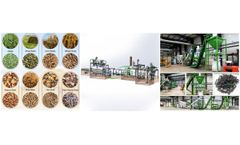
Products can be separated according to applications. The combustion effectiveness of pellets can get to 95% as well as above, as well as there will be no not enough combustion. ( 2 ) When burning, the product will not fire off throughout usage, which is risk-free. ( 3 ) Biomass gas pellets made by biomass pellets maker can be adjusted within the ...
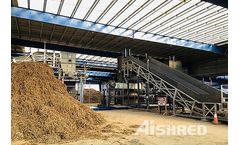
AIShred Sugarcane Bagasse Shredder can trun sugarcane bagasse and other plant materials into boiler fuel that for electricity or heat. AIShred has a fuel pretreatment system optimized for biomass cogeneration plants, which can continuously produce biomass fuels in large quantities. It can process everything from waste wood to crop straw to bagasse, turning them into uniform sizes ...
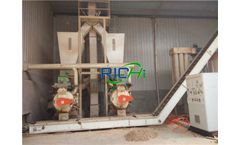
As a new sort of energy-saving power, it has excellent advancement potential customers in central heating boiler combustion. Biomass energy pellets have the qualities of large burning capacity and very high calorific worth after carbonization. ...
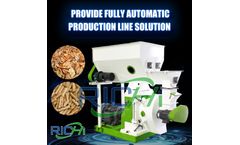
The higher the calorific worth, the much more enough the combustion. The fuel that can be fully burned is actually great. Naturally, there is no such excellent gas now, and also there will be some Usage exists, and also burning as fully as possible is to make complete use energy, conserve power, conserve expenses, and attain low-carbon life. ...
They cause corrosion in generation engines, mainly in the combustion chamber, valves and cylinder heads. Therefore, engine manufacturers request a maximum limit of halogenated hydrocarbons. ...

All three boilers combust exclusively pipeline quality natural gas to generate steam that is used at the site for process and space heating purposes. All three boilers have a rated capacity of 100,000 lbs per hour steam output. The exhaust gas stream is discharged to the atmosphere from each boiler through a separate stack. ...
Capacity: 1698 mmBTU A Michigan Cogeneration Plant owns and operates three gas-fired boilers and three combustion turbines designated BL1100, BL2100, BL3100, GTP1, GT2100, and GT3100 at the Dearborn, Michigan cogeneration site. The turbines combust exclusively pipeline natural gas and utilize a dry low-NOx combustor to minimize NOx emissions. ...

Customer: Any industry having a stake in improved combustion technologies Material measured: Combustion flue gases Installation: At the boiler outlet Function: Reliable and accurate monitoring of O2 and CO for combustion control optimization Application Combustion has a number of outputs such as the ash ...
ByENVEA

Activities that are owned by the company can include fuel combustion such as company machinery or vehicles, boilers, chemical production and air conditioning leaks. ...

Gases investigated by SST are as follows; H₂(Hydrogen) up to 2%; stoichiometric combustion CO (Carbon Monoxide) up to 2%; stoichiometric combustion CH₄ (Methane) up to 2.5%; stoichiometric combustion NH₃ (Ammonia) up to 1500ppm; stoichiometric combustion Heavy Metals Vapours from metals such as ...