
Refine by
Concrete Analysis Articles & Analysis
29 articles found

These logistical bottlenecks can delay concrete delivery and ruin the wet batch. Therefore, on-site concrete mixing represents the most reliable way to maintain quality. ...
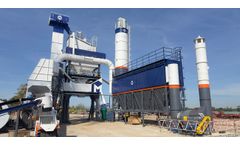
Site-mobilization budget achievement demands integrated analysis extending far beyond isolated equipment quotations. Engineering Specifications Impact Foundation Requirements High-capacity asphalt mixing plant for sale with 240-320 TPH output impose substantial foundation demands. Reinforced concrete footings capable of withstanding drum dynamic loads and ...
ByMacroad
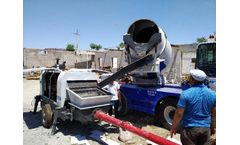
This growth fuels the demand for efficient concrete mixing solutions, with self-loading concrete mixers becoming a preferred choice due to their mobility and on-site mixing capabilities. 2. ...

Biaxial HDPE geogrid is a major geosynthetic material with unique properties and efficacy compared with other geosynthetics. The biaxial HDPE geogrid is often used as a reinforcing material for reinforced soil structures or a reinforcing material for composite materials. The HDPE geogrid is divided into four categories: plastic geogrid, steel-plastic geogrid, glass fiber geogrid, and polyester ...

OBJECTIVE The surface decontamination efficacy determination of DeconGelTM 1101 on stainless steel, aluminum, carbon steel, and concrete surfaces contaminated with cadmium compounds (cadmium chloride (CdCl2) and cadmium oxide (CdO)) was performed with ICP-OES (Inductively Coupled Plasma-Optical Emission Spectroscopy) according to Environmental Protection Agency (EPA) SW-846 ...
Abstract Surface decontamination efficacy determination of DeconGel™ 1101 on aluminum, stainless steel, and concrete surfaces contaminated with Navy Dye Marker was performed with LC/MS (Liquid Chromatography/Mass Spectrometry) according to Environmental Protection Agency (EPA) SW-846 Methods: 3500C (sampling) and 8321B (analysis). ...

The present paper analyses the behaviour of moment resisting frames in reinforced concrete subject to earthquakes recorded in near–field areas. In these areas, the signals show impulsive–type accelerograms, with velocity and displacement peaks higher than in far–field zones especially for the fault–normal component of the ground motion velocity in the direction of propagation of ...
In this paper, attention is focused on the modelling and nonlinear seismic analysis of framed structures equipped with friction, metallic yielding, viscoelastic and viscous dampers. A design procedure is proposed for proportioning damped braces in order to attain, for a specific level of seismic intensity, a designated performance level of the structure. A six–storey reinforced ...
This is mainly due to the flexure–dominated behavior of slender column and the non–contribution of the confinement to the flexural stiffness of the concrete. In this paper, a numerical analysis was conducted in the view to establish the upper–bound slenderness limit of SSTT–confined HSC columns. ...
Reinforced concrete multi–panel flat slabs subjected to punching shear are investigated in this study on the basis of finite element analysis. The study involves development of a non–linear material model strategy based on past experimental investigations which implements solution for a realistic description of punching shear of RC slabs for several types of ...
Composite ferrocement–concrete beams have been introduced in the literature as a viable alternative for the conventional reinforced concrete beams. This paper presents a proposed theoretical and a three–dimensional non–linear finite element models for simulating and analysis of composite ferrocement–concrete system. The ...
The numerical formulation and a finite element computer program were developed for the non–linear analysis of reinforced concrete skew slabs. It is important to ensure that the proposed model should perform well in a variety of situations. ...
This paper provides an analytical method based on equilibrium of sectional analysis for predicting the shear load capacity and the mode of failure for beams reinforced with spiral links under different spiral configurations.Keywords: shear transfer mechanisms, spiral reinforcements, sectional crack analysis, shear evaluation, reinforced concrete ...
This paper investigates the use of washed post–consumer Recycled Glass (RG) as replacement of 7.5% and 15%#37; silica aggregate in concretes used to manufacture roof tiles. Three grading of RG were studied, defined by the retained particles on the following US Tyler mesh sieves: 4–10 (4.76–1.68 mm), 10–20 (1.68–0.84 mm) and 20–50 (0.84–0.30 mm). Metakaolin (MK) was used to replace 7.5% and 15% ...
The main purpose of this study is to propose an evaluation method that can be used for analysing the time–dependent seismic reliability of reinforced concrete (RC) buildings located in a corrosive environment with high seismic hazard. ...
This study investigated the performance of a laterised cylindrical shell under hydrostatic loading. The properties of laterised concrete at optimum mix proportion were adopted in performing the static analysis of the cylindrical shell structure under the action of hydrostatic pressures using Pasternack's equations formulated on the basis of theory of shell of ...
This study primarily explores the experimental study on the behaviour of full scale size concrete columns reinforced internally with non–corrosive reinforcements, i.e., glass fibre reinforced polymer (GFRP) reinforcements combined bending and axial loads. ...
Some relationships presented here are also useful for a progressive collapse analysis of reinforced concrete structures.Keywords: impact, shock, plasticity, progressive collapse, structural engineering, large deflections, World Trade Center, WTC towers, column buckling, reinforced concrete ...
This experimental study primarily focuses on the joint shear strength of full scale size exterior concrete beam–column joint reinforced internally with glass fibre reinforced polymer (GFRP) reinforcements under monotonically increasing load on beams keeping constant load on columns. Four series of joints and total of 14 numbers of such specimens are cast and tested for different ...
The main measure for improving the durability of reinforced concrete structure is to increase the thickness of concrete protective cover, but the excessive thickness will influence the performance of the mechanical properties of structure seriously. Based on concrete structure damage deteriorating law, considering that it is a dynamic process ...