
Condensing Turbine Articles & Analysis
17 articles found

The plant will be supplied with 26.0MW worth of fuel to produce 24.4MW of steam to power a steam turbine with an electrical output of up to 6.2MWei and delivers up to l8.0MWth over the company’s district heating network and process heat to a neighboring saw mill. ...
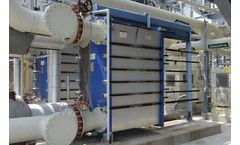
For example, a critical issue in the power industry is steam surface condenser performance, in which the condenser, as its name implies, converts turbine exhaust steam into condensate for return to the boiler. ...

Quick Facts LOCATION: Galveston, TX MARKET SECTOR: University/Hospital FACILITY SIZE: 45+ buildings, 2+ million gross square feet FACILITY PEAK LOAD: 45 MW FACILITY AVERAGE LOAD: 30 MW EQUIPMENT: East Plant: Solar Taurus 60 5.5 MW gas combustion turbine, a 2 MW condensing extraction steam turbine, heat recovery steam boiler, one 1 MW diesel ...

Traditionally, many campuses, universities, hospitals, and corporations have estimated steam flow by measuring condensate or using turbine meters. In this era of rising energy costs, accurate steam usage data is critical to control costs. Facility managers have long known that the condensate method lacks accuracy and turbine ...

In addition to purifying air, activated carbon is also used to preserve radioactive gases in the air that is vacuumed out of the boiling water reactor turbine condenser in nuclear plants. This way, it prevents the loss or spread of radioactive substances by trapping them in the charcoal particles. ...

Significant heat exchange occurs between steam and turbine rotors during the start-up process and even more intensive heat exchange takes place during the condensation phase in cold start-up mode, which leads to further thermal stresses and lifetime reduction. ...
The machinery is operated all year round and uses two steam turbines, driven by compressors, to condense air and product gas. The goal was to condense the waste steam from the turbines as effectively as possible. ...

Other systems cool down steam that hasn’t been used in steam turbines, for example, condensing vapour into liquid again before re-feeding it into the boiler. When there is little steam to be returned to the condenser, less seawater is required, enabling the speed of the pump to be reduced to a necessary minimum. ...

The design parameters of the plant were chosen as: compressor pressure ratio, compressor isentropic efficiency, gas turbine isentropic efficiency, and turbine inlet temperature, pinch difference temperature, steam turbine inlet temperature, steam turbine isentropic efficiency, condenser pressure, and pump ...
The effect of ambient weather condition was considered on the condenser pressure. It was shown that high ambient temperature has more adverse effect on the exergy efficiency than the energy efficiency. As ambient temperature increases, the exergy efficiency of the boiler, condenser, heaters and feed water pump decrease, while the exergy efficiency of the ...

The magnitude of uprate from increased steam generation will be limited by the maximum capacity of the weakest link in the cycle, which for many plants is the condenser. The condensers on many units are already pushed to their limit. ...
The other is a refrigerated wind turbine system, Water from Air, which offers novel means to collect water from wind.Keywords: arid drought, seawater distillation, seawater inland, solar distillation, water condensation, water desalination, water ecosystems, water from air, wind condensation, wind turbine refrigeration, water ...
CHP plants with heat rejection facilities can operate a mix of cogeneration and condensing activities. Quantifying the energy flows of both activities properly requires knowledge of the design power-to-heat ratios of the CHP processes (steam and gas turbines, combustion engines). ...

The steam is brought to the surface through production wells and then expanded through a turbine to produce electricity. Coming out of the turbine is the condensed steam and any non-condensible gases (NCG) associated with the steam. The condensed steam is usually pumped back into the underground formation. ...
In conclusion, it is found that combined cycle cogeneration systems with extraction condensing steam turbines are thermodynamically and thermoeconomically more advantageous when compared to those with back-pressure steam turbines.Keywords: combined cycle cogeneration, energy analysis, exergy analysis, speco, thermodynamic analysis, thermoeconomic analysis, steam ...
Hence more than 60% of the energy of nuclear fuel being used escapes into the environment through turbine condensers at nuclear power stations. Cogeneration turbines that reduce heat loss by 20–30% are used at thermal power stations for efficiency upgrading. ...

The types of equipment that are vulnerabe to the build up of mussel colonies include: - Heat exchangers - Cooling systems - Air conditioning systems - Condenser units - Turbines - Fire fighting equipment - Small-diameter pipes - Seals - Valves Farms and golf courses may also be likely targets of ...