
Refine by
Confined Space Articles & Analysis
370 articles found
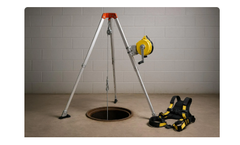
The complete confined space entry system is the integrated arrangement that supports entry, fall arrest, retrieval, and rescue for a specific space. ...

Underground mining remains a high-risk industrial activity, where methane (CH4) is one of the primary safety hazards. This colorless and odorless gas can accumulate unnoticed and form an explosive atmosphere at relatively low concentrations, making continuous monitoring essential for safe operation. Modern methane detection systems are a core element of mine safety infrastructure. They are used ...
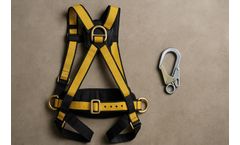
Specify the harness alongside the tripod, davit, winch, SRL, or retrieval system, and treat it as a confined space entry system rather than a standalone harness purchase.Welding and Hot WorkHot work can require different material decisions. ...
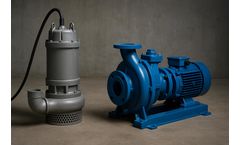
They are advantageous in deeper, denser, or confined pumping environments where stable inlet conditions are difficult to maintain. ...
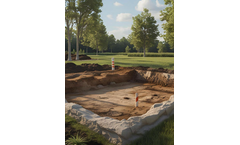
Our data better informs resource allocation through access to live data. Our clients unlock more effective site prioritization by highlighting risk in realtime and insitu remediation system success with only six sensors per site to deliver results to allow our clients to move onto other priority ...
ByLiORA
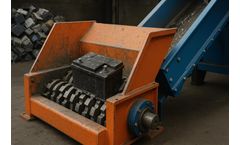
Cleaning often necessitates stopping the line and applying confined-space procedures. Cutter teeth and wear liners experience accelerated abrasion from lead oxide paste, shortening replacement intervals to weeks in some cases. ...

Introduction Welding processes generate a complex mix of airborne contaminants, including metal fumes, gases, and ultrafine particles. These contaminants are produced directly at the welding arc an dean quickly disperse into the surrounding workspace if not effectively controlled. In industrial environments where welding is performed continuously, this leads to poor air quality, reduced ...
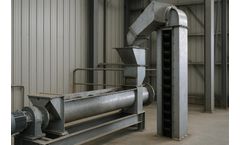
In battery recycling, plastics transport often uses centrifugal discharge, while paste handling uses continuous discharge; plants may employ two separate elevators to manage distinct streams.Bucket ConfigurationsStandard Buckets (V-shaped): General-purpose for free-flowing materials; typical capacity 0.5–5.0 L per bucket; continuous belt mounting.AA-Style Buckets: Rounded front for centrifugal ...
In today's fast-paced world, ensuring the integrity of plumbing and sewer systems is essential for both residential and commercial properties. One of the most effective tools for diagnosing issues within pipes is the pipe inspection camera. These specialized remote inspection cameras are designed to provide a comprehensive view of the interior of pipes, allowing technicians to spot problems that ...

Electrical rooms and vaults house some of the most crucial components of a building’s electrical infrastructure, including switchgear, transformers, distribution panels, and more. Regular inspections are essential to ensure the safety, functionality, and compliance of these systems. As technology advances, innovative equipment is increasingly used to enhance the accuracy, efficiency, and ...
Elevators are an essential part of modern infrastructure, transporting millions of people daily in office buildings, residential complexes, shopping malls, and hospitals. Given their frequent use and the potential risks involved, ensuring their safety through regular inspections is critical. Elevator safety inspections help prevent accidents, ensure compliance with safety regulations, and enhance ...
Chimneys are essential components of industrial operations, serving as conduits to expel exhaust gases safely and efficiently. However, the extreme conditions they endure—high temperatures, chemical exposure, and environmental wear—make regular inspections a necessity. Traditional inspection methods, while effective, are often labor-intensive, time-consuming, and pose significant ...
In industries where tank inspection and maintenance are critical, the challenges associated with traditional inspection methods are both significant and unavoidable. Tanks used to store liquids, gases, or other materials often require routine inspections to ensure their structural integrity, prevent leaks, and maintain safety standards. However, these inspections traditionally involve significant ...
However, inspecting these systems can often be challenging, given the pipes' locations in hard-to-reach, confined spaces. This is where pipe inspection cameras come into play. ...
Remote inspection cameras have revolutionized the way industries conduct visual inspections, offering a safe, efficient, and cost-effective method to examine hard-to-reach areas. These cameras come in various types, each designed for specific applications across industries such as infrastructure, manufacturing, utilities, and ...
In the past, inspecting manholes required physically entering these confined spaces, often exposing workers to hazardous environments. Fortunately, with the advent of the manhole inspection camera, municipalities and contractors can now perform detailed assessments safely and efficiently from the surface. ...
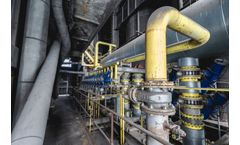
Maintaining underground sewer systems is essential to ensure public health, prevent flooding, and avoid costly infrastructure failures. A comprehensive sewer inspection helps municipalities and contractors detect blockages, cracks, corrosion, and other structural issues before they turn into serious problems. Traditionally, these inspections have been conducted using manual entry or ...
In many organizations, inspections are done seriously. Teams take the time to document, fill out reports, take photos, and write observations. At the moment they are performed, inspections do their job. They answer a very specific question: what is the condition of this asset today? But a few months later, that same inspection often loses its value. Six months go by—sometimes less—and ...
Inspecting manholes and other confined spaces is an essential task to ensure the proper functioning of underground infrastructure. ...
Inspections of pipelines, manholes, or confined spaces often expose tools to extreme conditions: moisture, heat, chemicals, mud, vibrations, and more. ...