
Refine by
Contaminant Biodegradation Articles & Analysis
53 articles found

The goal of an ETP is to remove contaminants from the wastewater so that the treated water can either be safely discharged into the environment or reused in various applications. ...
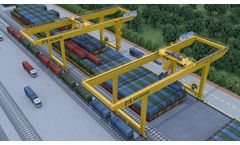
The choice of cranes and their maintenance can influence these factors.Hydraulic Fluid Management: Gantry cranes that use hydraulic systems must be equipped with effective fluid containment solutions to prevent leaks that can contaminate nearby waters. Biodegradable hydraulic fluids are also a more eco-friendly option. ...

If the waste stream is principally water with few solids, bug ponds may be used to biodegrade light organic contamination. If the waste stream has a high enough organic content to give it fuel value, it may be destroyed in a liquid burning incinerator. There is a broad class of wastes that lie between these options – too heavily ...

Traditional wastewater treatment relies on several steps, including: Physical Treatment: Physical treatment methods during primary treatment include the removal of solid particles and contaminants with processes like sedimentation, filtration, and screening. ...

Both are expensive and causes emissions into the atmosphere (global warming) respectively water contamination (Class II) and difficulties in biodegradation. Up to now there is no recycling solution for LC-Displays available. ...

The wastewater treatment process removes the contaminants from the wastewater and converts it into an element that can be returned to the water cycle with minimum impact on the environment. ...

These contaminants also present challenges to municipal wastewater treatment facilities, as these facilities are typically not equipped to treat these contaminants in an efficient way. ...

The unique aerobic, oxygen-rich design removes organic waste, nitrogen compounds, surfactants, and other biodegradable contaminants to produce effluent with up to 97% of pollutants removed. ...
Paint/Pigment companies often produce waste water containing elevated levels of suspended solids and color from their operations, in addition to non biodegradable contaminants. Based on the levels of constituent contaminants discharged, the higher the municipal waste water disposal surcharge costs for the paint manufacturer. ...

Furthermore, metagenomics can offer information about the interactions between microbes that influence water quality issues such as algal blooms, contaminant biodegradation, and pathogen dissemination. Contrary to Moore’s Law predictions, metagenomic sequencing power and complexity has doubled every five months. ...
These contaminants also present challenges to municipal wastewater treatment facilities, as these facilities are typically not equipped to treat these contaminants in an efficient way. ...

Abstract Contamination load and distribution of contaminants is shown. Gaiasafe Passive Collectors have been used successfully to determine single compounds out of the contamination load. Furthermore the spreading and biodegradation of contaminants was monitored over a large area in Abidjan. ...

In natural, remote, and protected surface‐water environments where contaminant releases are sporadic, contaminant biodegradation is a fundamental driver of exposure concentration, timing, duration, and, thus, EDC ecological risk. ...

EOS, or emulsified oil substrate, was used to stimulate anaerobic biodegradation of trichloroethene (TCE) and tetrachloroethene (PCE) at a former Army-owned manufacturing facility located in the Piedmont area of North Carolina. ...
The barrier will continue to be monitored to evaluate the long-term effectiveness and cost associated with the use of EOS® for in situ biodegradation of perchlorate and 1,1,1-TCA. INTRODUCTION Groundwater and surface water contaminated with perchlorate (CIO 4") has become a major environmental issue for the U.S. ...

Perfluoroalkyl and polyfluoroalkyl substances (PFASs) represent hazardous pollutants and are frequently detected in the environment, e.g. in contaminated groundwater. PFASs are persistent to biodegradation and conventional oxidation processes such as ozonation. ...
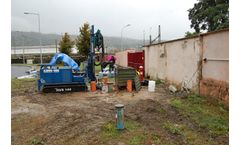
Site Remediation The Spolchemie site was chosen as one of the NanoRem case study sites, to test two types of nanoparticles (NPs) (zerovalent iron - nZVI and iron oxide NPs) for in situ remediation of BTEX (Benzene, Toluene, Ethylbenzene, and Xylenes) contamination. Nanoremediation was seen as an opportunity to enhance the in situ biodegradation of the BTEX ...

Challenge: A subject of considerable research in recent years, sulfate reducing bacteria have been demonstrated to be a dominant factor in the natural anaerobic biodegradation of petroleum hydrocarbons dissolved in groundwater. Antea Group has conducted extensive pilot testing at hundreds of sites across the United States that demonstrate the benefits of enhancing sulfate ...
Biological wastewater treatment systems require living biomass to remove biodegradable contaminants from wastewater. Effective treatment is directly dependent on the concentration of healthy biomass. ...

This work proposes a bacterial–based mathematical framework as a decision–support system for evaluating crude oil spill impact on agricultural soil. The rate of 'in situ' biodegradation of the crude oil predicts the half–life of the spilled crude oil in the soil ecosystem while the inherent toxicity of the spilled oil provided the impact value (E), which was integrated into a ...