
Refine by
Contaminant Data Articles & Analysis
128 articles found
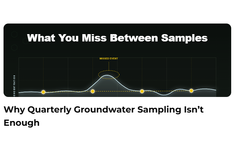
Groundwater contamination doesn’t move in neat, predictable intervals. Yet for decades, environmental monitoring programs have relied on quarterly or annual sampling as the standard approach to understanding subsurface conditions. While this method has been widely accepted, it introduces a critical challenge: it captures only snapshots in time,not the full story. As regulatory ...
ByLiORA

This statement reflects reality at contaminated sites worldwide, not a criticism of the hydrogeologists who designed these networks. Contamination plumes evolve over time, and our understanding of subsurface conditions improves as data accumulates. A well that provided critical information during initial site characterization may become ...
ByLiORA
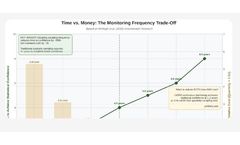
The Global Contamination Challenge Over 2 million contaminated sites exist globally, and we continue polluting more sites than we clean up. This disparity between the problems we face and our ability to solve them through innovation creates what I call an ingenuity gap. The gap persists not because solutions do not exist, but because industry practices lag behind scientific advances by decades. ...
ByLiORA
Understanding the Plume Overestimation Problem A Problem Hidden in Plain Sight I have spent years watching site managers struggle with a problem they cannot easily see: their plume maps are wrong. These maps are not slightly wrong, but systematically wrong in ways that cost real money and extend project timelines unnecessarily. The contamination boundaries drawn on quarterly monitoring ...
ByLiORA

The blog reviews how plants interact with pollution, which pollutants they affect, limitations of plants’ role, and how associated monitoring data is used to assess the effects of green initiatives on air-quality benefit claims. ...

The chemistry of a material’s outermost nanometres often determines its functional performance, making accurate surface characterisation vital for modern materials research. Yet, analysing these nanometre-scale layers is inherently challenging, as many surface-sensitive chemistry techniques, like AES, can modify the material or disturb its native chemical composition and techniques like EDX ...

With a compact and lightweight, it delivers real-time air quality data and seamlessly integrates with Smart Displays via API integration. ...

Traceability means a complete understanding of today’s complex food chain and testing at control points where contamination is likely to occur. Understanding the source of all raw ingredients, the CoA (Certificate of Analysis) report, other test results, and all associated documentation is critical. ...

How can modern software like ESdat help manage environmental data? ESdat offers a cloud-based solution for managing contaminated site data and environmental monitoring. ...
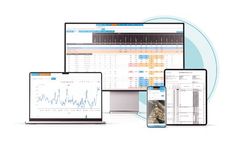
Wouldn’t it be sensible if your scientists and engineers could easily manage their data and analysis using modern online software? With the modern ESdat environmental data management system, engineers and scientists can easily manage the data associated with their projects themselves. ...

Wouldn’t it be sensible if your scientists and engineers could easily manage their data and analysis using modern online software? With the modern ESdat environmental data management system, engineers and scientists can easily manage the data associated with their projects themselves. ...

Many large organizations employ a team of data experts to maintain a complex enterprise system to manage their geo-environmental data. ...

Complexity of Sample PreparationSample processing steps need to be precisely controlled to avoid sample loss and contamination.2. Difficulty of Data Processing and AnalysisHandling massive amounts of data requires complex algorithms and powerful computing resources.3. Dynamic Range and Sensitivity LimitationsDetecting low-abundance proteins is ...

PSIRS – comprised of E-Tech, Tijuana-based Proyecto Fronterizo de Educacion Ambiental (PFEA) , the University of Sonora Department of Scientific and Technical Investigations (DICTUS) and Social Sciences Department, University of Arizona Emerging Contaminants laboratory (ALEC), CONAGUA—the governmental National Water Commision, Red Fronteriza de Salud y Ambiente, and ...

Original Measure (NEPM 1999) The National Environment Protection (Assessment of Site Contamination) Measure 1999 (NEPM 1999) provides a framework and guidelines for assessing and managing site contamination across Australia. ...

This is achieved by choosing the locations of the contaminant and product interfaces, and then using data from the image analysis to guide the position of a separation barrier. ...

How MIMS Contributes to Soil Quality Monitoring Detection of Soil Degradation: The HPR-40 DSA system can identify changes in soil gas composition, which may indicate degradation or contamination. This data is essential for implementing the EU’s mandate to regenerate degraded soils and create a toxic-free environment by 2050 (European Commission). ...
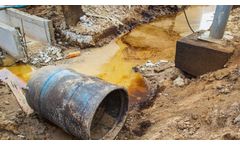
During Environmental Impact Assessments: To evaluate potential or existing environmental contamination and its impact on human health. In Remediation Projects: Planned and implemented cleanup operations at contaminated sites, ensuring that contaminant levels were reduced to acceptable risk levels. ...

In Africa, the issue of water quality is of paramount concern, as many regions face challenges related to pollution and contamination. Emerging contaminants in water have become a pressing issue, as they pose potential risks to human health and the environment. ...
Beside, analyzed and traced the contamination data. At first, our team detected water pollution at a particular location. ...