
Refine by
Contaminant Mobility Articles & Analysis
34 articles found

Site Sees PCE Concentrations Reduced Tenfold, While Eliminating Other Contaminants Newterra supplies a dynamic ozone generating system for a 2-phase pilot program and full-scale remedial operation. ...

The traditional pump-and-treat solution has been applied to the remediation of PFAS-impacted groundwater, but it is expensive and can take decades to achieve any signifi cant levels of removal. Additionally, contamination in the more mobile, high-permeability groundwater zone can migrate into immobile, low-permeability subsurface zones, and pump-and-treat is not ...
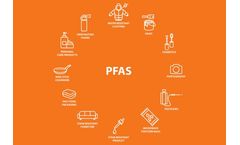
People can be exposed to PFAs in many ways, such as through the air, eating contaminated animals or drinking contaminated water, working in occupations that deal with PFAS, and using household products that contain PFAS. ...

The MiniCapt Mobile microbial contamination monitoring instrument now helps you further reduce contamination introduced during monitoring activities with a new antibacterial housing. Did you know that Particle Measuring Systems recently released the MiniCapt Mobile Microbial Particle Counter with a new antibacterial housing? In ...

This is the third and final post in our series providing you with tips and tricks on the proper use of ion chromatography columns. In the first part, we mostly discussed the standard operation conditions as well as operational limits for columns, while in the second post, we focused on application related topics and what elution parameters can be changed to modify the separation performance. In ...

People can be exposed to PFAs in many ways, such as through the air, eating contaminated animals or drinking contaminated water, working in occupations that deal with PFAS, and using household products that contain PFAS. ...
In this short video, Frank Panofen, PhD, and Daniele Pandolfi discuss the following cleanroom monitoring topics: Viable monitoring in pharmaceutical manufacturing Risk-based approach to monitoring methodology and design, classification and qualification Continuous sampling meaning and applications Active air sampling and real-time testing Changing regulatory expectations for pharmaceutical ...

In addition, nitrates are highly mobile and can contaminate groundwater, with serious consequences for wells and drinking water treatment. ...
Surfactants are well known to increase solubility/mobility of hydrocarbons and can be used to remediate contaminated water and soil. We wanted to explore if Ivey sol R 106 used at less than the critical micelle concentration (CMC) could effectively mobilize PAH (polycyclic aromatic hydrocarbons) from contaminated soil. ...

It is a result of co-eluting components, usually the material in the sample other than the analytes or the mobile phase additives (can also be the contaminants from your LC mobile phase, yak!). ...

Without prompt upgrades, we are likely to see deteriorating water quality, with more incidents of lead or arsenic poisoning and bacterial and viral contamination, and increasing numbers of leaks disrupting water service and leading to costly emergency repairs. ...
ByEnsia

However, the magnitude and saturation dependence differed significantly from what has been seen for activated carbons, presumably reflecting the unique surface chemistries of these two BC materials and suggesting BC‐specific sorption coefficients will yield more accurate assessments of contaminant mobility and bioavailability and evaluation of a site's response ...

The cleanup continues to address remaining contamination at the Site including soil, sediment, groundwater and surface water. ...

Inertisation is thus far the only technology for the conversion of leachate and contaminated water into an inert product, thereby facilitating handling and disposal in MSW landfills. ...

Your company is committed to supplying clean, safe drinking water to millions of people, so it has implemented a sophisticated water sampling program to ensure water is free of contaminants. LIMS and The Mobile Lab: Data at your fingertips Across this water company’s territory, technicians just like you are collecting and testing samples from reservoirs, ...

Provisions were made in the final design to include an Engineered Cap that would cover over 75,000 cubic yards of sediment to ensure there would be no re-suspension of contaminants. Reach #3 posed some unique geo-mechanical challenges to the design engineer due to the fact that the organic laden sediments being capped were very unstable and offered little bearing capacity to ...
ByCETCO
Fullerene nanoparticles (nC60) in aqueous environments can significantly enhance the transport of hydrophobic organic contaminants by serving as a contaminant carrier. Here, the authors examine the effect of the solvent‐exchange process on nC60 aggregate formation, and subsequently, on nC60's contaminant‐mobilizing capability. ...

From the simulation model, it is recommended that a mitigation measure should be performed to reduce the risk from landfill contamination. Hazardous waste should be separated for proper management. Groundwater contamination in the aquifer should be closely monitored. Consumption of groundwater in a 500 m radius must be avoided. In addition, rehabilitation of the ...
The settling of stormwater particles leads to a contaminated sediment layer. Wild plants can colonize these basins and can also play a role on the fate of heavy metals either directly by their uptake or indirectly by modification of physico-chemical characteristics of the sediment and therefore by modification of the mobility of heavy metals. The aim of this ...
Contaminants, including hydrocarbons (LNAPL), chlorinates (DNAPL) and heavy metals, are sorbed onto the substrates and so have reduced mobility and low water solubility. ...