
Refine by
Contaminated Site Articles & Analysis
616 articles found
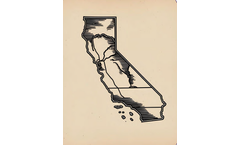
This significant milestone marks the first sensor-based monitoring approval known in California, enabling effective NSZD quantification using only three strategically deployed sensors for enhanced environmental ...
ByLiORA
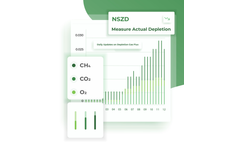
Effective resource allocation and enhancement to operational efficiency. With only 6 sensors and LiORA Insights there was dramatic acceleration in decision-making processes with sensor data and analytics to showcase: Bioremediation injection effectiveness NSZD rates quantified for transition decision Vapor intrusion protection maintained Portfolio optimization achieved ...
ByLiORA

The National Park Rapid Plume Assessment showcases the efficiency of LiORA Trends real-time modeling, utilizing 8 sensors to deliver critical insights in a fraction of the time. Get insights on your plume immediately rather than years or ...
ByLiORA

Achieved significant savings through innovative data collection and depletion rate monitoring with advanced sensor technology and real-time analytics. The project resulted in $748,680 in savings through the deployment of 17 sensors, collecting 23 million data points to monitor a 4,490 L/year depletion ...
ByLiORA

This case study highlights significant savings from risk-based closure strategies, achieving $400,000 in sampling costs with the deployment of 16 sensors + LiORA Insights over just two ...
ByLiORA

Biosurfactants have demonstrated effectiveness against oil spills and other persistent contaminants.Applications in CaliforniaUsed in wastewater treatment facilities to improve pollutant removal and process efficiency; applied to agricultural runoff to mitigate contaminant transport to water bodies; and utilized in site decontamination efforts where oily or ...

They also provide technical services which include self-control plans and management of specific food supply chains, investigation plans, characterization plans, contaminated site remediation projects, management and design of water/waste treatment plants, etc. ...

When engineers evaluate technologies for mercury remediation, discussions frequently focus on removal efficiency or binding strength. Laboratory studies often report sorption capacity and distribution coefficients (KD), which describe how much mercury a material can bind and how strongly it partitions from water onto the ...
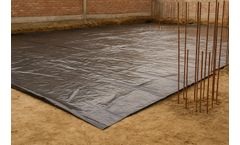
While reinforced cement concrete provides structural strength, it remains vulnerable to moisture ingress, capillary rise, and subsoil contamination, particularly in fine-grained alluvial soils typical of Siwan, Bihar. ...

When you are evaluating treatment media, you usually need answers fast. What contaminants can this media remove? Which product is the right fit for the water chemistry you are dealing with? What is happening at the chemical level that makes the treatment work? Those are the questions we had in mind when we created Sorbster’s new Heavy Metals & Contaminants Removal Product Line ...

SYNOPSIS: Over the two decades since its introduction into the United States, the CPT has now established its position as a routine, reliable, and expedient means for site characterization, stratigraphic profiling, evaluation of soil engineering parameters, and geotechnical design. ...

Yet tree planting alone does not guarantee thriving forests in all locations: arid conditions, steep slopes, contaminated sites, and rocky terrain can hinder establishment and survival. ...
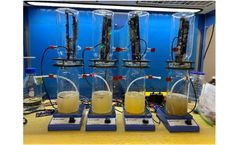
INTRODUCTION Environmental Material Science ("LiORA") provides a new generation of Internet of Things (loT) enabled non-dispersive infrared (NDIR) water sensors that provide high-resolution quantification of groundwater (GW) petroleum hydrocarbon (PHC) concentrations. The current generation water sensor transmits data at 30-minute intervals using a 4-channel pyroelectric NDIR detector, along ...
ByLiORA

The Groundwater Modeling Problem Nobody Talks About There are roughly 60,000 leaking underground storage tank (LUST) releases in the EPA's active remediation backlog, and over 1,343 active Superfund sites on the National Priorities List.(1,2) The average remediation timeline for both exceeds 10 years.(3) Most of these sites share one thing: either no numerical groundwater model at all, or a ...
ByLiORA
Understanding the Plume Overestimation Problem A Problem Hidden in Plain Sight I have spent years watching site managers struggle with a problem they cannot easily see: their plume maps are wrong. These maps are not slightly wrong, but systematically wrong in ways that cost real money and extend project timelines unnecessarily. The contamination boundaries ...
ByLiORA
The result represents a hidden cost that compounds annually, with typical contaminated sites paying 20 to 40 percent more than necessary for monitoring that provides redundant information. ...
ByLiORA
Understanding What Monitoring Frequency Reveals Why Frequency Determines Knowledge I spend considerable time thinking about how we measure things underground. The physical act of lowering a bailer into a well or watching a pump purge three volumes of stagnant water forms only part of the story. The deeper question concerns what those groundwater measurements tell us and what the measurements ...
ByLiORA
This statement reflects reality at contaminated sites worldwide, not a criticism of the hydrogeologists who designed these networks. Contamination plumes evolve over time, and our understanding of subsurface conditions improves as data accumulates. A well that provided critical information during initial site characterization ...
ByLiORA

The Global Contamination Challenge Over 2 million contaminated sites exist globally, and we continue polluting more sites than we clean up. ...
ByLiORA

By processing demolition waste on-site or at a dedicated yard, a contractor eliminates the substantial cost of hauling and dumping contaminated concrete. ...