
Refine by
Cooling System Articles & Analysis
1,042 articles found
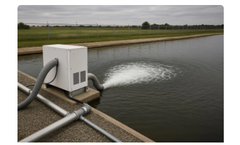
Modern systems enable long-term environmental and operational objectives.Why oxygen transfer is importantOxygen transfer directly affects water quality. ...
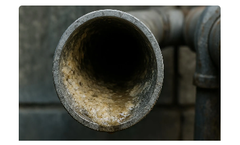
Biofilm is increasingly recognized as one of the most persistent and costly operational challenges across industrial water systems, wastewater infrastructure, agriculture, cooling towers, and food processing environments.Unlike loose contamination, biofilm forms structured microbial communities that attach directly to surfaces within pipelines, tanks, drains, ...
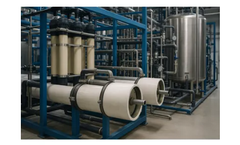
High-purity and ultrapure water are required for manufacturing, while large volumes of consistently treated water sustain cooling for high-density compute resources. Even with advances in supply security and treatment technologies, reuse systems themselves influence the pace of progress.Water Challenges in High TechIn advanced facilities, water cycles through ...
Corrosion at the electrical contacts and the degradation of cooling systems can lead to erratic engine performance.Electrical Integrity Anti-Corrosion Dielectric Application: Every electrical connector, sensor plug, and control relay should be treated with a high-grade dielectric spray to prevent terminal oxidation.Controller Housing: The central control cabinet ...

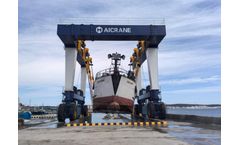
This article explains how PLC-based control systems work in RTG cranes, their core components, operational logic, advantages, and maintenance considerations.What Is a PLC-Based Control System in RTG Cranes? ...
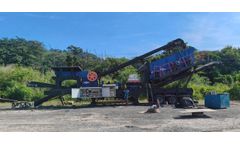
The difference between ambient temperature and the engine's maximum permissible coolant temperature — the thermal headroom within which the cooling system must operate — shrinks dramatically compared to temperate climate conditions, leaving far less buffer against cooling system degradation, radiator fouling, or demand spikes ...

Different plants employ varying thermal transmission methodologies, including direct heating, indirect heating, and externally insulated heat circulation systems. Direct heating systems expose reactor surfaces to combustion flames, allowing rapid temperature elevation and simplified structural design. ...
To prevent excessive reaction and generation of unnecessary by-products, the cracked gas needs to enter the quenching system immediately and be cooled to below 650°C to terminate the cracking reaction. 4) Gas separation and purification: The quenched cracked gas is compressed, cooled and separated to gradually remove impurities such as tar, ...
To prevent excessive reaction and generation of unnecessary by-products, the cracked gas needs to enter the quenching system immediately and be cooled to below 650°C to terminate the cracking reaction. 4) Gas separation and purification: The quenched cracked gas is compressed, cooled and separated to gradually remove impurities such as tar, ...

Heat-based medical waste processing systems often require extensive supporting infrastructure, including boiler systems, cooling equipment, sewer and wastewater connections, gas supply lines, permitting, environmental compliance measures, and facility modifications before processing can even begin. ...

The environmental benefit is a secondary advantage.Closed-Loop Cooling System Some batching plants use water for cooling. The mixer motors and the hydraulic system may require cooling. ...
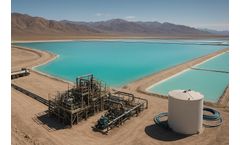
Fluence addresses this through decentralized water reuse and membrane aerated biofilm reactor (MABR) systems, enabling cooling with recycled or nonpotable water and reducing pressure on municipal supplies to support continued expansion.3. ...
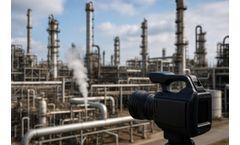
Most hydrocarbons absorb energy in the MWIR region, specifically between 3.2 and 3.4 micrometers. High-performance OGI systems use narrow-bandpass filters to reveal energy imbalances when gases are present. ...
ByOPGAL

Measurement values are scattered across individual controllers or control systems and are only actively monitored in the event of faults or deviations. ...
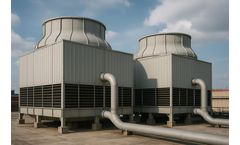
Operators must address these risk factors to prevent growth and dissemination.Important Risk Factors in Cooling TowersWarm water temperatures promote bacterial multiplicationBiofilm formation protects bacteria from disinfectantsScale and corrosion provide surfaces for microbial growthStagnant water zones reduce disinfectant circulationPoor maintenance leads to ...

Ideal for high-pressure and high-velocity systems. Applications: Used in critical systems such as oil and gas pipelines, power plants, and chemical industries. ...
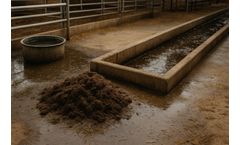
Moisture is introduced through drinking systems, cleaning processes, cooling mechanisms, and environmental exposure. ...

Against a backdrop of increasing demand for LNG, continued investment in new liquefaction plants and the drive to optimize existing plant profitability, the demonstrated value of a process digital twin has never been more important. This use case features the SLB (Schlumberger) Symmetry simulation platform, MySep Engine rigorous separator models and additionally, MySep Studio for ...
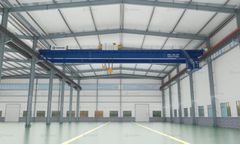
Energy-efficient motors generate significantly less heat due to lower energy losses, maintaining cooler operating temperatures even under heavy loads.Lower heat generation also reduces the need for auxiliary cooling systems or fan-based ventilation, saving energy and simplifying maintenance. ...
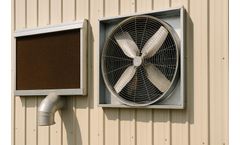
A properly designed and managed system helps maintain suitable environmental conditions, improving operational efficiency and energy performance. ...