
Refine by
Cooling Tower Water Articles & Analysis
253 articles found
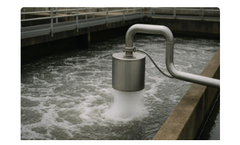
Oxygen transfer systems address these issues by releasing oxygen directly into the water. This process can rapidly and efficiently improve water quality. ...
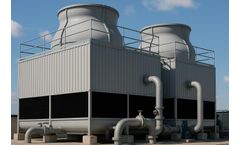
What Is a Cooling Tower Water Safety Plan? A water safety plan for cooling towers is a structured program to regulate water quality, identify hazards, monitor conditions, and implement corrective actions to ensure consistent maintenance and minimize microbial risks. ...
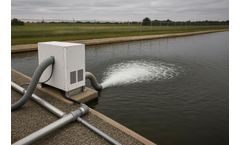
Water treatment technology is continually evolving, and efficient oxygen transfer is central to water quality, sustainability, and performance. ...
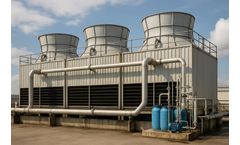
Industrial cooling towers require reliable water treatment to maintain operation and energy efficiency. Effective management of cooling tower water reduces unplanned downtime and supports maximum production throughput. Temperature and system performance Summer heat increases thermal and ...
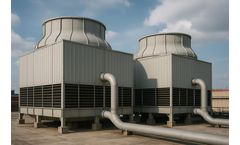
Industrial cooling towers are essential for heat rejection in many facilities but create conditions that favor Legionella proliferation. ...
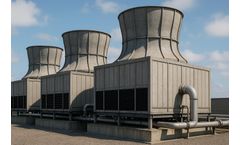
Cooling towers remove heat from water systems to keep buildings comfortable, but warm water promotes Legionella growth and the potential for legionnaires’ disease. Effective prevention relies on engineering controls, reliable operation, and consistent maintenance to minimize risk in daily operations.Why cooling ...

For nearly a decade, a seasoned water treatment technician had managed a 60,000-gallon open counter-flow cooling tower at a manufacturing facility near Houston, Texas. The system faced a persistent challenge: a water pH of ...
Filtration & Separation Enhancing Strainer Efficiency Targeted modifications can enhance the performance of automatic self-cleaning scraper strainers, says Robert Presser, President of Acme Engineering Products For industrial plant managers, automatic scraper strainers are among the closest solutions to a true “set-and-forget” system, effectively removing both large and fine ...
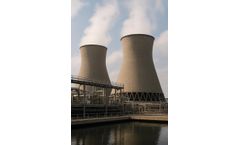
Cooling towers remain essential to process industries, but water quality challenges are intensifying. ...

Problem Cooling process water at Huhtamaki's Maine pulp & paper facility whilst ensuring continuous non-clogging ...
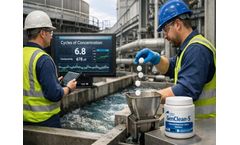
Industrial facilities operating cooling towers face a persistent challenge: balancing water conservation with system reliability. ...

Want to learn more about how radar measurements work? Curious about radar sensors’ strengths and limitations? You’re in the right place! Senix’s compact non-contact radar sensors—or CNCRs—utilize an 80 GHz radar signal to gather level measurements of bulk solids and liquids. This signal is sent through the face of the antenna in the form of a beam. It reaches the ...

The data center industry stands at a critical juncture. As facilities scale to meet exponential computing demands, water consumption has emerged as a defining operational challenge. Traditional approaches focused on water efficiency are no longer sufficient—leading operators are now pursuing water positive strategies that return more water to local watersheds than their facilities consume. ...
Introduction As facilities across agricultural, industrial, and municipal sectors prepare for seasonal shutdowns, winterization is often viewed as a simple operational pause: reduce flow, protect equipment, and wait for spring. But the science tells a different story. Cold temperatures, stagnation, and variable organic loads create ideal conditions for biofilm accumulation, setting the stage ...

The facility is a rendering plant, utilizing a limited waste water system. The basic design has a cooling tower, from which the water passes through a grease trap and then into an aeration tower. The water is then discharged into a series of three small lagoons, with a retention time that is ...

Treating wastewater to a high standard for reuse provides a dependable internal resource that strengthens both environmental and economic performance In most industries, water is both an essential and a potential challenge. It cools, cleans, rinses, steams, and transports materials, yet the same processes that depend on it also generate large volumes of wastewater. For decades, the common ...
Client: Keppel Seghers Site: Doha, Qatar Application: >98% efficiency NH3 scrubbing of <600ppm >98% efficiency H2S scrubbing of ...
Data centers consume approximately 200 billion gallons of water annually in the United States alone, with cooling systems accounting for 80-90% of that demand. As water scarcity intensifies across major data center markets—from Phoenix to Northern Virginia—operations managers face a critical challenge: maintaining uptime while addressing water availability constraints and rising ...
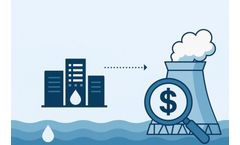
Your facility’s Water Usage Effectiveness (WUE) score looks acceptable on paper. Your cooling towers run reliably. ...
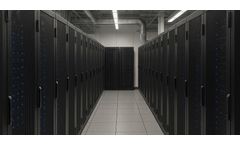
The exponential growth of artificial intelligence and cloud computing has transformed data centers from background infrastructure into critical water consumers. A typical hyperscale facility can consume 300,000 to 5 million gallons of water daily—equivalent to the usage of a small city. As regulatory frameworks tighten across the USA, Singapore, and the EU, facility directors face mounting ...