
Refine by
Copper Analysis Articles & Analysis
20 articles found

Heavy metal copper ions are non-biodegradable, and discharge of untreated copper-bearing wastewater poses severe threats to aquatic ecosystems and soil. Although copper is an essential trace element for humans, excessive copper accumulation in the body imposes a heavy burden on organs, especially the liver and gallbladder. ...
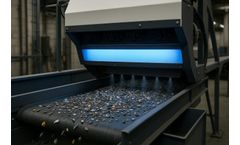
The selection and combination of these sensor types determine the material identification capability of a given installation.Evolution of Sorting TechnologyEarly optical sorting systems relied on visible-spectrum cameras for color-based decisions, adequate for simple glass cullet or paper streams but insufficient for battery material streams where critical distinctions (polypropylene versus ...

Water reuse opportunities in-plant were limited so the plant requested assistance from Sorbster® Inc. to mitigate the copper problem. Analysis indicated that the blowdown water contained an average of 191.5 µg/L of total copper and this level of copper was also present following one micron (nominal) bag filtration, an ...
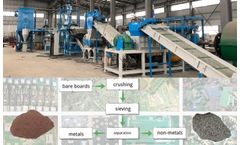
The final products of E waste pcb recycling machine has many usages, so the profit is very considerable. Here is a profit analysis chart that we made for your reference. 2.Copper cable wire recycling granulator Copper cable wire recycling granulator adapts advanced technology and materials to process various of wires and cables for pure ...
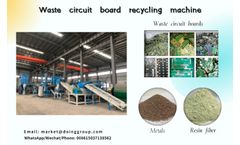
In the case of large quantities of copper, it is possible to directly sell it to copper electrolytic plants or copper factories. 2). ...

It can achieve next-level OES analysis, such as: The ability to analyse all alloying, treatment, trace, residual and tramp elements for iron alloys and steel. ...

Wastewaters containing Cu(II) and ligands are ubiquitous in various industrial sectors, and efficacy of copper removal processes, especially precipitation, is greatly compromised by ligands. ...
Abstract Surface decontamination efficacy determination of DeconGel 1101 on stainless steel, carbon steel, concrete, Lexan, and rubber surfaces contaminated with elemental copper and copper (I) oxide (Cu2O) was performed with ICP-OES (Inductively Coupled Plasma-Optical Emission Spectroscopy) according to Environmental Protection Agency (EPA) SW-846 Methods: 3005A ...
With fixed Cu:polyethylenimine (PEI) monomer:dithionite molar ratio, increasing copper concentration increases copper removal efficiency. Under fixed Cu:dithionite molar ratio and fixed Cu concentration, increasing PEI monomer:copper molar ratio decreases copper removal efficiency. The formation of nano-sized copper particles, ...
With fixed Cu:polyethylenimine (PEI) monomer:dithionite molar ratio, increasing copper concentration increases copper removal efficiency. Under fixed Cu:dithionite molar ratio and fixed Cu concentration, increasing PEI monomer:copper molar ratio decreases copper removal efficiency. The formation of nano-sized copper particles, ...

ABSTRACT Stack gases of a copper foundry's after-burner were measured on-site by low resolution FT-IR gas analyser. Concentrations of carbon dioxide (CO2), carbon monoxide (CO), sulfur dioxide (SO2), nitric oxide (NO), nitrogen dioxide (NO2), methane (CH4) and water vapor (H2O) were continuously measured for a period of three days. Validation of the method included laboratory determination of ...

The relative influence of model parameters was expressed as the absolute value of the range of variation observed in the resulting soil concentration when exposure is equal to the TRV. Rank Analysis of Variance was used to identify parameters with greatest influence on model output. ...
This study builds upon previous research that demonstrated the simplicity of obtaining metabolite profiles of bacteria in urban water networks, by using the metabolic profile of bacteria extracted from a reticulation pipe biofilm, which is known to cause microbial influenced corrosion (MIC). The extracellular metabolites of the isolated bacteria, and those bacteria in consortium, were analysed ...
With the development of our economy, the copper recycling market sees a rapid growth. Now 1/3 of the copper consumption comes from the recycle of the copper scrap, therefore the recycle and status of the transaction of the copper will produce greater influence on the whole copper market in the future. Meanwhile, as the construction of the circular economy has been continuously getting ...

A study has been carried out to characterise fuel before and after carbonisation, thermal analysis and mass balance of carbonisation process using a conventional charcoal kiln. For thermal analysis of carbonisation process, Copper Constantine thermocouples were installed at the centre of the air vent to measure the vertical temperature ...
Generic richness and SI were sensitive indicators for assessing the effect of heavy metals on soil nematode communities. The Canonical Correspondence Analysis (CCA) indicated that copper concentration and Cation Exchange Capacity (CEC) were most important environmental parameters that influenced nematode distribution.Keywords: ...
In this study, we propose to use a substance flow analysis as a tool for heavy metals management in urban areas. We illustrate the approach with the case of copper in Lausanne, Switzerland. ...
The actual experimental data which were used as our network's input gathered from published literature (for polypropylene tubes) and from the experiments carried out recently using copper tubes. The results of this study showed that ANN approach can give better approximation than the traditional theoretical correlations which was obtained by linear regression analysis.Keywords: ...
Estimates for mine tailings, smelter slag, mine overburden, stock buildup, loss of copper discards to the landfills, and energy and water use requirements have been presented based upon scenario analysis results of three alternative copper futures. ...

Abstract Cathodic adsorptive stripping voltammetry is one of the most sensitive analytical methods for ultratrace analysis. The detection limit is usually lower than 10 -9 mol/L. Most adsorptive stripping procedures have been focused on the one ligand/one analyte approach. In order to reduce analysis time and sample volume, the possibility of simultaneously ...