
Refine by
Copper Analyzer Articles & Analysis
7 articles found

Electric vehicle usage drives higher copper intensity, with EVs using approximately 80 kg of copper each, and wind turbines requiring 4–15 tonnes per megawatt. ...
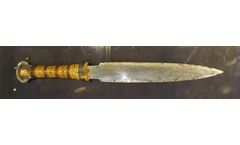
For most of human history, the materials behind great artifacts were a matter of educated guesswork. Was that dagger really made from a fallen star? How did a Roman glass cup change color from green to red? What alloys did ancient mints and silversmiths actually use? X-ray fluorescence (XRF) has quietly become one of the main tools for answering these questions. It lets scientists determine what ...
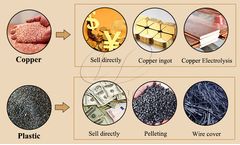
Generally speaking, the copper content of waste miscellaneous wire per ton is about 40%. A copper wire granulator is used for processing waste wire and cable to get pure copper and plastic. The copper separated by the copper wire granulator is about 0.39t from a ton of miscellaneous wires. ...
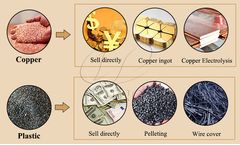
Generally speaking, the copper content of waste miscellaneous wire per ton is about 40%. A copper wire granulator is used for processing waste wire and cable to get pure copper and plastic. The copper separated by the copper wire granulator is about 0.39t from a ton of miscellaneous wires. ...

Electro-Chemical Devices introduces CA-6 Colorimetric copper analyzer Process and plant engineers treating municipal drinking water or industrial wastewater who need to monitor, remediate or remove harsh Iron (Fe) can use the precision CA-6 Colorimetric Copper Analyzer from Electro-Chemical Devices (ECD) with the goal to ...

There’s never been a more demanding time for those in the metals industry. Foundries and steel plants are under increasing pressure to use scrap materials in the melt. Supply chains are getting more complex and perhaps less reliable. Legislation for trace elements is getting ever tougher. The result is that to be able to consistently produce a profitable, high quality product that meets all ...

Fouling characteristics of crossflow flat-sheet membranes for two Nanofiltration (NF), one Ultrafiltration (UF), and one Microfiltration (MF) membranes were analyzed using 12.5 parts per million (mg/L) FeCl3 solution and 350 mg/L copper nanofluid. FeCl3 solution represents dissolved contaminant whereas copper nanofluid simulates particulate ...