
Refine by
Corn Yield Articles & Analysis
111 articles found

The global woodworking industry—encompassing furniture making, construction, and paper production—generates a staggering amount of sawdust annually. Estimates suggest that for every ton of processed wood, up to 150 kilograms of sawdust is produced, totaling millions of tons worldwide. For decades, this fine, powdery by-product was considered a nuisance: dumped in landfills where it ...
Biochar is a type of charcoal that is produced from organic materials such as wood, leaves, crop residues, and manure through a process called pyrolysis. Pyrolysis involves heating these materials in a low - oxygen environment, typically at temperatures between 300 - 800°C. This process causes the organic matter to break down, releasing volatile compounds and leaving behind a solid, carbon - ...

Treatment: Yield Check: 186 Bu AgZyme® with Ag Concepts® Super Hume®: 202 Bu Summary: Yield increase of 16 Bu/Acre with AgZyme® and Ag Concepts® Super Hume® Application: Ag Concepts® Super Hume® at a rate of 1 gallon per Acre and AgZyme® at a rate of 12.8 ounces per Acre. Both products were applied in furrow at planting with a liquid starter. All ...
Treatment: Yield Check: 197 Bu AgZyme® with Ag Concepts® Super Hume®: 221 Bu Summary: Yield increase of 25 Bu/Acre with AgZyme® and Ag Concepts® Super Hume® Application: 1 gallon per acre of Ag Concepts® Super Hume® with a liquid starter at planting. 2 quarts of Super Hume and 12.8 ounces of AgZyme® with a liquid starter at planting. The starter was ...
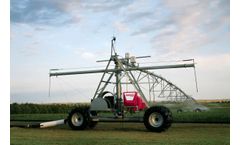
Key Difference between Lateral Move Irrigation and Centre Pivot Sprinklers, and What to Consider when Buying Lateral move irrigation systems, similar to center pivots, are a great solution for large fields. While center pivots rotate around a fixed point, laterals move continuously along the field’s length. This self-propelled design covers nearly 98% of the field area uniformly. The ...

"There are economic and environmental pressures to reduce nitrogen levels applied to soil while maintaining high corn yield," said Yongrui Wu. “Identifying genetic factors that increase nitrogen use efficiency is therefore ...

It was a 15 to 20 bushel difference in yield on the corn. We saw better width with the no-till, and I think that was because it was a drier spring. ...

BiOWiSH Technologies, Inc. engaged Helena Agri-Enterprises, LLC as a thirdparty Contract Research Organization (CRO) to conduct a study to determine the effects of BiOWiSH Crop Liquid coated UAN on corn production in ...

Tackling Malawi's Hidden Hunger through Selenium and Iodine biofortification to green vegetables and conservation agriculture (CA) field crops Introduction In sub-Saharan Africa, micronutrient deficiencies are common in poor and rural areas, due to over-farmed, depleted soils and restricted diets. In Malawi, three-quarters of the population are selenium-deficient, which can lead to weakened ...

Proper weed control early during the growing season is essential for reducing nutrient competition, gaining optimal crop health, and preventing yield loss. Weed management in corn and soybeans can be an extremely difficult problem to tackle and, if left unmanaged, can cause nearly a 52% corn yield loss and 49% ...
But understanding stand count can also reveal critical insights about uniform emergence and plant spacing — both of which can have a substantial effect on yield potential. Even when stand count numbers are good, non-uniform corn emergence can reduce yield potential by as much as 10 percent. ...

When using too little N, a crop such as corn results in lower yields and reduced profits. However, if too much N is applied, profits will be reduced, and environmental impact is likely to occur. ...

First, they identified areas of reduced and conventional tilling from previously published data outlining annual U.S. practices for 2005 to 2016. Using satellite-based crop yield models -- which take into account variables such as climate and crop life-cycles -- they also reviewed corn and soybean yields during this time. ...

The effect if it doesn’t get the amount of water it needs is different. You can stress a corn crop early on, and it will be fine. Yield loss will be negligible. You can stress a corn crop later in its life cycle and the effect will be much lower than if you stress it right when it’s forming grain. ...
ByGroGuru
At a time when grain markets continue to strain row crop revenue potential, many farmers are taking steps to do all they can to maximize productivity and yields. Excess water is a common yield robber with corn and other crops. ...

There is the National Corn Growers Association’s yield contest; the California Rice Yield Contest; and, in Arkansas, the Go for the Green Soybean Yield Contest. ...

Indigo announced yield forecasts in January for corn and soybeans across the Americas, democratizing data for the grower community to better navigate global markets during the U.S. government shutdown. ...
Kernel is also a forecasting system; for the past three seasons, Tellus forecasted US corn and soy yields throughout the growing season. The implications for a model that could do this with accuracy, speed, and breadth would be profound. The United States Department of Agriculture (USDA) shocked the industry in October of 2017 when it made a record-setting upward ...

One missed load on a 100 ac field can lead to error of 0.5% (assuming 180 bu/ac corn and a load is 1000bu). Grain Cart Data You might be using grain cart or combine data to track yield. ...
Int. J. Agron. Agri. Res. 12(3), 46-51, March 2018. To investigate the maize yield and nutrient concentration in its leaves as affected by biochar from different organic materials (wheat straw and sugarcane bagasse), a field experiment was conducted on maize crop during 2013 at koont research farm chakwal. The treatments were control, wheat straw biochar at 5t ha-1, and 10t ha-1, sugarcane ...