
Refine by
Crop Management Optimization Articles & Analysis
18 articles found

l Agriculture: Monitoring pigment content in crops can guide nutrient management and optimize yield. l Ecology: Pigment analysis provides insights into ecosystem functioning, such as plant adaptations to changing environments. ...

When it comes to agriculture, weather is an important aspect that determines crop health and yield. Unpredictable weather patterns pose a continuous challenge to farms, often leading to substantial crop losses and financial setbacks. However, with the innovation of advanced technology, leveraging weather data in agriculture has become a critical tool in ...
One exemplary case of digital transformation is Shree Agro Group’s adoption of KhetiBuddy’s Farmer Engagement and Management Solution. This initiative not only propelled their sales but also strengthened their relationships with farmers and dealers, setting a new benchmark in agricultural ...

In the challenging and ever-evolving world of agriculture, where unpredictability reigns and efficiency is paramount, Dowd Hill Farms stands as a testament to the power of innovation and strategic partnerships. Nestled in the expansive landscapes of Dodsland, Saskatchewan, this family-run operation has embraced cutting-edge agricultural technologies to transform its farming practices. The case ...
Let’s explore the benefits of an integration of wireless fuel monitoring technology and real-time data analytics, aligning with the advanced capabilities of your fuel farm management solution and highlighting the tangible benefits it offers to ...

By mapping variations in soil properties, farmers can tailor their management practices to optimize crop growth and resource use. Water Conservation: Monitoring soil moisture levels with sensors allows farmers to apply water precisely where and when it is needed, reducing water waste and energy consumption associated with irrigation. ...
ByJXCT

Optimizing Crop Yields and Resource Efficiency through Precision Agriculture In the pursuit of sustainable agriculture, precision farming has emerged as a game-changer, revolutionizing agricultural practices and fostering a more efficient and environmentally responsible approach to crop production. ...
This granular information empowers farmers to make informed decisions regarding irrigation, fertilization, and crop management, optimizing resource utilization and maximizing yields. ...
For instance, gardeners can plan their planting schedules based on weather forecasts, while hikers can determine the best time for their excursions. Optimizing Irrigation and Crop Management For agricultural applications, outdoor weather stations play a vital role in optimizing irrigation and crop ...
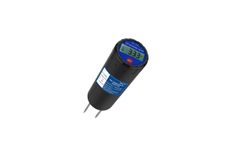
By measuring soil EC, farmers can gain insights into soil moisture levels and adjust irrigation practices accordingly. This helps in optimizing water usage, preventing over- or under-irrigation, and promoting efficient water management. ...
Carbon sequestration is a critical component of ensuring sustainable soil and water management, promoting biodiversity, fostering greener food supply chains, and enhancing resilience against climate extremes. However, putting carbon farming into practice to achieve that frequently, requires further investments; such as buying new equipment, devoting time and resources to soil analysis ...

Stepping forward with technological advancements Agriculture is one of the oldest industries known to man, and many traditional methods and commercial farming practices are still unrivalled. However, technological advancements are continuing at a rapid pace, and rather than shun these, commercial farmers can utilise them to improve their operations. Technology will probably never completely ...
You can maintain or improve soil fertility by adding nutrient inputs that offset nutrient loss. Keeping an optimal balance can pay off in major ways. Improved productivity. Good nutrient management increases your potential crop yield and builds more resilient crops. ...

How to successfully manage change with waste fibers in your plant. It is no coincidence that biogas technology is following a development trajectory towards biomethane production. ...

A monthly time-stepped chance constrained linear programming (CCLP) model was developed to derive optimal cropping patterns and optimal operational strategies for the Sri Ram Sagar Project, with stochastic inflows. The stochastic nature of the inflows was incorporated into the model in its equivalent deterministic form. These equivalent deterministic inflow values were estimated from the annual ...

Field experiments were conducted to evaluate the effects of improved crop management (OPT) for irrigated rice (Oryza sativa L.) on grain yield and N recovery efficiency in southwestern China. In the OPT treatment, rice seedlings were transplanted in a triangular spatial pattern and the N fertilizer was split, based on the difference between the estimated total N requirement and the soil and ...
Recent attention has focused on the use of perennial, warm-season grasses as renewable energy crops. The objective of this study was to assess the effects of N fertilization on partitioning of biomass and nutrients between above- and belowground plant components by four warm-season grass species in Iowa. ...
Rising research costs, broadening goals, intellectual property rights, and other concerns increase the need for robust management of crop improvement data. The data model of the International Crop Information System (ICIS) allows breeding processes to be recorded unambiguously in a relational database. This paper describes this model, which underlies the Genealogical Management System (GMS) of ...