
Refine by
Crop Nitrogen Articles & Analysis
71 articles found

The market is segmented into fertilizers, pesticides, adjuvants, and plant growth regulators, with key applications in crop-based and non-crop-based sectors. Market Overview Market Size for 2024: The agrochemicals market is projected to reach USD 253.29 billion. ...

Nitrogen is a crucial element used to help most crops thrive. Nitrogen fertilizer is used to refresh the soil that lacks nitrogen, so using it in every part of the farmland is optional. Nitrogen can be fed back into the soil using fertilizer or "Nitrogen Fixers." ...

**Nutrient Concentration**: The solid fraction obtained after dewatering is rich in nutrients like nitrogen, phosphorus, and potassium. These nutrients are essential for plant growth and can be used as a valuable organic fertilizer. 3. ...

The result is a healthy, uniform revegetation crop that provides consistent, long-term erosion control while significantly reducing overall revegetation costs. ...

Manna Irrigation offers a customized cloud-based, sensor-free software solution that helps growers and corporations optimize irrigation and monitor crop growth. Why Choose Manna Irrigation? Optimized Irrigation Maximize irrigation efficiency to enhance production processes and improve yield quantity and quality. ...

One of the most critical parts about a healthy crop rotation is bacteria – both good and bad – because when you change crops, you change pathogens. ...
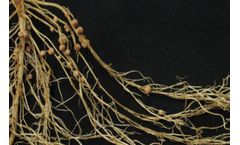
Applied directly onto the plant as part of your spraying program, this is different than the way a traditional pulse crop fixes nitrogen, for instance. While pulses rely on nodules in the root zone for nitrogen fixation, nitrogen-fixing bacteria utilizes plant leaves. As you spray the bacteria, it gloms onto your ...

The system operated satisfactorily during the first season producing commercially acceptable yields. The crop absorbed high levels of nitrogen from the wastewater. Special care is required in the feeding of the hay to animals. ...
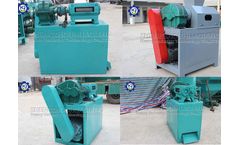
Using some bio-organic fertilizers can not only avoid the cumbersome process of traditional organic fertilizer production, but also can supply soil with many beneficial microorganisms to activate soil nutrients and reduce crop rotation damage. Certain special roller extrusion granulator machine for fertilizer has determined the suitable nutrient ratio according to the fertilizer ...

It is also starting to become clear that subsurface replenishment of soil water is another important factor affecting crop yield in dry years. “A good example was the excellent crop yields under the drought conditions of 2017. ...

“Part of the problem is people don’t trust the information,” says Ryan Hutchison of South Country Equipment in Saskatchewan. He was at Crop Connect 2019 in Winnipeg to give a presentation called Crop Intelligence — Trusting the Data. ...

How to prevent nitrogen loss: When crops are young and small, they have low nitrogen demand. ...
ByGrowers

Organic fertilizer contains not only mineral nutrients, but also organic components, which is conducive to improving the yield of crops and the quality of agricultural products. 2. Improve soil fertility. ...

The nutrients that most often limit the growth of plants (through their absence) in agriculture (land crop production) are nitrogen (N), phosphorus (P), and potassium (K). ...
ByFishward

Recent Danish research and trials have shown a significant reduction of ammonia volatilisation after application of the slurry in the field (typically a 50 % reduction compared to untreated slurry) and a subsequent increase of yield due to a higher amount of nitrogen available to the crop. To read the full article, please click ...

The key reason why bio charcoal is a superb soil additive is that it is loaded with micronutrients needed for crop growth, including calcium, nitrogen, zinc, phosphorus, and manganese, plus it improves soil aeration/drainage properties. ...
The reason why bio charcoal is a superb soil additive is it is rich in micronutrients needed for crop growth, including calcium, nitrogen, zinc, phosphorus, and manganese, and it also improves soil aeration/drainage properties. ...

Lack of additional yield increases at 16- and 20-gallon applications may have been influenced by inadequate levels of other key nutrients in the soil and the crop stage at the time of application. The added nitrogen was applied relatively late in the growing season. The crop was well into tillering, where added nitrogen has an ...

Both Swedish and European field trials show that winter oilseed rape that has taken up a lot of nitrogen in autumn needs less nitrogen in the spring. A thinner crop, which has not assimilated so much nitrogen in the autumn, needs more N fertilizer in the spring. ...
BySolvi AB

Nitrification inhibitor refers to a class of chemical substances that inhibit the biotransformation of ammonium nitrogen into nitrate nitrogen (NCT). Nitrification inhibitors reduce the formation and accumulation of nitrate in soil so that it can reduce the loss of nitrogenous fertilizer in the form of nitrate nitrogen and the ...