
Refine by
Crop Performance Articles & Analysis
44 articles found
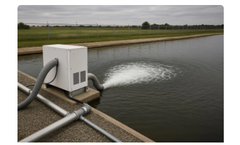
Water treatment technology is continually evolving, and efficient oxygen transfer is central to water quality, sustainability, and performance. Advanced nanobubble technology provides a smarter solution to elevate dissolved oxygen levels while reducing chemical and energy use.The nanobubble system has transformed the water environment in industrial contexts by generating ...

Components of a Purity Analysis A physical purity test divides the seed sample into distinct categories, each weighed separately: l Pure Seed (PS) – Seeds of the species being tested, including whole seeds and germinable broken seeds containing the embryo. l Other Crop Seeds (OCS) – Seeds of cultivated species other than the crop under analysis. ...

But in today’s world, farming isn't just about growing crops, it’s also about understanding the land, the water, and the air that support it. ...

The Relevance of Plant Hormone Analysis Analyzing plant hormones is vital in several contexts: Crop Improvement: Understanding hormonal pathways allows for the development of crops with enhanced growth traits, resilience to biotic and abiotic stresses, and improved nutritional profiles. ...

As global agricultural practices address environmental and economic challenges, regenerative agriculture has stood out as a promising approach to creating more sustainable and robust farming systems. This farming method focuses on restoring soil health, enhancing biodiversity, and improving water cycles, ultimately leading to more sustainable food production. Innovative tools and technologies are ...
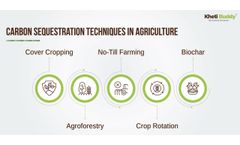
While farming activities have traditionally been associated with greenhouse gas emissions, innovative practices can turn agriculture into a significant carbon sink. This transformation hinges on effective carbon sequestration techniques, which capture and store atmospheric carbon dioxide in soils and plants. Implementing these methods is crucial in our fight against climate change. However, the ...
Agriculture has been the backbone of human civilization for generations, providing the essential resources needed for survival and growth. As global populations continue to rise, the demand for food production has never been greater. Traditional farming methods, once sufficient, are now struggling to meet the demands of modern food production. New-age techniques in crop management provide ...
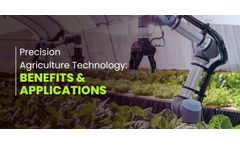
Precision agriculture (PA) is the use of advanced technologies to optimize field-level management. By leveraging data analytics, GPS, IoT, and various sensors, precision agriculture enables agronomists to make informed decisions, thereby enhancing crop yield and resource efficiency. This modern approach contrasts with traditional farming methods by emphasizing precision in monitoring, managing, ...
The integration of agricultural data analytics into farming practices has become increasingly essential. This approach, often termed “smart farming” or “precision farming” uses farm-level data to enhance productivity, sustainability, and profitability. In India, where agriculture is a vital sector supporting the livelihood of millions, the strategic use of data can ...

Optimizing Crop Yields and Resource Efficiency through Precision Agriculture In the pursuit of sustainable agriculture, precision farming has emerged as a game-changer, revolutionizing agricultural practices and fostering a more efficient and environmentally responsible approach to crop production. ...
This granular information empowers farmers to make informed decisions regarding irrigation, fertilization, and crop management, optimizing resource utilization and maximizing yields. ...

” Know what’s in your soil for a better fertilizer plan Healthy, nutrient-dense soils help to grow productive crops. As part of the commitment to supporting growers make the most informed decisions, Decisive Farming by TELUS Agriculture agronomists review soil tests and develop specific recommendations for each zone on a farm to account for variations in texture, ...

How to benefit from connected devices on your farm A growing number of farmers are using the internet of things (IoT) to save time, increase production and reduce costs. So, what is IoT and how can you benefit from using IoT solutions and connected devices in your ...

For instance, robotic feeders and milking parlors are now becoming common on dairy farms. On the crop production side, robotic, driverless tractors perform tillage tasks and fleets of robotic weeding machines cultivate weeds while farmers attend to other tasks. ...
ByAGRIVI
Indexes plant health status throughout the crop cycle. Predicts best fertilizing windows and computing the most cost-efficient amount of inputs based on crop status, input costs, predictive yields and crop value. ...
ByAGRIVI

INTRODUCTION: CROP AREA ESTIMATION The two components of agricultural production estimation are crop area and yield estimation. ...

Other applications that often require accurate gas mixtures are the creation of modified atmospheres for food preservation and crop growth.1 One way to perform in-house blending is to use a benchtop multi-component gas ...

Many crop soil in Iowa, for example, has high concentrations of P in their soils but most are organic or mineral forms not available for plant uptake unless converted to the inorganic form. As we are finding with most other plant and crop nutrients, if we maintain a healthy microbial population in our soil they will do the heavy lifting of organic to inorganic ...

Healthy soil systems act as an important natural carbon sink for the planet by sequestering atmospheric carbon dioxide and helping to reduce greenhouse gas concentrations. The value of our planet’s soil as a carbon store cannot be overlooked. Capable of storing twice the amount of carbon found in the atmosphere and three times that in above ground vegetation, the health of our soil ...
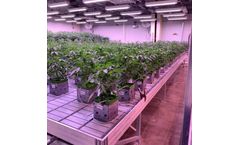
How do you achieve the highest yields with your lighting system? As we know, increasing light intensity up to a certain species-specific point, results in a corresponding increase in yield. And when light levels are not optimized for production, or the type of crop you are growing, you are going to have slower flowering, poor root development and plant structure, as well as reduced yields. There ...