
Refine by
Cropland Articles & Analysis
119 articles found
Soil Amendment: When applied to pastures and croplands, biochar improves soil structure, enhances water retention, and increases microbial activity. ...
For instance, nearly the entire state of Iowa falls in one PULA. There are almost no acres of cropland that do not fall into one of the generalist areas—even if that acre is not in a PULA. ...
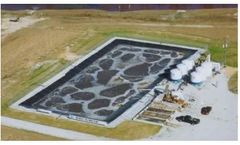
Problems with the existing design were a substantial odor and high levels of nitrogen requiring approximately 180 acres of cropland for liquid disposal. The conditions were such that the farm's permit was not going to be ...

Meanwhile, it is estimated that more than half of America’s sludge is spread on fields and cropland. A recent report asserts that roughly 20 million acres of farmland in the United States may be contaminated with PFAS as a result of biosolid application. ...

Background Nitrification is important in wastewater treatment as it helps remove ammonia, which is toxic to many fish. In addition, nitrification reduces nitrogenous oxygen demand (NOD) in wastewater effluents and is the first step in the nitrification/denitrification process. Incomplete nitrification can cause excess nitrite buildup and can temporarily limit ammonia oxidation. An abnormal ...
It's estimated that in case we were try using a 25% biochar soil amendment by weight across all cropland in North America and South America, this would remove roughly 250 million tonnes of carbon from your atmosphere each year! ...
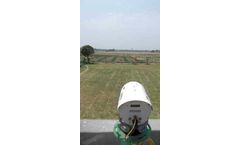
Three years ago, the Indian Institute of Remote Sciences (IIRS) in Dehradun, in collaboration with the Indian Agricultural Research Institute (IARI) in New Delhi chose the Kipp & Zonen LAS MkII to conduct studies in Energy Balance. Their research results have been published in the Journal of Earth System Science ...

Owners: Doug, Kim & Olin Claassen Potwin, Kansas, USA Farm’s Features: 1,400 sows farm, 4 week batch farrowing 8,000 finishings places, 220 farrowing places and 15 open-housing gestation pens Diversified production including 600 to 700 feeder cattle, 3000 acres in croplands and 800 acres in pasture. They have their own feed mill. They utilize their own corn ...
If we cut grain-fed meat from our diets, we could free up 50% of cropland and phase out 80% of nitrogen fertiliser use. As our recent Fixing Nitrogen report revealed, excess nitrogen has a huge impact on our rivers and wildflowers and drives nitrous oxide emissions, a greenhouse gas more long-lived than methane. ...

In the Northern range, land use changes to cropland and from wind energy development are the primary concerns, while grazing, silviculture, and oil and gas development continue to stress the protected species in the southern range. ...
It provides drinking water for approximately 300,000 residents and irrigates 2 million acres of cropland responsible for up to 30% of the state’s annual product. ...

If you would like to download the entire memo you can get it HERE. IV. Prior Converted Cropland The USDA is responsible for making determinations as to whether land is prior converted cropland for FSA purposes, whereas the Corps and EPA are responsible for determining applicability of the prior converted cropland exclusion for CWA purposes, ...

This indirectly controls the requirement for energy crops, which are an otherwise popular feedstock for AD due to the reliability of their supply, but potentially occupy cropland that could otherwise be used for food crops, or are food crops themselves – something the government does not wish to encourage. ...

In 2013, the U.N. stated that reportedly 20 million hectares of cropland were irrigated with wastewater, and the unreported total is assumed to be much higher, particularly in the developing world. ...
If they cannot source enough water, they must begin to take cropland out of use. As much as half a million acres of prime agricultural land could be idled. ...

According to a 2017 Agricultural Censuses report, farmers appear to be getting on board with the long-term investment and close to 35 percent of cropland in the U.S. is now managed with reduced tillage. "One of the big challenges in agriculture is achieving the best crop yields today without comprising future production. ...

What does the future hold for the fish feed and aquaculture markets? Our world's population is growing more rapidly than ever before, causing strain on our ability to produce enough food for everyone, partially because of the increase in the number of people and partially because of the related loss of arable land from the same factor. At the same time, the push for a healthier diet has improved ...
ByBESTMIX

According to the latest USDA Census of Agriculture, drainage tile systems are utilized on almost 49 million acres of U.S. cropland, a testament to the importance of good drainage in sustaining some of the most productive farmland in the country. ...

Farming Food Waste Statistics 21 to 33 percent of U.S. agricultural water use goes to food that is ultimately wasted. 18 to 28 percent of our viable cropland is used for growing wasted food. The USDA estimates that about 4 percent, or 66,500 acres of planted crops are left unharvested each year. ...
Also included was agricultural data, such as the percentage of cropland under cultivation and the number of livestock, because nitrate often is associated with fertilizer and manure runoff. ...