
Refine by
Decanter Articles & Analysis
190 articles found

Compatibility with your facility flow and cleaning strategy. Centrifugal decanting in an automated workflow Centrifugal decanting removes supernatant without introducing a pipette tip into the vessel. ...
ByCytena

The Challenge A large refinery in India faced persistent sludge accumulation in its effluent treatment pits and oily lagoons. Each year, thousands of tons of sludge had to be collected and transported offsite. ...
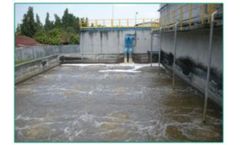
Location: SBR Plant in Southern Pennsylvania A 0.5 mgd SBR plant in southern Pennsylvania uses MICROBE-LIFT/IND and MICROBE-LIFT/OC and achieves the following ...

You should apply spill containment on land anywhere spills are likely and could cause harm to people, assets or the environment, such as:Workshops & maintenance areas – oils, lubricants, coolants and parts washers Warehouses & storage yards – drum and IBC storage, chemical rooms, decanting areas Construction & mining sites – around fuel tanks, bowsers, service trucks ...
Many medical waste processors face challenges with traditional sharps management and disposal methods. Single-use containers require frequent replacements, disposal fees, and potential safety risks for staff handling full or overfilled containers. They also generate significant environmental waste. In industries where sustainability is becoming a key priority, many large-scale waste ...

In the area around a refinery’s facilities the groundwater was suspected of being contaminated by ...
A rectangular clarifier tank at a steel factory was equipped with an oil skimmer with a floating oil pick-up mop to remove oil and grease from the cooling water ...
The cooling water in a steel plant is contaminated with oil, fat and scale. In a settling basin, most of the scale sinks to the bottom of the basin. Oil, fat and a small percentage of scale floats on the water ...
Which is used for Machining Cast Iron During machining of cast iron, metal chips and fine particles of carbon black and iron are produced. Bigger chips are removed by the filtration system, while fine carbon black and iron particles float as a black layer on the coolant. Tramp oil, especially lubrication oil and hydraulic oil, float on the surface of the coolant too and mixes with the iron and ...

Additionally, operational changes were made which increased the number of decants in the South Digester, allowing for longer solids retention. Weekly composite samples were collected from both digesters; laboratory analysis focused on Oxygen Uptake Rate (OUR), Total Solids (TS), and Volatile Solids (VS). ...
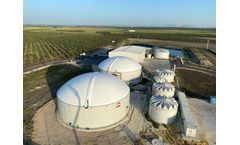
In the water treatment industry. Choosing the right equipment is essential to ensure the efficiency and durability of installations, especially in challenging environments such as coastal areas or islands where salty air can accelerate the corrosion of materials. In this scenario, W-TANK modular tanks made of Glass Fiber Reinforced Polyester (GRP) stand as the best solution, thanks to their ...

As a separation technology specialist, we focus on combining efficient separation with effective dewatering of the fibers in order to achieve a high yield of the plant milk. At the same time, the decanters must, of course, be sufficiently large and optimally designed to ensure the best possible separation results. Thanks to our many years of experience and numerous references, we ...

The glass skull decanter is made of high borosilicate glass and has a capacity of 700 ml. ...

Centralized management provides many benefits, such as predicting the quality of the collected water, automating coagulant reagent dosing, simulating the properties of stored chemicals, monitoring decanter performance and intelligently sequencing filter backwashing. It also improves energy efficiency by optimizing storage and pumping, and factoring in electricity tariffs and ...
ByIdrica

However, the primary decontamination method involves wash plants with various aqueous solutions to filter, settle and decant solids from plastic particulates. Adjusting chemical properties like pH levels and solvent polarity during this phase can target the removal of glues, paper, inks, oils and product residues. ...
ByAntecs

This paper addresses recent efforts at the Ohmsett facility to recover, treat (e.g., heat and decant), and evaluate used oils in a manner that provides potential customers with oil that has properties consistent with their test needs. ...
ByOHMSETT

The clarified water is then carefully decanted or drawn off, leaving the sediment behind. Sedimentation is effective for reducing larger particles. ...

Synopsis: Using a decentralized innovative wastewater technologies, such as small membrane bioreactors (MBRs), to gain green-building certification credit points. Application: The certified BioBarrier® MBR and BioBarrier® HSMBR® System treat wastewater to higher standards that allows for onsite water reuse. ...

Entire Capsuled plant with: Reception Areas for all Bin size , Wrack, Palettes and big Bags Depacking lines and Mixing tank Hydrolysis Hygienasation 2 Digesters (Total Volume 8.200m³) Decanter and fine screening line UF/RO line (Winter Time) Storage of Digestat products Biogas cleaning CHP plant Aeration system with Bio-Filter Flare Biogas Utilization: ...

Health and Safety Executive release safety alert on exposure risks to diacetyl vapour (2,3 butanedione) What is Diacetyl? Diacetyl (IUPAC systematic name: 2,3 butanedione CAS: 431-03-8) is a by-product of coffee roasting that is often used as an additive in food products or a flavouring, due to its strong buttery taste. Heating diacetyl above certain temperatures significantly increases ...